Table of Contents
This post may contain affiliate links to things like tours, hotels, Amazon associates and products. These help me earn a small commission at no additional charge to you.
One of the best experiences of my 6-week Peru trip was hiking in the Colca Canyon for three days as a return trip from the gorgeous city of Arequipa.
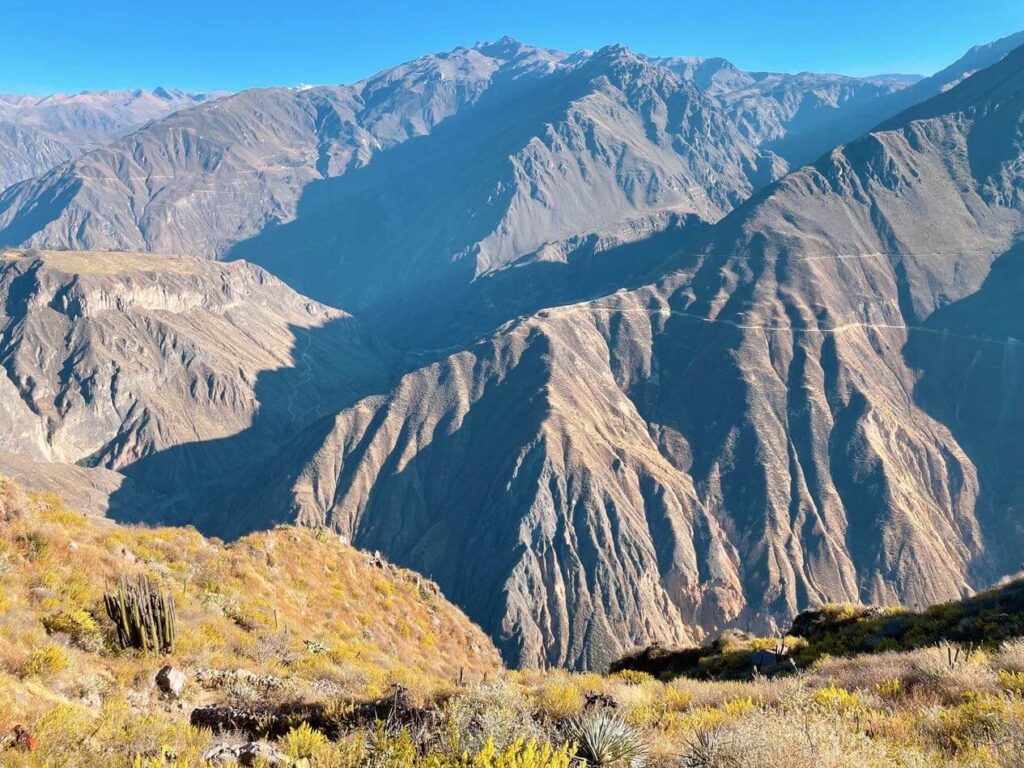
The scenery on this hike is simply spectacular! It’s completely different to the snowy mountains I saw on the Salkantay Trek near Cusco (and the many hikes I did in Huaraz in Northern Peru). Even though I’d hiked so much by the time I reached Arequipa, I don’t regret doing this one, too.
The arid canyon basin is peppered with cacti and small villages home to indigenous communities. I couldn’t imagine living so remotely, but learning about other cultures is what truly lights me up about travel.
Parts of the canyon reach 3,270 meters (10,000 feet), making it one of the world’s deepest canyons and considerably deeper than the Grand Canyon.
Throw in soaring Andean Condors and you have a truly mesmerising destination like no other!
You begin and end the hike in the gorgeous colonial city of Arequipa, one of my favourite places in Peru. I spent over a week there, grazing at the best Arequipa restaurants and coffee shops and wandering at my leisure.
Be sure to spend enough time in Arequipa before or after the hike!
In this guide, I’ll cover what to expect on the guided hike, what to pack and more
How hard is the Colca Canyon hike?
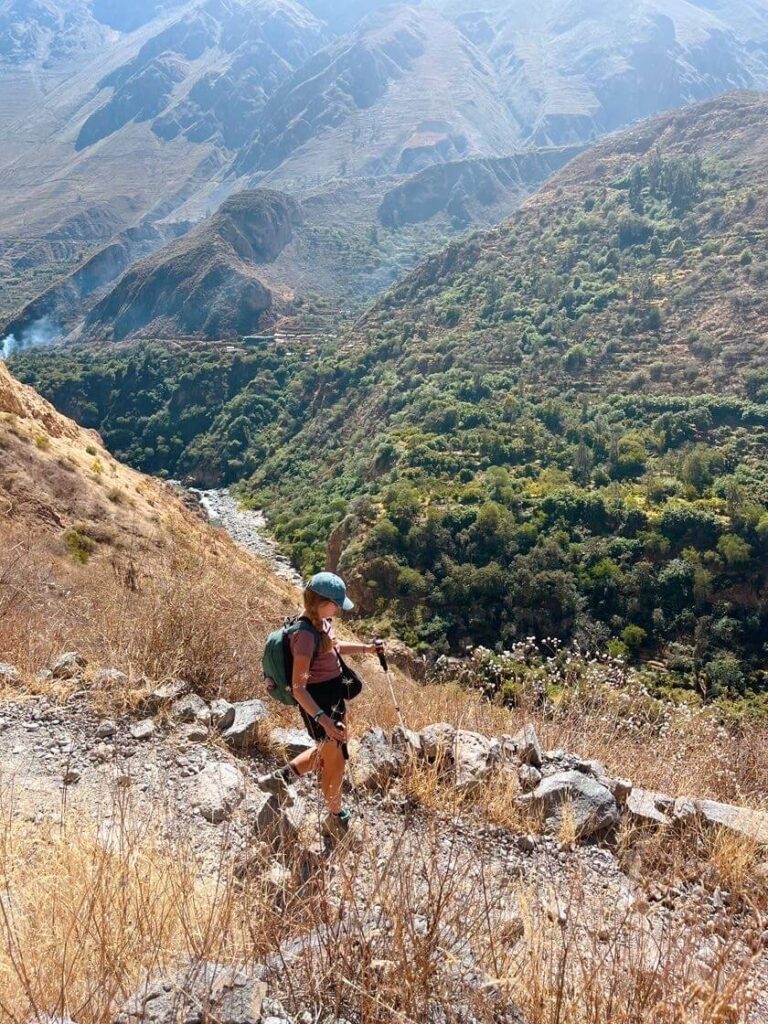
How long is the trek? The popular route is around 20 miles in total, with an average of 15 hours trekking. It’s a lot spread across two days, but fairly leisurely across three.
Difficulty level: After the other hikes I did in Peru (including Salkantay and day hikes in Huaraz), I didn’t find it too challenging apart from the final morning when we had to climb 1,200m out of the basin. I’d describe that section as difficult and the rest as moderate.
On day one, we were going down most of the day (which could be tough on those with bad knees), but the second day was a relatively flat walk of around four hours. However, if you do the Colca Canyon hike in just two days, this hike is incorporated into the afternoon of day one, making it a lot harder.
Altitude: I was well accustomed to the altitude after five weeks in Peru, and probably the last two years living in Mexico City. If you’ve just arrived at high altitude, it’ll be much tougher. Parts of the canyon lie between 2,000 and 4,000 metres.
Symptoms of altitude sickness can range from breathlessness to dizziness, headaches, stomach problems and nausea. Luckily, I’ve never experienced it but I’ve witnessed other people feel absolutely terrible.
It’s recommended to spend a couple of days in Arequipa (2,300m) to acclimate before starting the hike.
The fact that the accommodation is comfortable truly helps; you don’t feel like you’re roughing it or missing a good night’s sleep.
Self-guided or tour group for the Colca Canyon hike?
It’s possible to do the hike self-guided, but as a solo female traveller, I preferred doing it as a guided tour for security and company. The price was very reasonable: £24 / $32 per day (incl. accommodation and food).
Fellow solo travellers will relate to the fatigue of doing all the admin, researching and booking. I jumped at the chance to join a tour group for some time off.
Tour pick-ups from Arequipa start at 3am, but public transport to the Colca Canyon is somewhat lacking and the buses go VERY early, too. Basically, by going independently, you won’t miss the ridiculously early start.
If you do choose to go independently, take a colectivo (local minibus) from Arequipa to Cabanaconda, changing in Chivay.
What’s the difference between the 2 and 3 day hike?
Simply the number of days you spend completing the hike. It’s the same route; the 3-day hike doesn’t include anything extra that the 2-day hike doesn’t.
Some might say this is reason to cram it into two days. On the other hand, it makes day one incredibly long since you have to hike again after lunch, having woken up at 2.30am. There’s not much time to recover since you need to be up at 4am the following day for the hardest challenge of the trek: a 1,200m ascent!
Here’s the schedule for both hike options:
2-day Colca Canyon hike:
- Day 1 – pick up at 3am
- Day 1 – hike before lunch
- Day 1 – hike after lunch finishing around 6pm
- Day 2 – wake up at 4am to hike 1,200m
- Day 2 – breakfast and drive to hot springs, followed by lunch and travelling back to Arequipa.
3-day Colca Canyon hike:
- Day 1 – pick up at 3am
- Day 1 – hike before lunch
- Day 1 – relax at accom in afternoon
- Day 2 – breakfast and morning hike
- Day 2 – relax at pool in second accom
- Day 3 – wake up at 4am to hike 1,200m
- Day 3 – breakfast and drive to hot springs, followed by lunch and travelling back to Arequipa.
Personally, I didn’t find the 3-day hike had excessive downtime. But maybe pack a book/Kindle or downloaded podcast and headphones if you get bored easily, especially if you’re travelling solo (obviously you’ll be in a group but you never know how the other guests will be!).
Can you hike the Colca Canyon during a day tour?
In a word, no. It’s too far from Arequipa to drive there, back and do a hike in the same day.
You CAN do day trips to the canyon from Arequipa, however you’ll only have time at the viewpoints. It’s a sightseeing tour rather than a hiking tour.
In terms of hiking tours from Arequipa, you’re looking at 2-day tours and 3-day tours.
Booking a tour
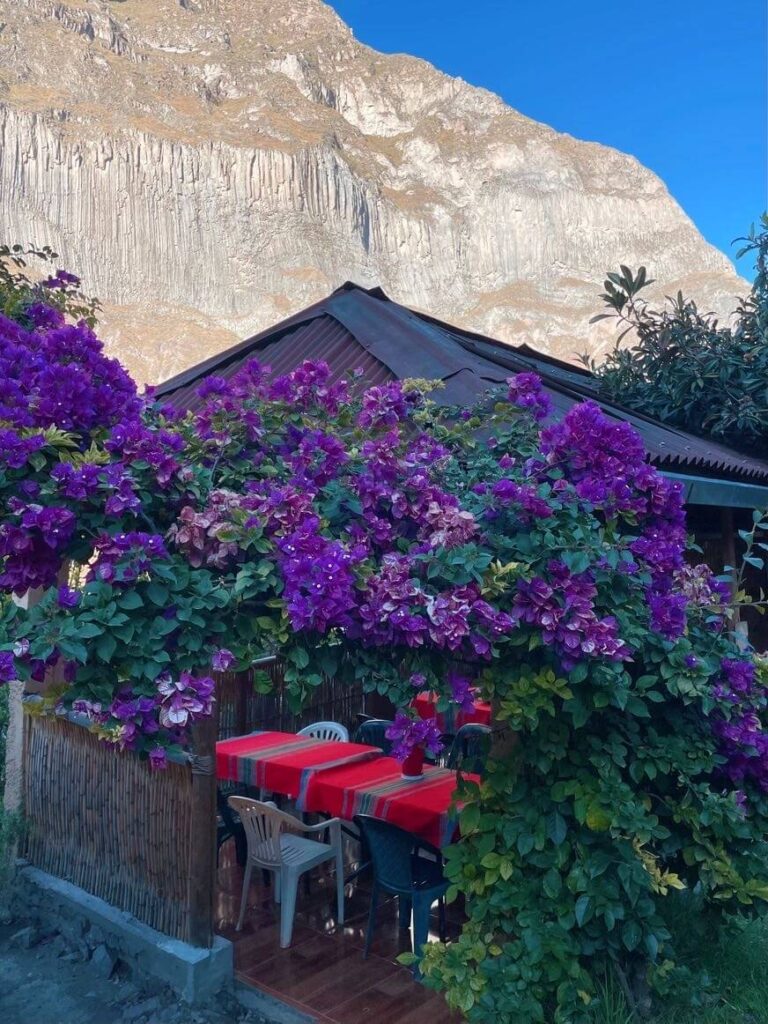
There are several companies to choose from but I went with Oasis Palmera Travel. You can visit their office, but my hostel, Econunay Hostel, booked it all for me.
I paid 350 soles for the 3-day trip ($100 / £72) including accommodation, food (three meals on days one and two and breakfast on day three), transport and a guide.
Unlike the popular Inca Trail hike from Cusco that must be booked months in advance, you don’t need to book ahead. I booked and paid the day before. You can’t book on the day since tours start at 3am.
What is the accomodation like?
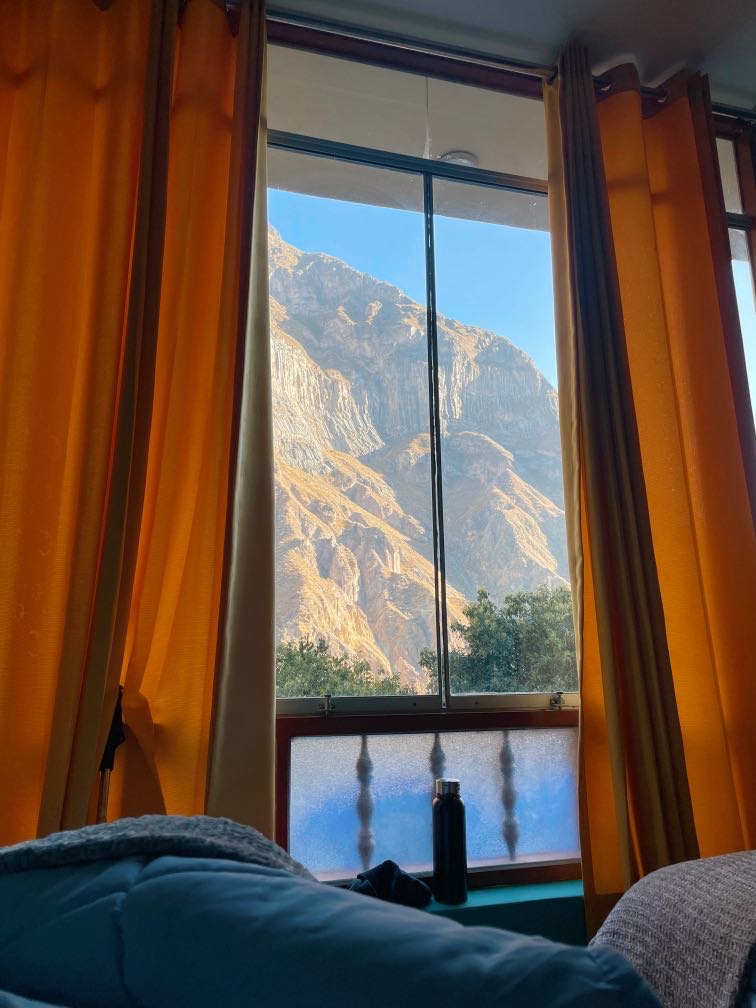
I thought it was great! Compared to the Salkantay, where you sleep in huts or freezing glass domes, it was very comfortable. Rooms were like basic hotels with double or twin beds and en-suite bathrooms.
Solo travellers will most likely share with another solo traveller in the group, but you might get your own room if there’s no one else!
Even though I was travelling solo in Peru, I coordinated to do this hike with a male friend and we didn’t mind sharing a room, but presumably the company wouldn’t make male and female solo travellers share if they didn’t know one another.
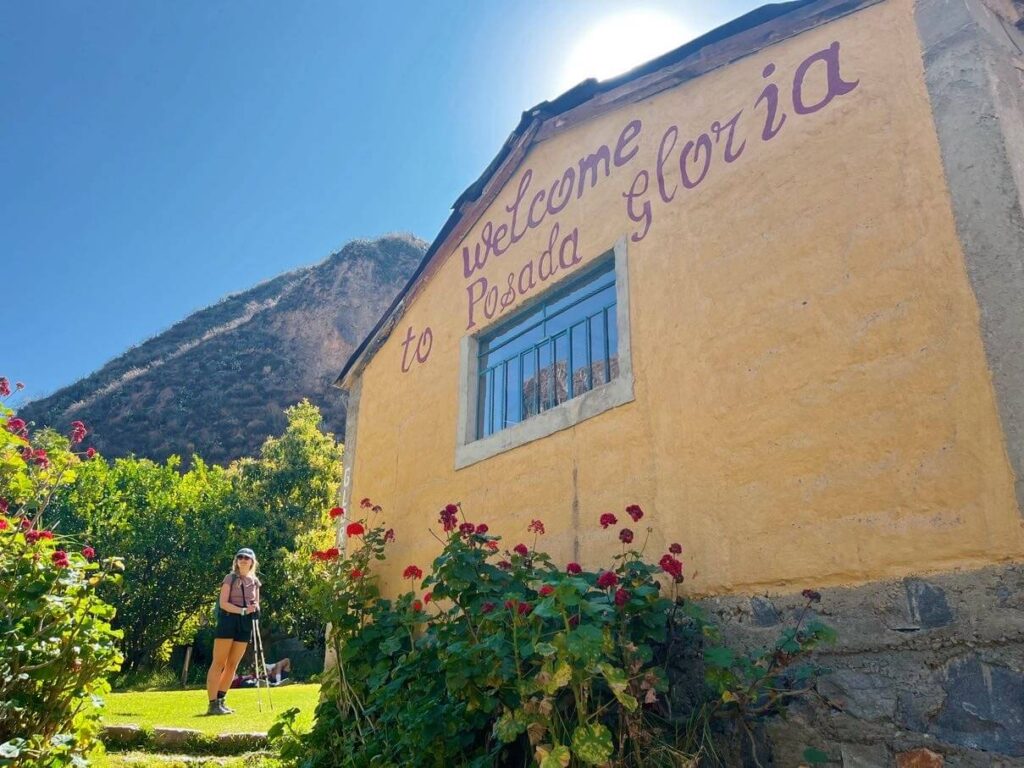
I loved the first camp where you stay on night one if doing the 3-day hike (those doing the 2-day hike just briefly stop here for lunch before getting back on the road). It’s basic but has beautiful views of the canyon, including from the rooms.
The second night’s accommodation (or first night’s if doing the 2-day hike) was even more impressive! Oasis Sangalle is a beautiful place nestled at the bottom of the canyon, filled with hotels, palm trees and pools.
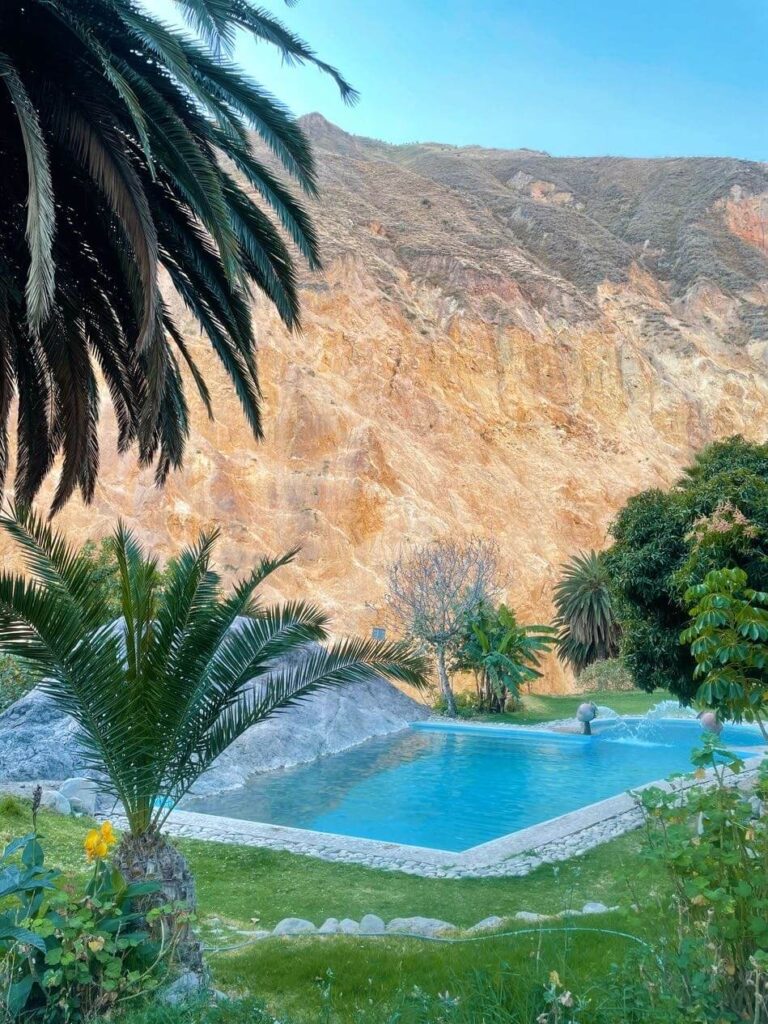
It has a lovely pool with cold water so I recommend jumping in right away before you cool down from hiking. On the 3-day hike, you get a whole afternoon here but on the 2-day hike, you arrive after the sun has set so you’d need high cold water tolerance to get in!
Food on the guided Colca Canyon hike
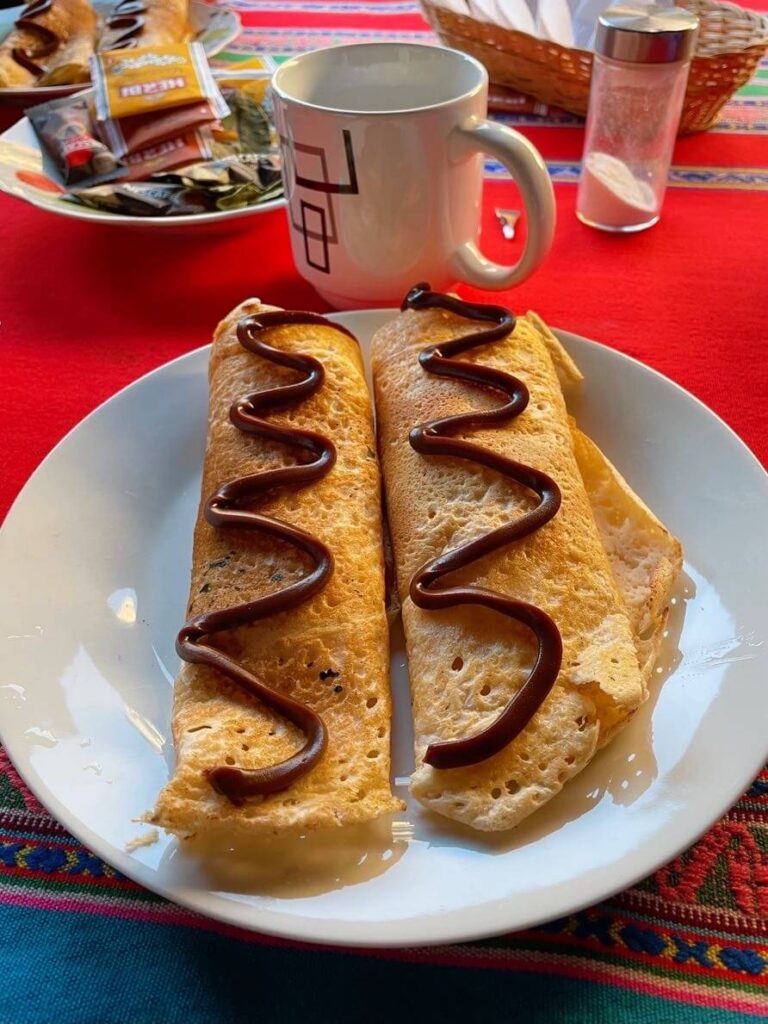
I’d give the food a 6/10. It was just ok!
I chose to go vegetarian after getting food poisoning just a couple of weeks before from the company I did the Salkantay hike with. However, the rest of the group ate meat and seemed fine.
A typical vegetarian meal on the hike involved eggs, vegetables and pasta. On night two, we had an interesting dish of cheese-stuffed deep-fried potatoes with a side of quinoa. I would have loved some dessert but sadly, we never got any (but camps usually have a shop with overpriced packaged snacks if you get desperate).
The meat-eaters had alpaca one night but said it was pretty chewy (it’s usually renowned for being tender, not that I would know because I can’t bear the idea of eating my favourite animal!).
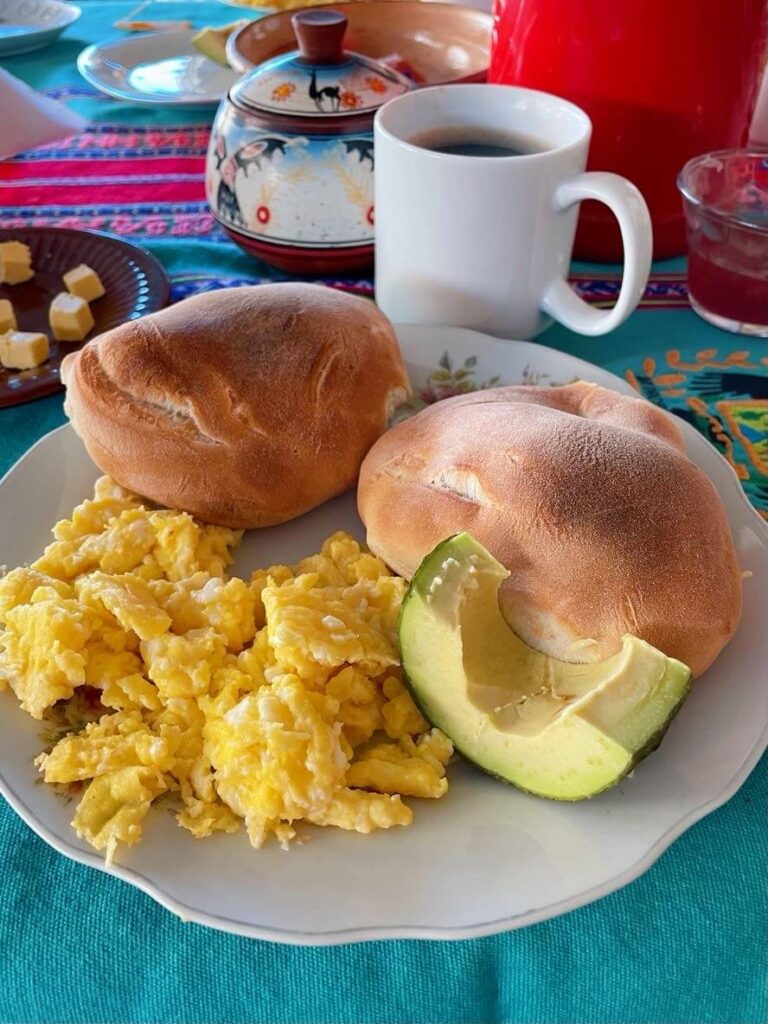
My favourite meal on the Colca Canyon hike was our first breakfast because we got eggs AND banana chocolate pancakes. On the final morning, there’s no breakfast until after the 1,200m climb, so make sure to pack snacks like energy bars, nuts etc. There’s somewhere to buy bananas the afternoon before.
Day 1 – early starts
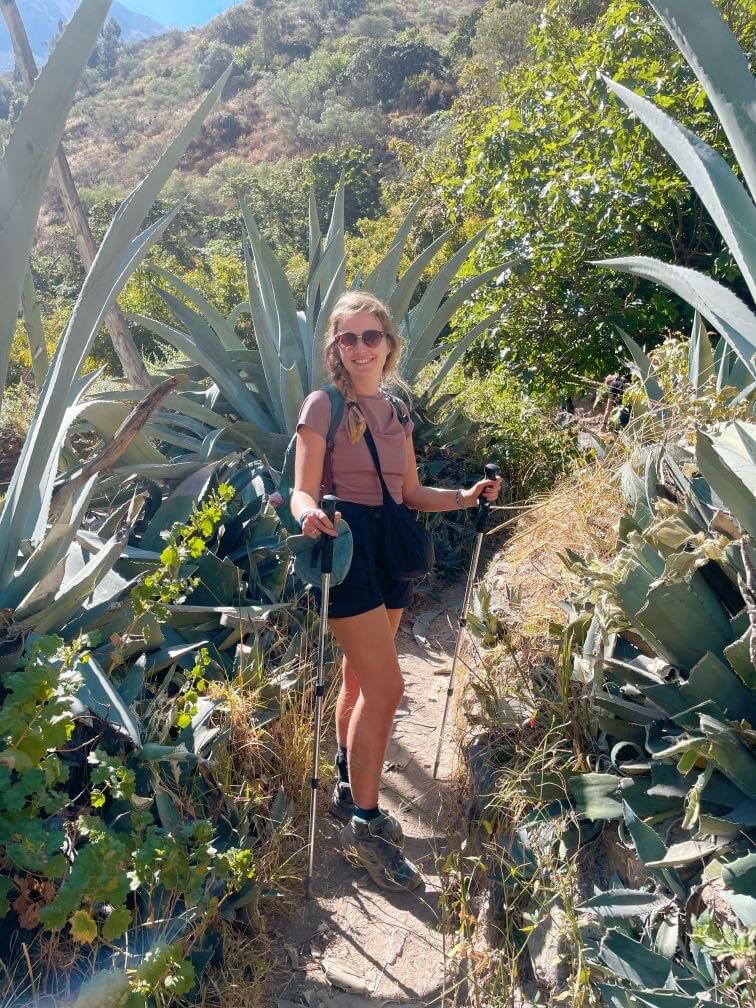
Day one began with the earliest wake-up of my whole Peru trip (and life?): 2.30am in time for the 3am pick-up from Arequipa! Absolutely horrific.
The drive to the canyon takes around four hours, stopping at a breakfast buffet around 7am. Luckily, I managed to get a few hours’ sleep in the car. I’d have felt pretty rough for the rest of the day otherwise.
After breakfast, it was back in the van to the famous Cruz del Condor viewing point. It was incredible to see huge condors with wingspans of up to 3.3 metres gliding through the air. Sadly, there was no room in my bag for my camera and I couldn’t get any decent photos with my phone.
This viewpoint is VERY touristy and there are even people dressed up in condor suits. My friend and I laughed, imagining having to explain down the pub what you do for a living!
The downside of being here with a tour was that we only got 15 minutes and saw the viewpoint at its busiest because all the groups arrive and depart at the same time.
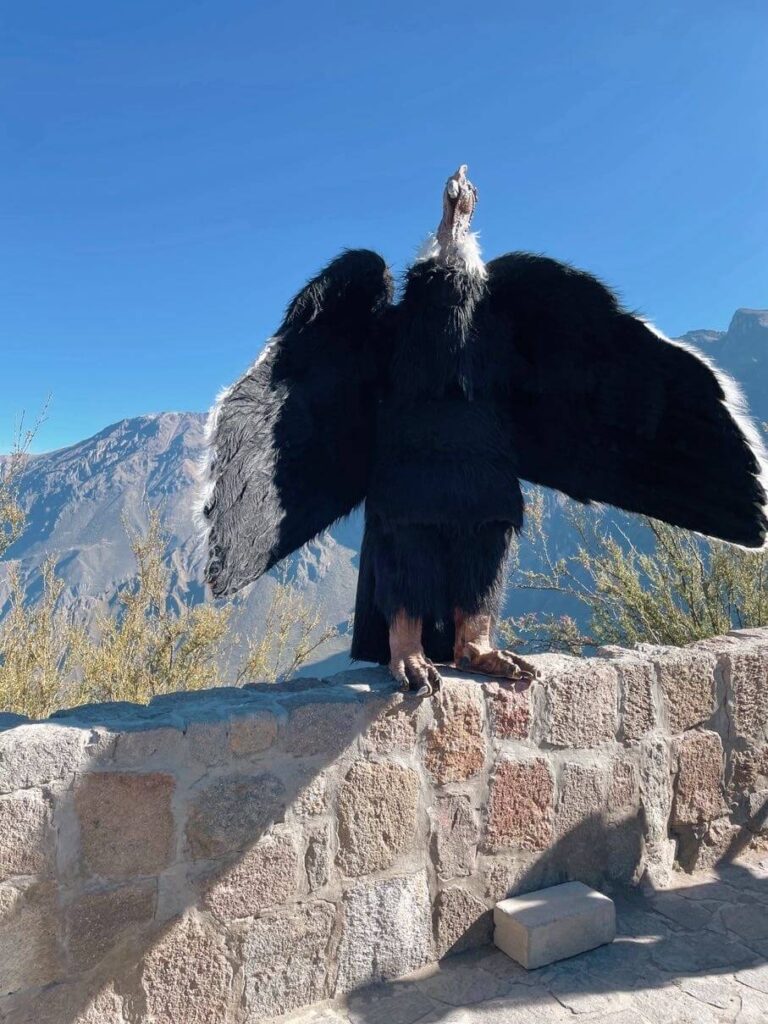
Note about tickets – whether you’re visiting with or without a tour, a ticket to the national park – including the condor viewpoint – costs 70 soles and lasts 1 week. It’s a bit expensive for Peru, especially since I don’t believe anyone spends that long in the canyon. But it’s worth it!
Then, it was time to begin the hike. Along with our guide, we spent the morning trekking 1000m downhill from the starting point of Cabanaconde into the base of the canyon.
Day 2 – easy day
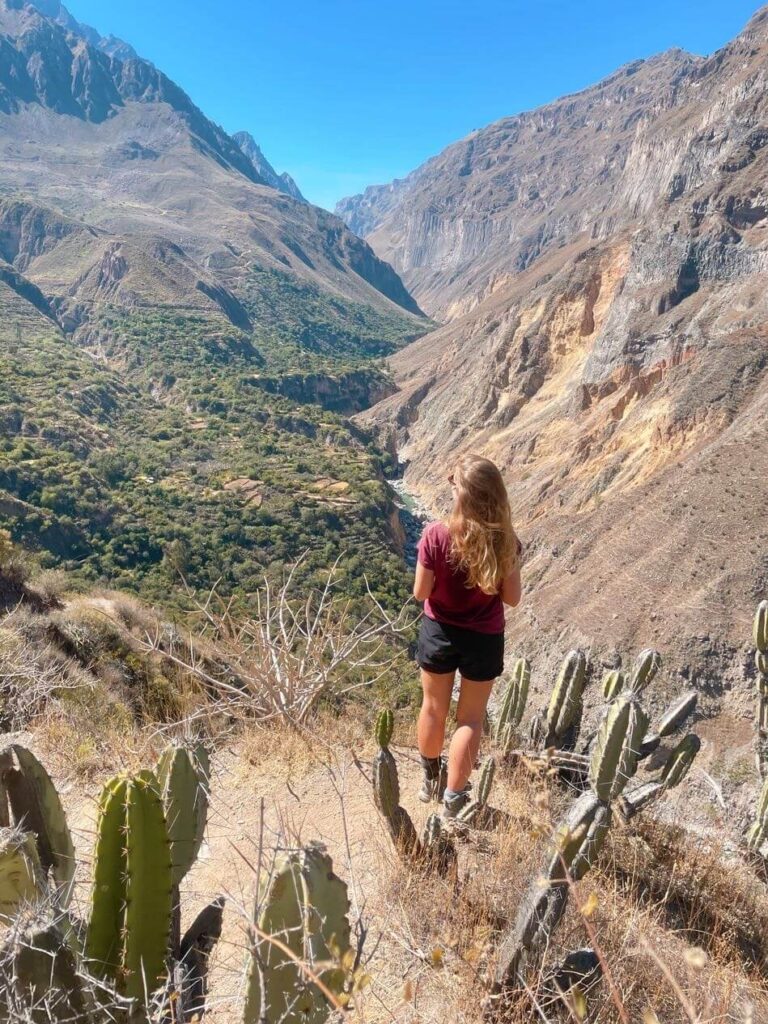
This is the day that you would condense into the afternoon of day one, if only doing the 2-day Colca Canyon hike.
However, I loved doing it as a whole day. It meant getting up leisurely and enjoying breakfast before setting off at 8.30am. A novelty for a Peru hike! I had become used to 5am wakeup times after the Salkantay and Huaraz hikes (and knew we had a 4am start the following day).
Then, we got to stop at a local farm to meet the family, see their guinea pigs (sadly not destined for a happy future since they’re a renowned delicacy in Peruvian cuisine) and try local fruits like chirimoya, known as ‘custard apple fruit’ due to its sweet flavour.
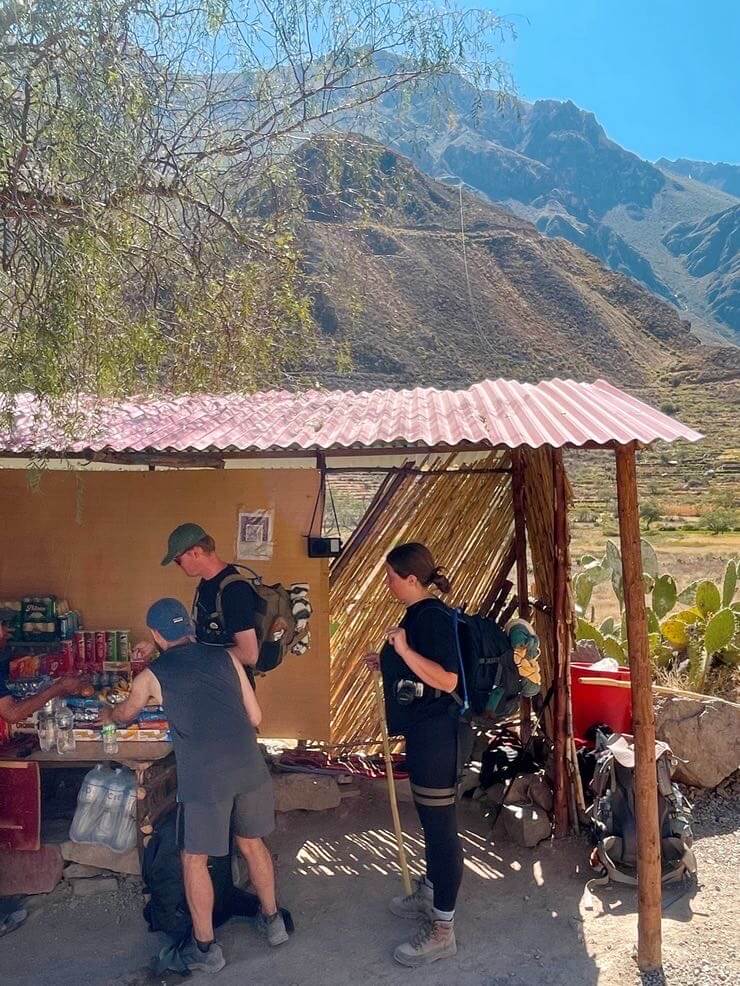
Towards the end of the hike, we stopped at a snack shack for refreshments. This was the last place to buy fresh stuff like bananas so I grabbed some for the following morning as I knew we needed to do a big hike before breakfast.
We arrived at our accommodation at the base of the canyon in time for lunch. Then, the afternoon was ours to relax at the pool, read and chat. The sun set extra early because the high canyon walls eclipse the horizon, so we could only enjoy the pool until around 4pm.
The 2-day hikers arrived at the camp around 6pm when it was cold, so they didn’t get to enjoy the pool at all. Another reason I liked doing the 3-day hike.
Day 3 – the big ascent!
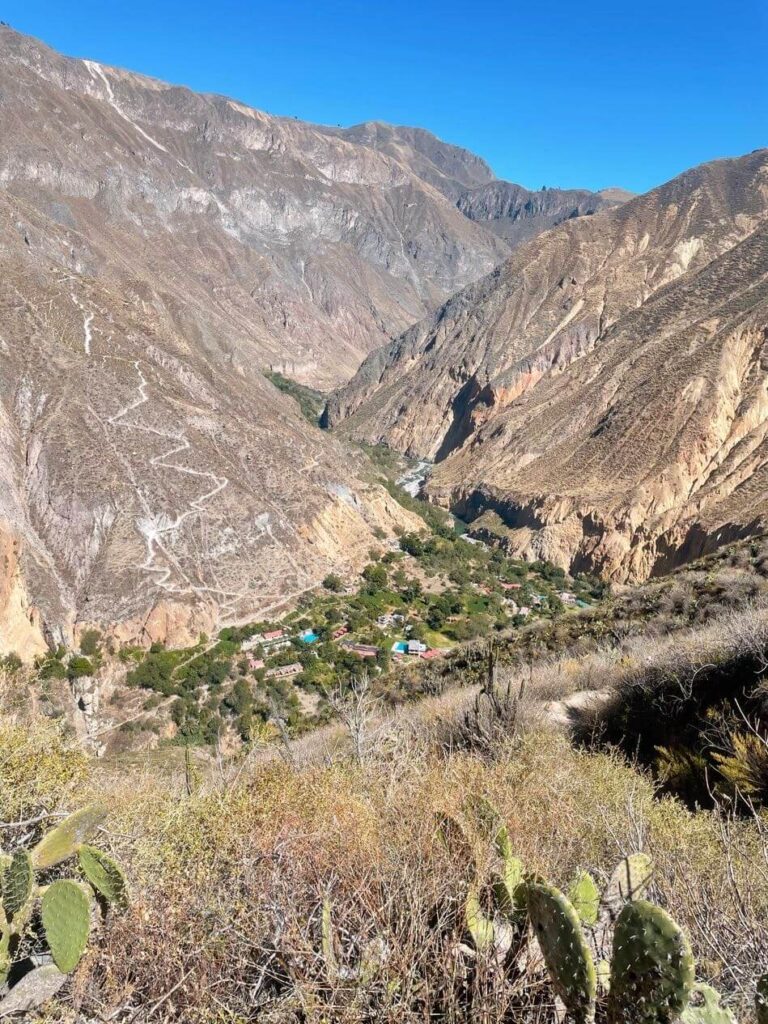
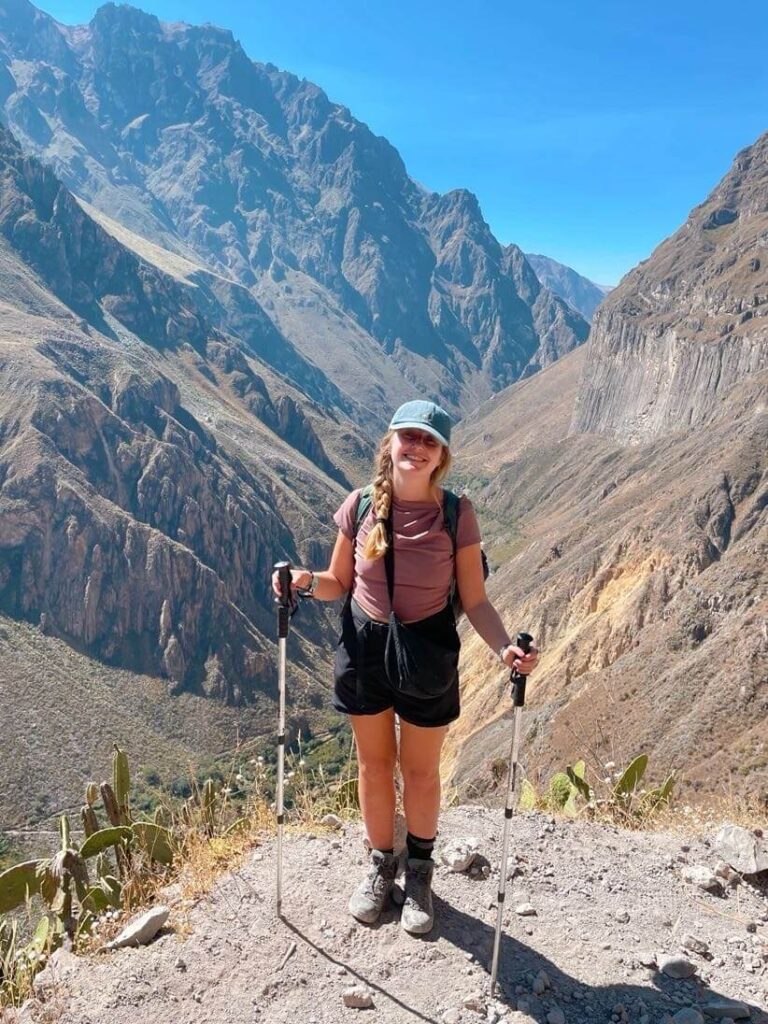
I took the photo above at the end of day two before we descended into the canyon for our final night. The next day, I barely took any photos because we got up at 4am and hiked uphill for 2.5 hours. I was exhausted!
It’s a tough ascent of around 1,200 metres. Apart from five minutes here and there for a breather, we didn’t rest at all. It’s the toughest part of the whole Colca Canyon hike for sure!
Our group split up as we were going at different speeds and reunited at the top. There were several other groups, however, so I was never alone.
I kept having to jump aside as horses carrying goods (and people who didn’t want to walk) passed. It made listening to music tricky as you couldn’t hear the horses until they were right behind you. They weren’t stopping for anyone, so be careful!
What to pack for the Colca Canyon hike
Unlike some of Peru’s other epic multi-day hikes where the trekking companies transport your belongings, you’ll be carrying everything you need for 2-3 days. I recommend you bring as little as possible. Climbing 1,200m on the last day with a heavy bag would be hellish!
I just took a small 15-litre day pack. It was a tight squeeze but my only other bag was my main 65 litre backpack that I’d left at my hostel in Arequipa (which, side note, I highly recommend – it’s called Econunay Hostel).
Here’s what I suggest you bring/wear:
- 1 pair of trousers – I wore the same pair for three days; they zip off which was super useful in the midday heat
- 1 top for each day – ideally sweat-wicking ones, I was drenched the day I just wore a regular H&M t-shirt!
- 1 pair of underwear for each day
- Jacket for the evenings – I took a puffer jacket that packs down into a little bag
- Rain jacket – only applicable in the rainy season
- Pyjamas – we always had decent duvets at the accommodation so don’t overpack, but a thermal won’t go amiss if you know you get cold
- Hiking pokes – optional but I thought they were super useful for the steep ascent on the final morning
- Lightweight pair of shoes for camp – such as flip flops
- Swimwear and a microfibre towel for the last night’s camp with pool
- Hat and sunglasses – very important as there will be no shade when you’re hiking
- Head torch – useful for the final morning as you start in the dark
- Toiletries – toothbrush, toothpaste, sunscreen, facial cleanser and deodorant. Don’t overpack!
- Snacks – you can buy snacks at camps but they’re overpriced and the selection isn’t great. I recommend bringing nuts as they give you more energy than sugary packaged snacks
- Entertainment – like a book or Kindle if doing the 3-day hike.
Best season for the Colca Canyon hike
May-October (dry season) – I did the hike in July, bang in the middle of the dry season. Predictably, we didn’t have a drop of rain. On the downside, it’s hot in the day and cold at night.
November-April (wet season) – a perk of this season is reduced tourism and more availability at lodges etc. However, it might be a slippery and stressful hike in the rain!
Do you need specialist travel insurance?
Most standard travel insurance will insure you on hikes up to 3,000 metres, which many Peru hikes surpass. Parts of the Colca Canyon even surpass 4,000m so it might be wise to upgrade your normal insurance.
I personally used True Traveller for all my Latin America travels and can’t fault them.
For the Colca Canyon hike, opt for their Adventure Pack which will cover you up to 4,600m (as opposed to the standard Traveller Pack that covers you up to 3,000m).
Click to get a quote.
Thanks for reading!
Read more Peru blogs:
- Review of the Salkantay Trek
- Solo female travel in Peru
- How to visit the Sacred Valley independently – without a tour group
- Cusco restaurant guide
- Best restaurants in Arequipa