Table of Contents
This post may contain affiliate links to things like tours, hotels, Amazon associates and products. These help me earn a small commission at no additional charge to you.
I just spent a few weeks travelling solo in Costa Rica as part of a big Central America backpacking trip. I departed Mexico, where I had been living the last year, and hit up all the countries except Honduras (as they’re currently not letting in Brits without a visa), without taking any flights, before taking a 4-day boat trip through the San Blas Islands to Colombia.
It was a fantastic adventure of which Costa Rica was a memorable part. Whether you’re visiting as part of a bigger trip like I did or simply exploring Costa Rica alone before returning to your home country, I have a ton of tips for you.
Visiting Latin America? See my solo travel guides:
- Solo female travel in Belize
- Is Guatemala safe for solo travel?
- Nicaragua solo travel guide
- Is solo travel to Panama safe?
- Travelling alone in El Salvador as a solo woman
- Solo female travel in Mexico
- Brazil solo travel – safety & tips
- Things to know about travelling alone in Argentina
- Chile solo female travel guide
- Peru solo female travel
- Ecuador solo travel
- Solo female travel in Bolivia
- Travelling solo in Patagonia
- Travelling alone as a woman in Colombia
What is it like travelling in Costa Rica?
I had no idea what to expect before my trip because countless other travellers had complained about how expensive and touristy Costa Rica is compared to other countries in Central America.
Having visited, I really think it depends on your experience and tolerances. If you’re a budget backpacker who loves exploring adventurous destinations, well, Costa Rica may not fit the bill. I would recommend Guatemala or Nicaragua instead.
However, if you’re looking for a comfortable vacation and amazing wildlife (and you have the budget), then I think you will love Costa Rica.
Is Costa Rica safe for solo female travel?
Yes, I personally felt very safe during my trip to Costa Rica. The small towns you’ll visit are very touristy so you won’t stand out, or struggle without Spanish. Getting lost in the beautiful nature of Costa Rica solo also felt safe, but there are always opportunities to hire guides and go as part of a group if you’d prefer.
The one place to be on alert is San Jose where there are some sketchy neighbourhoods, especially near the bus stations. Don’t walk in this area; call an Uber instead and be mindful of your belongings while waiting for it.
The city centre is nowhere near as bad but it doesn’t feel the absolute safest, but it’s fine to walk in the day.
Saying that, it’s no different to many large cities around the world. Especially if you’re coming from the US, you will have seen sketchier bus station areas!
What about for first time solo travellers?
I rarely recommend Latin America as a first time solo female travel destination. I think there are easier places in Europe to travel solo for all ages and travel styles, but if you’re a young budget traveller, I’ll always recommend Southeast Asia!
However, I think the exception to my Latin America rule is Costa Rica which IS suitable for first time solo travellers. With developed tourist infrastructure, plenty of English speakers and a positive safety rating, I don’t think you’ll feel overwhelmed.
Good things about solo travel in Costa Rica
- Plenty of people speak English – which is handy if your Spanish isn’t great
- The infrastructure is well developed – you have everything from hotels to hostels, all types of cuisine and a wide range of activities
- If you’re staying in hostels, they’re good and surprisingly affordable (barely more than in cheaper countries in Latin America) when compared to other local costs like food and activities.
Bad things about solo female travel in Costa Rica
- Expensive – the elephant in the room! Your money doesn’t go as afar as in neighbouring countries and you really feel the pinch when going solo, because things like taxis, private rooms, car hires and groceries cost more for those alone (unless you eat the same meal over and over!)
- Poor public transport – I think because it’s so common for travellers to hire cars, the local transport is slow and not especially comfortable. I did it but I definitely experienced better buses during my solo trip to Mexico, for example.
How to get around Costa Rica alone
There are several options for getting around Costa Rica, the main ones being…
Car hire – I didn’t do this myself (but here’s someone who did: read this article on hiring a car in Costa Rica) but I always recommend Rentalcars.com for car hires around the world. You can expect a car hire for 2 weeks to cost around $150 USD. San Jose is the easiest place to pick up your car, then the country is your oyster!
Public bus – as I mentioned, I didn’t find these amazing but they did the job. I took them between towns in the north like Monteverde and La Fortuna (though annoyingly you have to change in small town, Tilaran) then to San Jose and down the east coast.
An annoying thing about the buses is that, instead of there being one bus station, there are different ones depending on your onward destination. So if you’re transiting San Jose rather, you may have to change bus stations rather than get a bus in and out of the same station.
Shuttles – solo travellers in Costa Rica can opt for AC minibuses for ease and security. They’re more expensive than the bus so it depends on your budget. For example, a shuttle between La Fortuna and Monteverde costs $30 whereas a bus costs $7, however not having to change buses is an undeniable perk! Book via 12go or at your accommodation.
Uber – you can use Uber and InDrive in San Jose and other popular destinations such as Puerto Viejo.
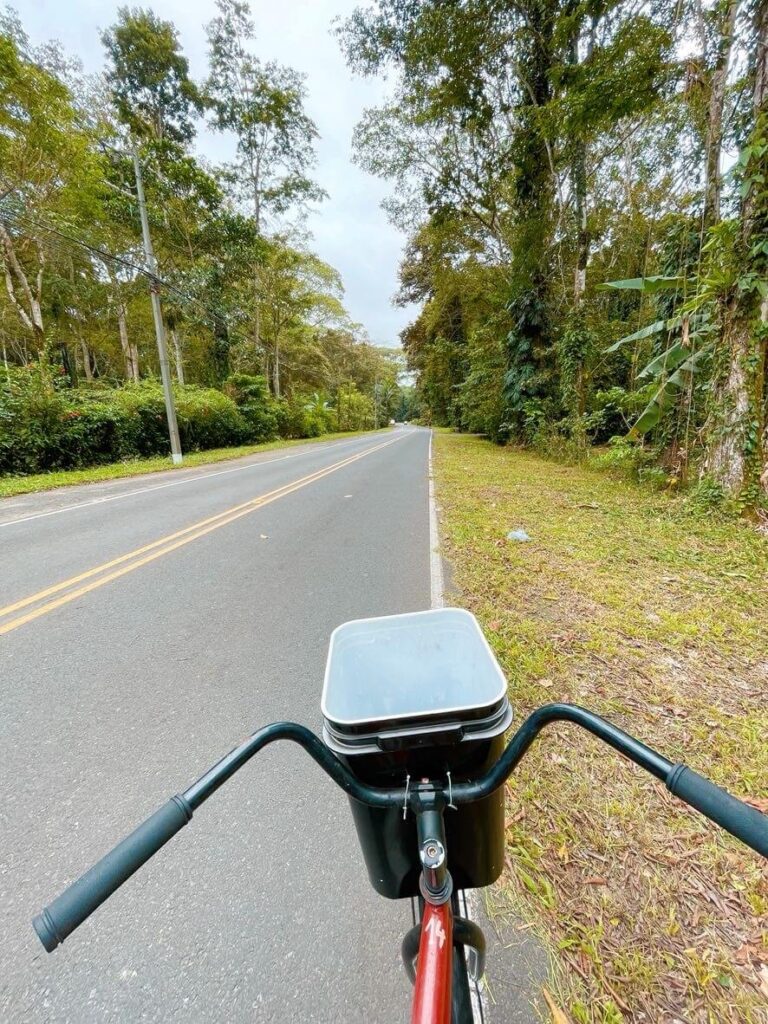
Bicycle – this a great way to explore the Caribbean coast, and cheap!
Best places for solo female travel in Costa Rica
There are so many places to go in Costa Rica that I think you’ll need to pick and choose unless you have a month or more! One issue is that the two coasts aren’t well-connected. To get from one to the other via public transport, you’ll likely have to change buses in San Jose (and get an Uber between bus stations as your second bus probably won’t depart from the same one).
With that in mind, I would recommend doing the key places in the north then picking either the West (Pacific) or East (Caribbean) coast.
- The East Coast is more chilled with a relaxed, Caribbean vibe
- The West Coast (Pacific) is more about surf towns. This is the more developed and expensive part of the country so keep that in mind when budgeting.
One more thing to consider is that, if you’re solo travelling to Panama next like me, the easiest overland route is departing Puerto Viejo on the Caribbean coast and arriving in the Boca del Toro islands. I chose to do the east coast of Costa Rica rather than the west to accommodate this plan.
Monteverde (Northern Costa Rica)
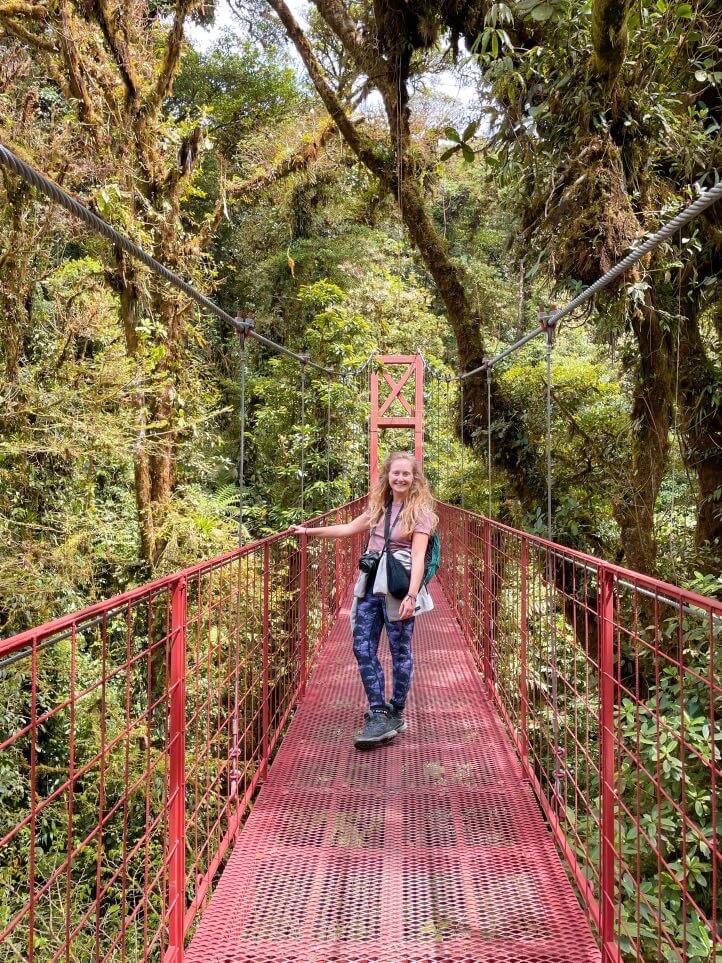
In terms of nature experiences, this was my favourite place during my solo travels in Costa Rica. The town is nothing special but it’s a good launching spot for nature activities and wildlife experiences.
Your accommodation will help you book activities or you can visit any agency or book with a reputable online operator like Viator or GetYourGuide.
Where to stay in Monteverde:
- Budget: Hostel Cattleya – I spent a few nights here and the staff were lovely and the huge kitchen was spotless with lots of cooking equipment and herbs/spices. It attracts more families than your typical backpacker crowd but you can’t complain with prices from $8 a night
- Budget: Monkey Hostel – a classic backpackers hostel with activities and a nice social area where you’ll often see monkeys at the (free) breakfast
- Mid-range: Hotel Santa Fe – with private rooms from $80 including breakfast and parking, this hotel is a steal for solo travellers.
Where to eat in Monteverde:
- Soda Canton 83 – for a budget meal, they do local dishes like fried rice, casada meals and Western/Mexican-inspired classics like burgers and nachos
- Raulitos – another popular budget spot for fried chicken and empanadas
- Orchid Coffee & Restaurant – a cute spot for breakfast, sandwiches, coffee, smoothies, healthy bowls and fast food
- Santa Elena Coffee Shop – the best place for speciality coffee in town, plus smoothies and baked goods.
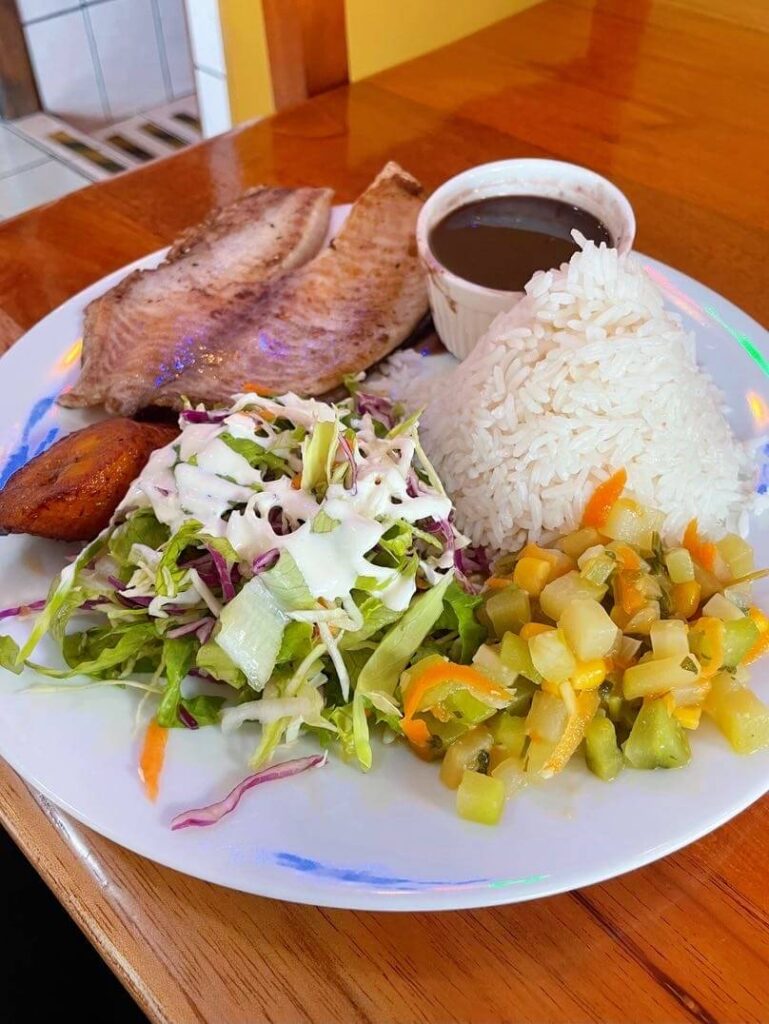
Tip – casada (translating as married) refers to meals usually comprising meat, veg, salad, rice and beans. They’re served at restaurants called ‘sodas’. Look out for these as they can really save you money! Plus, the casada meals are huge and relatively healthy.
These are the experiences I recommend you don’t miss:
Nature walk in Monteverde Cloud Forest
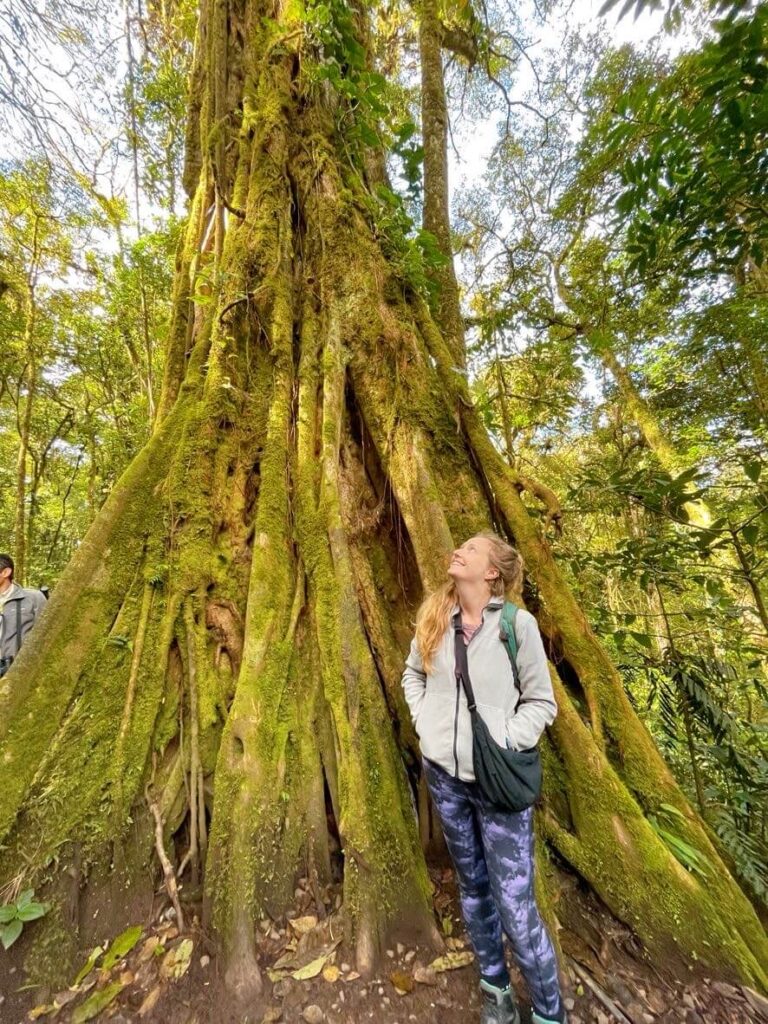
You can visit this spectacular virgin forest without a guide but I felt I saw much more because of having one including the rare quetzal bird!
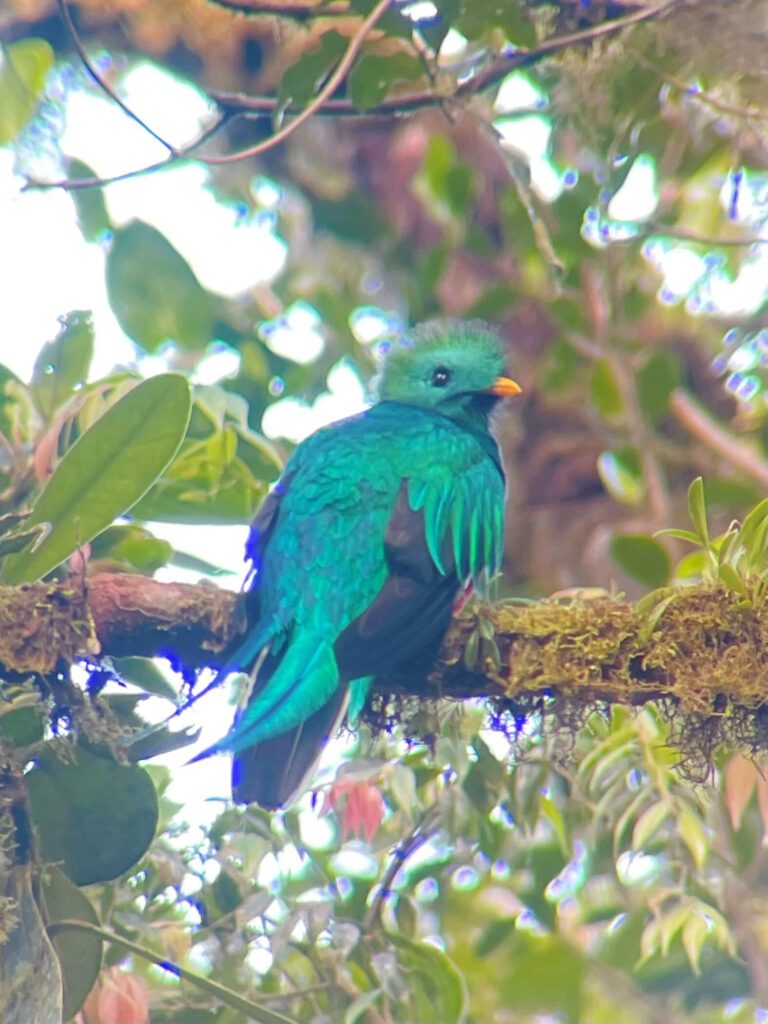
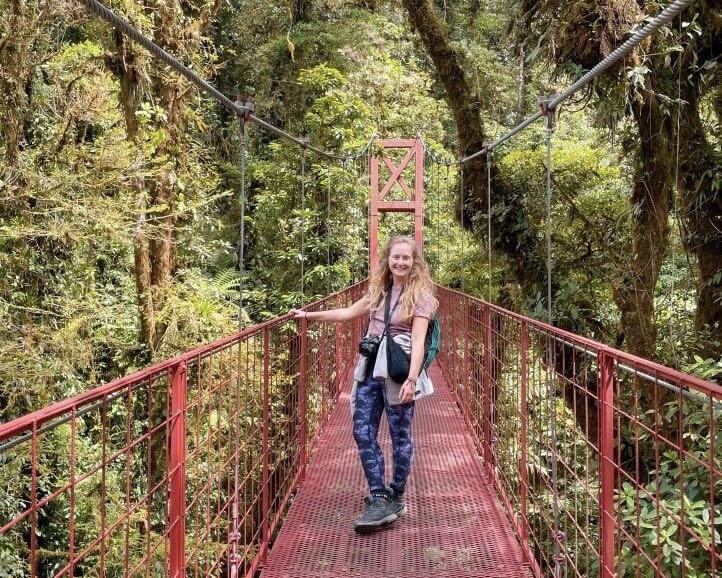
Entry to Monteverde Cloud Forest costs $26 and the guide was a further $25 including pick-up from your accommodation. However, I chose to get the bus back so I could spend more time in the park crossing the hanging bridges.
I also enjoyed the chance to sit in the cafe and watch the hummingbirds drink from feeders. A pesky (but cute) coati even joined me, desperate for scraps of my food!
I booked a guide through my hostel but there are well-rated tours on Viator
Nature night walk
I loved this walk with a super passionate guide! We saw olingos and kinkajous (related to raccoons), frogs, tarantulas, scorpions and a fascinating fly being controlled by cordyceps, a fungi that controls its victim so it’s still alive but can’t use its brain. Wow!
To book the tour I did, WhatsApp +506 83155002. It costs $30 (including the guide’s professional photos he sends you after) and begins at Hotel El Establo. I walked the 15 minutes from town and they took me to the starting point in their free shuttle. After, a nice family in the tour group dropped me back in town.
Note – I really recommend taking this tour or at least doing your research. Some night walk companies charge $5 less but have terrible reviews mentioning huge groups and guides who disturb the animals. Don’t be part of this!
Zip-lining in Monteverde
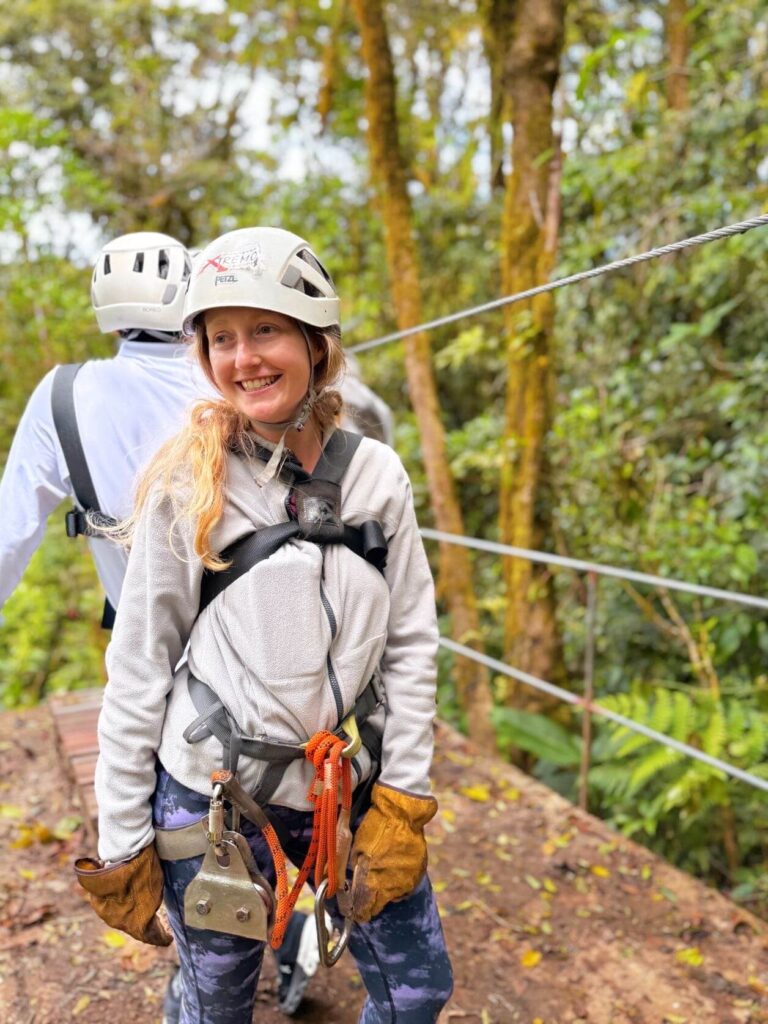
It’s a great place for adventure as well as nature because zip-lining was invented in Monteverde! I went with Monteverde Extremo and it was great fun; just little expensive at $70. As a self-certified big baby, I probably wouldn’t have done this completely solo but I got coerced by a new friend in the hostel who was going. I love hostels for that!
However, if you’re more adventurous than me, there’s no reason not to go zip-lining solo! You’ll definitely meet others in the group, plus the guides were great. Included is the optional Tarzan swing. Onsite (but not included in the price) is the highest bungee in Central America. Not for me!
They offer a return shuttle from Monteverde for just a couple of dollars extra which is probably cost-effective even if you have a car as it’s a 20-minute drive from town.
La Fortuna / Arenal (Northern Costa Rica)
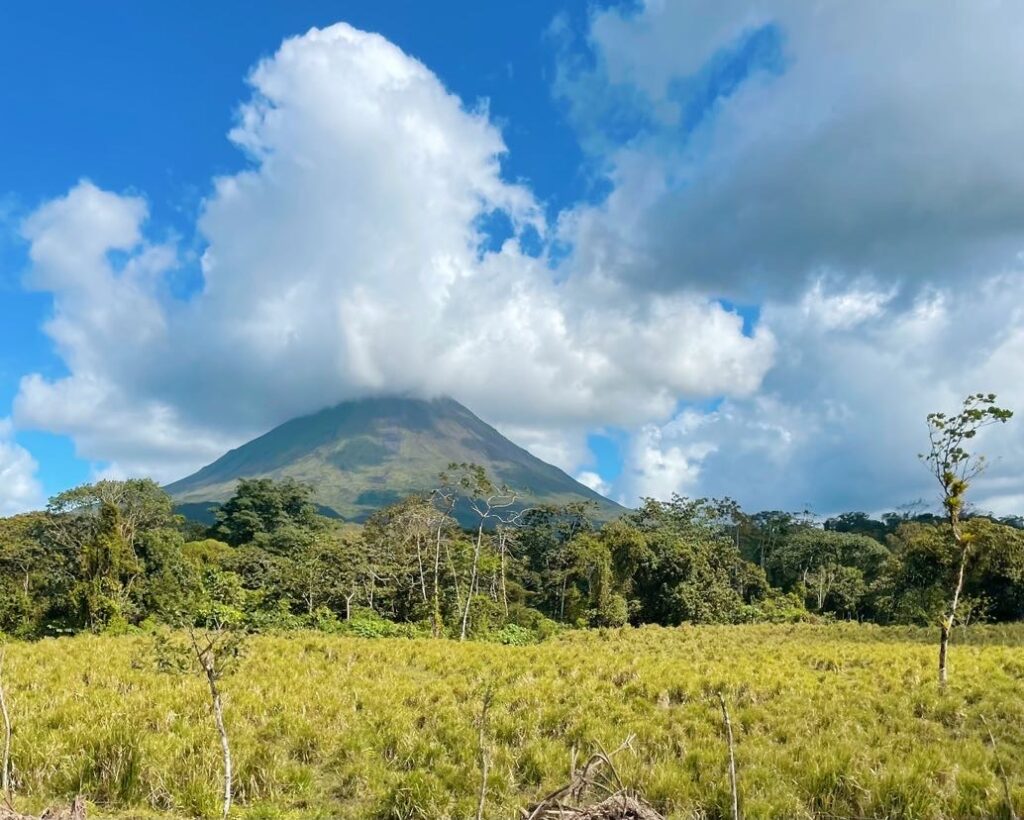
After Monteverde, the other most popular destination in the north is La Fortuna. It’s a good place for solo female travel in Costa Rica because there are plenty of hostels (as well as other types of accommodation if that’s not for you) and it’s easy to organise activities.
The only slightly pesky thing about La Fortuna is how much easier it is to get around with a car. I didn’t hire one as a solo traveller so I had to DIY it by taking the local bus (that only went once a day) to hike near the volcanos. Afterwards, I tried to walk 5 minutes to the hot springs but it was so dangerous on the road without a pavement, I had to call Uber!
Then, from the hot springs back to La Fortuna, there was no signal to call an Uber so I started to wonder how I’d ever get home… Luckily, I bumped into someone at the hostel who had a car! Overall, it’s tricky for travellers (solo and otherwise) sin car.
Best things to do in La Fortuna:
- Hike near the volcanos – originally I planned to visit the popular Arenal Volcano National Park then changed to Mirador el Silencio Nat Park at the last minute as I learnt it’s closer and cheaper ($10 entry). I didn’t see much wildlife here and sadly the views of the volcano were blocked by clouds that day but it’s still a lovely hike through peaceful forest
- Find other volcano viewpoints around the lake, easiest if you have your own vehicle
- Soak in hot springs – there are so many, some offering pricey day packages up to $80, however I visited the free La Choyin ones close to the national parks mentioned above
- Visit Fortuna Waterfall – some would say $20 to visit a waterfall is a lot and they would be right! Provided swimming isn’t prohibited due to bad weather, it could be worth it, plus apparently proceeds are reinvested into preserving nature
- Day trip to Rio Celeste – this is another popular waterfall known for its bright blue waters
- Adrenaline activities – try repelling down waterfalls, white water rafting, zip-lining, horseback riding… Name it and you can do it here! Use GetYourGuide to browse and book activities
- Mistico Hanging Bridges Park – what it says on the tin! Cross 16 hanging bridges offering striking views over the forest
- El Salto rope swing – another free activity within walking distance from the town. I didn’t go because it was pouring with rain and the river was too high, but I hear good things.
Where to stay in La Fortuna:
- Budget: Pink Hostel – with the best reviews on Hostelworld for La Fortuna, this is a quality, family-run hostel. There are private rooms and dorm beds with single beds; ideal if you don’t want to risk getting the top bunk!
- Budget: Argdivan Hostel – a social base with a bar, roof terrace, dorms, privates and apartments in the centre of town. Bicycle rental, activity booking and board games are some of the perks of staying
- Mid-range: $80 for a private apartment and pool access is the treat you deserve!
Cahuita (Caribbean coast)
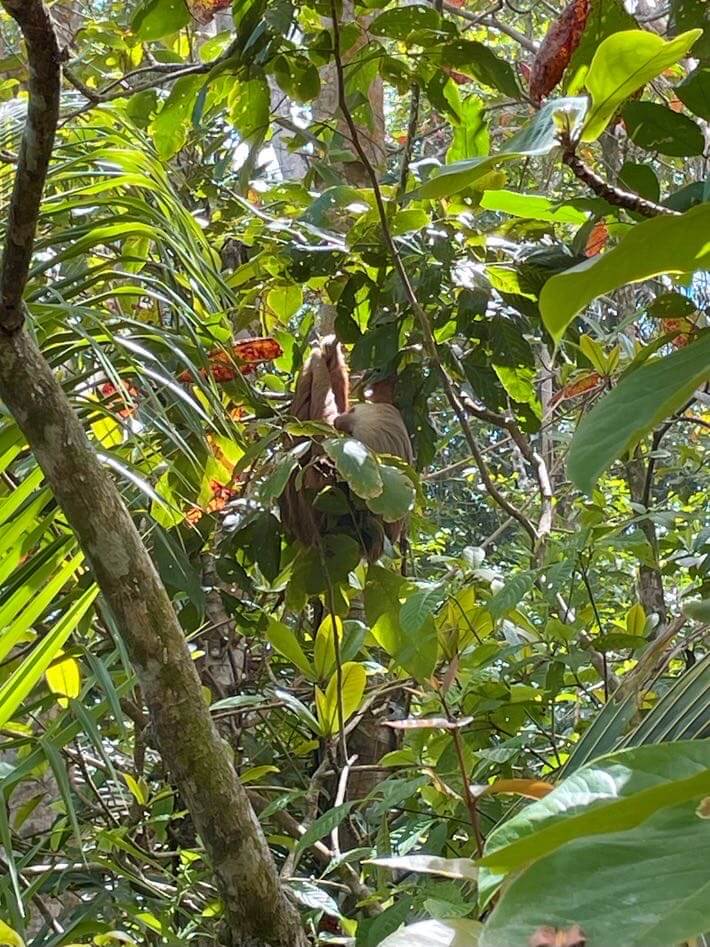
I enjoyed visiting this chilled town on the Caribbean coast of Costa Rica during my solo travels. There isn’t loads to do but it’s somewhere you can escape the hustle and bustle of busier tourist towns.
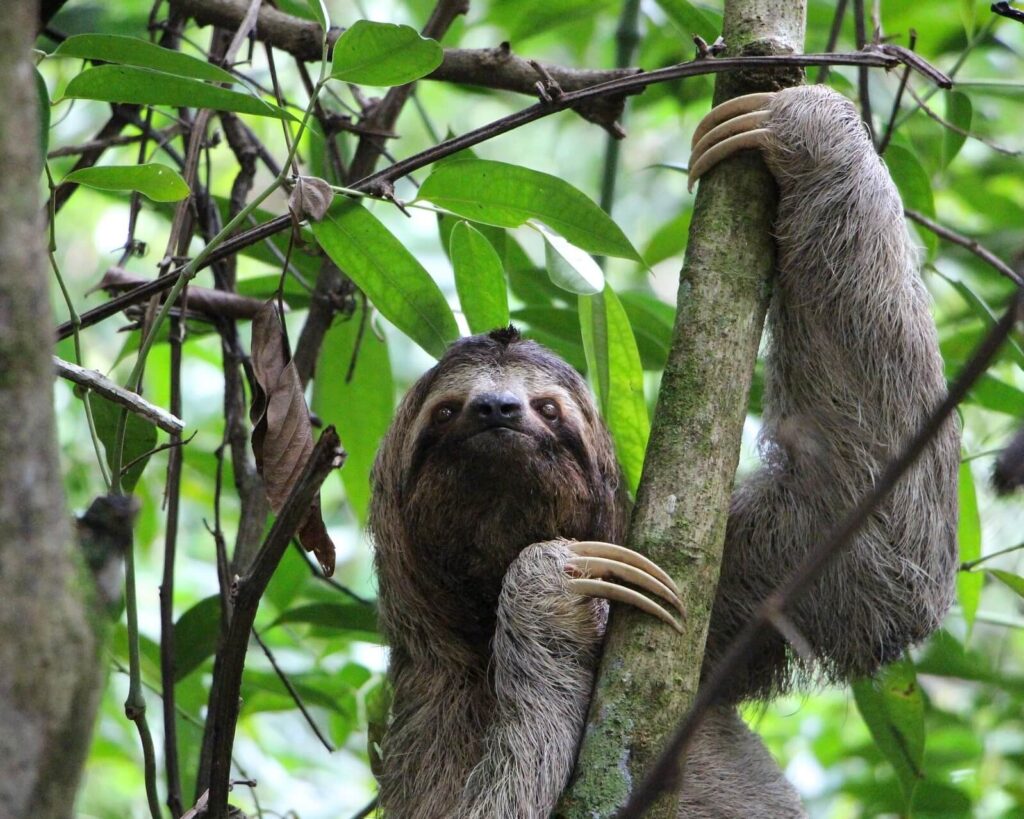
A morning walking in Cahuita National Park is a breath of fresh air: there’s no entry fee (just an optional donation) and plenty of animals to be seen including sloths, monkeys, racoons and toucans. The capuchin monkeys – seen on the 5 mill bank note – were particularly cute.
Go at opening time (8am) to beat the crowds!
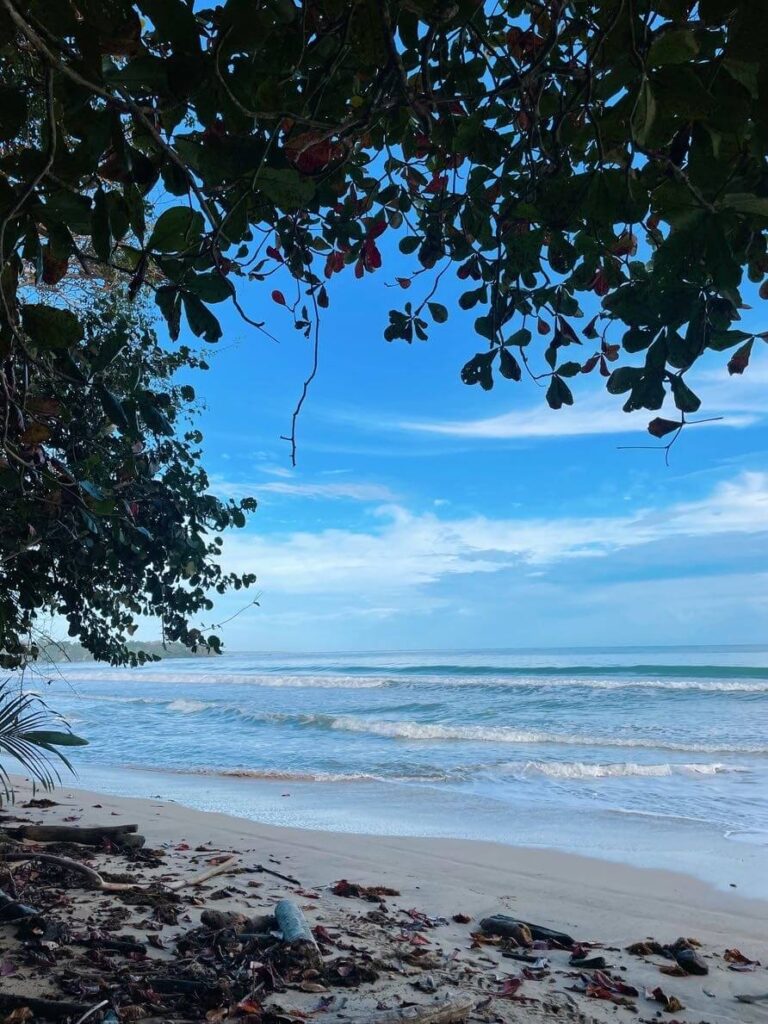
I stayed at Hostel Hakuna Matata near the entry to the park. It was nothing fancy but did the job from $12 a night with a kitchen, swimming pool and some cute hostel cats!
Note – if you’re short of time, it’s also easy to visit Cahuita National Park from Puerto Viejo.
Puerto Viejo (Caribbean coast)
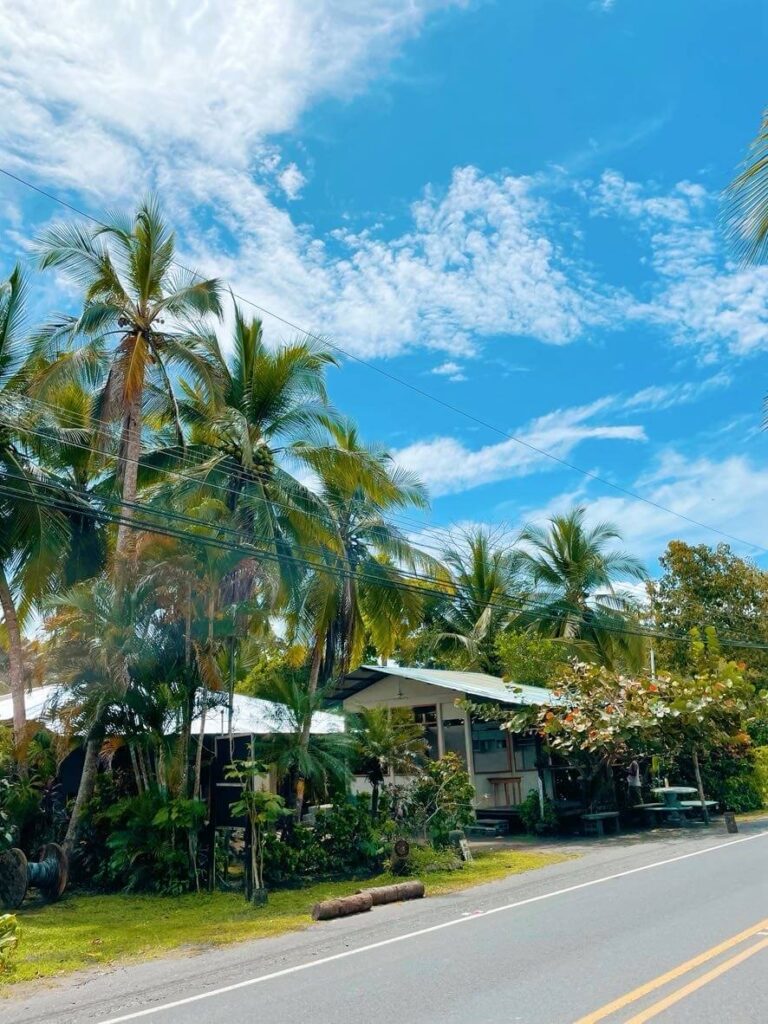
The expensive and touristy town of Puerto Viejo wasn’t my favourite stop during my solo Costa Rica trip, but the nature around it was a true highlight. The best thing I did was hire a bicycle from my hostel (surprisingly affordable at $10 for two days) and explore the coastline.
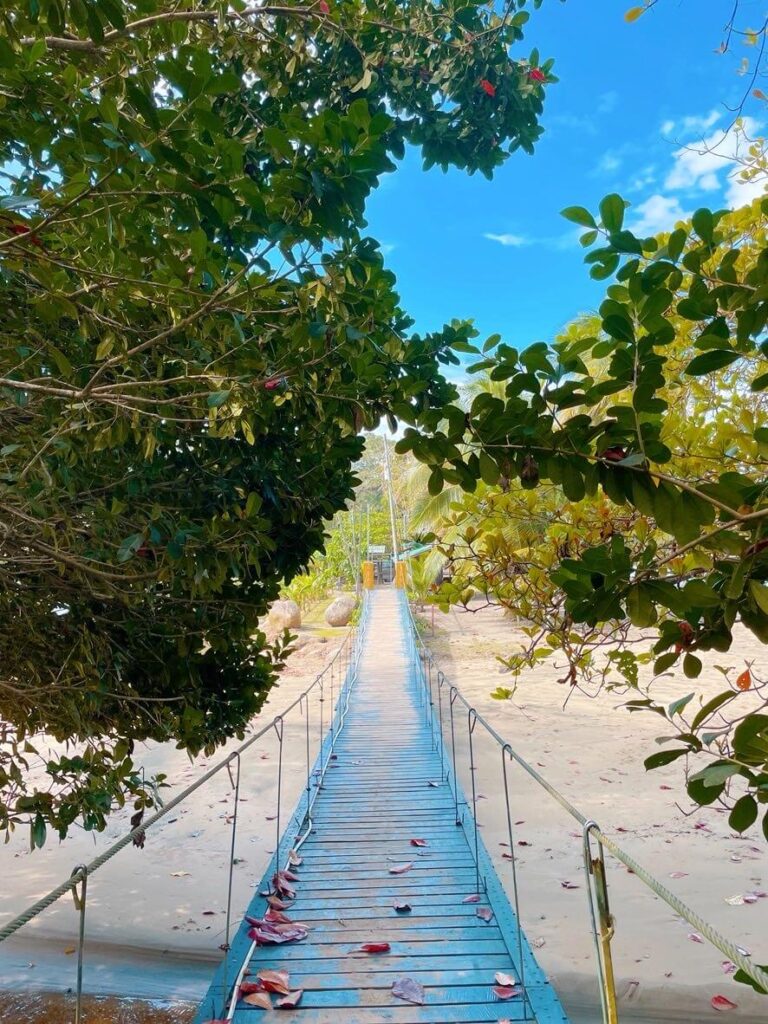
There are plenty of beaches to visit in this region but the highlight of my coastline cycles was visiting Gandoca-Manzanillo Wildlife Refugee. Like Cahuita, it’s also donation-based. I didn’t see as many animals here but the nature is beautiful with coastal views, crashing waves and thick forest to meander through.
Wear shoes you don’t mind getting dirty – it was VERY muddy!
It’s around a 13km bike ride from the town, along an easy flat road without too many cars. You’ll pass cafes and restaurants: I stopped at Indigo Cafe and Tambie’s Bro Panaderia on different occasions. Gypsea Cafe near Chiquita Beach also looks good, plus there are no-frills restaurants like Soda Titeres.
Tortuguero (Caribbean coast)
This remote region accessed only by boat or plane is somewhere I skipped as it was far out of my way and not turtle nesting season. However, if you have the time, I hear great things about the winding waterways of Tortuguero home to otters, crocodiles, toucans and more.
Things to do in Tortugero:
- Take a guided turtle walk from June to October (the peak being July-September) and visit the Sea Turtle Conservancy Visitor’s Centre to learn about the conservation of Green and Hawksbill turtles who call the beaches home
- Take a guided or self-guided canoe trip to see wildlife
- Hike extinct volcano, Cerro Tortuguero (just 1km return)
- Enjoy the beaches
- See sloths and more on a guided night walk.
Where to stay in Tortuguero:
- Budget: Aracari Garden Hostel – with a big garden and access to the unique nature of the region, this is easily the best rated low cost accommodation in Tortuguero. Dorms from $12 and privates from $25.
- Mid-range: Casa Marbella’s double rooms for $40 are the best value in town.
Manuel Antonio National Park
The smallest reserve in Costa Rica is one of the most beautiful, teeming with sloth, monkeys and more. Better yet, you have the beach and the rich forest both in the same place. The nearest town is Quepos where you can find a range of accommodation options and transport connections to the park.
Tamarindo
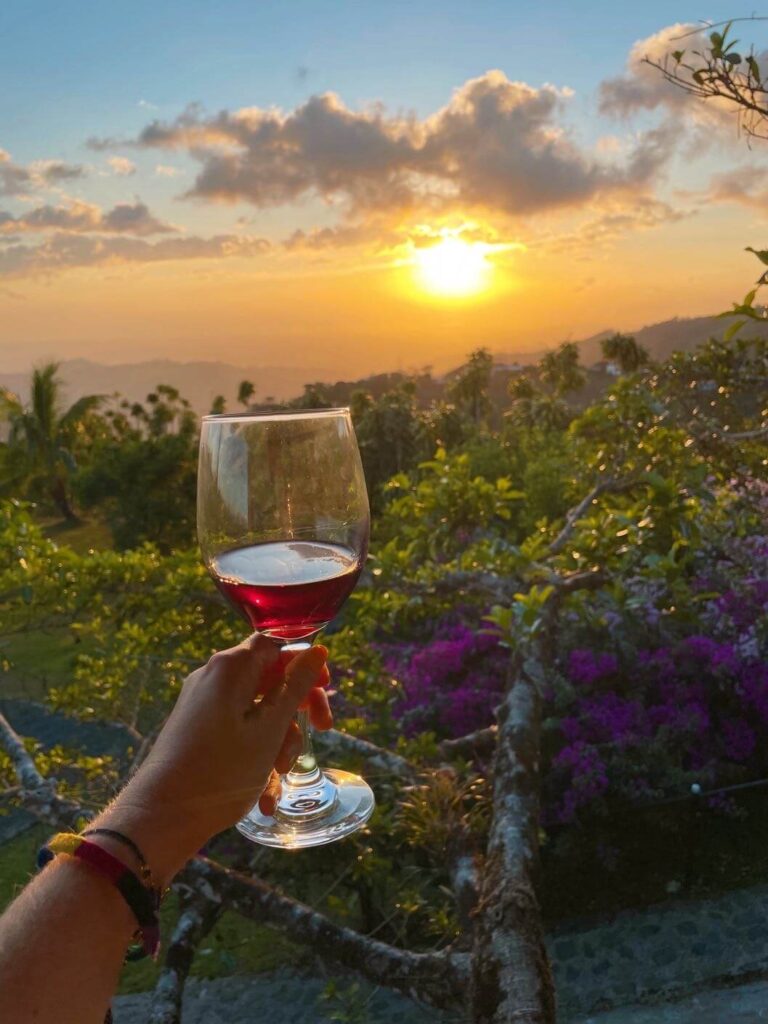
Surfers need look no further than Costa Rica’s Pacific coast which is world-renowned for its impressive swell. Although it’s no longer the hippie town it once was (in fact, it’s one of the most expensive places in the country), it’s still a favourite for many with great restaurants and nightlife once the impressive sunset is over.
Uvita
Known for its striking coastline with its distinct ‘whale tale’ formation, this is one of the most popular places to visit on the south Pacific coast and a gateway to head further south still to the Osa Peninsula, highlights of which include Drake Bay and Corcovado National Park.
Costa Rica solo itinerary
Here’s my exact itinerary including central, north and east Costa Rica as I headed down Central America.
1 day in San Jose: some travellers will skip the capital and I can see why. Truly, it’s not an essential if you’re short of time. If – like me – you’re not in a rush, stay in the Barrio Escalante neighbourhood (Chillout Hostel is good), enjoy the nice cafes & restaurants, and take a free walking tour of the city centre.
2-3 days in La Fortuna (north): spend a couple of days visiting the waterfalls, national parks and hot springs. Take a day trip to Rio Celeste waterfall if the weather is good (apparently the stunning blue waters appear muddy when it’s been raining).
2-3 days in Monteverde (north): a couple of days is enough in Monteverde. I spent one going zip-lining and another doing a daytime nature walk in the Cloud Forest followed by a guided night walk.
1 day in Cahuita (east coast): get up early and walk in Cahuita National Park before the crowds arrive.
2 days in Puerto Viejo (east coast): hire a bicycle, preferably for a couple of days, and explore the national parks and beaches of the Caribbean coastline.
Want to visit the Pacific Coast too? Add the following destinations…
Tamarindo: two days or longer for surf lessons or a surf camp.
Uvita: snorkel, scuba dive, hike and explore the whale tale formation at low tide in this relaxed escape from busier beach towns like Tamarindo.
Manuel Antonio: a day is enough to explore the wonderful national park but you may want to spend up to 3 days in Manuel Antonio to enjoy the area’s beaches.
Cost of travel in Costa Rica for 1 person
I’ll put this simply: Costa Rica IS expensive but it doesn’t have to be.
During my few weeks in Costa Rica, I spent the very reasonable amount of $56 a day (I use the TravelSpend app to record my expenses; it’s so helpful). This was definitely on a backpackers budget as I was travelling as part of a big, nine-month trip.
I stayed in hostels, travelled by local bus and cooked around half my meals at my accommodation. The other half were at budget soda restaurants. Still, I did activities from zip-lining to guided nature walks so I didn’t feel I missed out.
However, the sky’s the limit when it comes to Costa Rica spending. For a mid-range budget, I recommend $80 a day.
As a solo traveller in Costa Rica, the bulk of your expenses will be private rooms if you’re not a hostel person. So if you can hack hostel life, I recommend it. There are some fantastic hostels in Costa Rica with ‘superb’ ratings (over 9 stars) from $7 a night.
Now in my 30s, I opt for smaller dorms (4 or 6 beds) with privacy curtains and individual chargers and lamps. Many hostels offer female-only dorms, too.
More budget tips for travelling Costa Rica alone:
- Book accommodation with kitchens and cook rather than eating out
- When eating out, visit ‘sodas’ – these local restaurants serve reasonable ‘casada’ meals usually including a choice of meat (inc. fish), veg, beans, rice and salad for less than $10
- Take local buses rather than shuttles (on average 75% cheaper)
- Visit off-season – the months either side of the summer like May and September have decent weather without the bulk of the crowds. The Christmas, Easter and summer holidays are the most expensive, busy times.
- Bring a reusable water bottle – you can drink the tap water so there’s no excuse to buy plastic bottles
- Opt for self-guided hikes than tours – I always felt safe hiking solo in Costa Rica so didn’t feel I needed a guide
- Do a volunteer placement with Workaway or Worldpackers, helping out a few hours a day for food and accommodation. I can offer you discount codes for both Workaway and Worldpackers.
Useful tips for Costa Rica travel:
– The currency is the Costa Rican Colón, at the time of writing there are 500 colones to 1 USD
– To charge your devices, use plug types A and B (the same from Canada all the way down to Bolivia)
Visas: many countries including the UK and the US get 90 days visa-free on arrival in Costa Rica.
Staying connected – SIM card options
Having a SIM card is super handy when travelling solo in Costa Rica (and everywhere, to be honest), especially for safety reasons. Even though I usually felt safe in Costa Rica, I was VERY relieved to quickly call an Uber when arriving in some of the sketchy San Jose bus stations.
I generally find that getting a local SIM is cheaper than an e-SIM, but you may prefer getting connected before you arrive.
Best e-SIM – Airalo are a reliable option around the world and they have a variety of packages for Costa Rica.
Best physical SIMs – I opted for a Claro SIM card in almost every country in Central and South America. I paid around $20 for a month’s data in Costa Rica.
Best time to visit Costa Rica
The tourism to Costa Rica is more based around popular holiday dates than the weather: the Christmas, Easter and summer holidays are busiest.
Rainy season runs from late September to January but can be a good time to visit if you’re not on a tight schedule (and can be flexible about spending a few rainy afternoons inside) as prices are lower.
An ideal time to visit Costa Rica (when I went) is in the weeks or months after Christmas because the crowds have thinned out and the rains have stopped.
However, weather is getting increasingly unpredictable due to climate change and I had a lot of rain even though it was meant to be the dry season. Be prepared for any eventuality, especially as Costa Rica is full of microclimates.
Do you need travel insurance?
Yes, I never have and never will travel without insurance. It could save your life!
I recommend True Traveller which I use myself. I pay around £30 (€40) a month when getting a year’s plan. As well as pre-existing health conditions, they’ll cover you if you’re already travelling and/or don’t yet have your flight home booked. The claim process is easy; I’ve done it twice and received the money within days. Click to get a quote.
Note – they include activities you’ll likely want to do in Costa Rica such as zip-lining for no extra cost under their standard ‘traveller’ pack. Check ts&cs for all potential activities.
True Traveller is just for European residents (including the UK) so, for other nationalities, I recommend Hey Mundo and for long-term digital nomad travellers, I suggest Safety Wing.
Final thoughts about solo travel in Costa Rica
Costa Rica is a fantastic first-time solo travel destination: it’s safe, there’s solid tourist infrastructure including quality hostels and tours, many people speak English, and there’s abundant things to do and see.
However, as an advanced solo travel destination… I’m not 100% convinced. Many of the waterfalls and beaches I felt were comparable to those I saw in neighbouring countries (see my Central America archives) without the hefty entry fees and food & drink prices.
I’m certainly not saying don’t go to Costa Rica. I had a fantastic time especially spotting animals such as sloths and the rare quetzal bird. But I wouldn’t put it above all other countries in the region; in fact, I probably preferred them all.
As an experienced and adventurous traveller (who is pretty budget-savvy), maybe it just wasn’t my dream destination. Still, there’s loads to do for nature, wildlife and surf fans. It’s better developed with more opportunities for treats and luxury than, say El Salvador or Nicaragua.
So, if you’re on the fence and it sounds like your kind of place, I say go for it!
Thanks for reading!
Read more Central America blogs:
- Solo travel in Guatemala
- Is solo travel in Belize safe?
- Tips for solo travel in Nicaragua
- The perfect Nicaragua itinerary
- Travelling solo in El Salvador (2025)
- El Salvador travel itinerary