
Table of Contents
This post may contain affiliate links to things like tours, hotels, Amazon associates and products. These help me earn a small commission at no additional charge to you.
If you’re planning your El Salvador itinerary, you have come to the right place because I recently spent a memorable couple of weeks in this friendly, beautiful country.
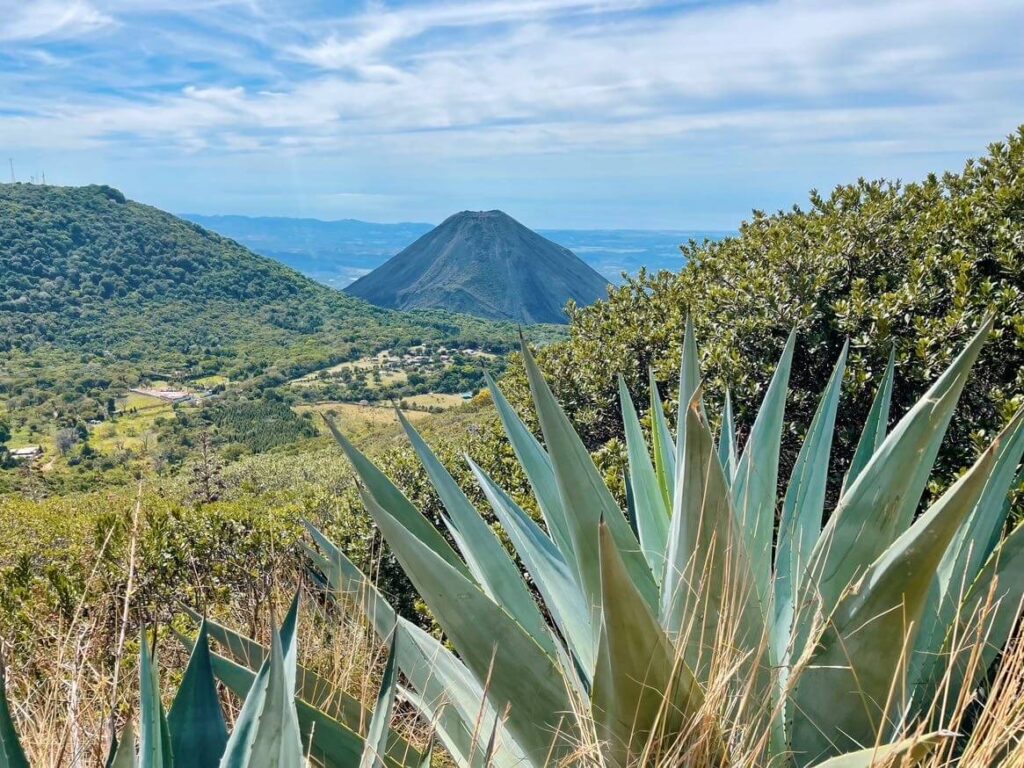
From beaches drenched in orange sunsets to idyllic towns on the Ruta de las Flores (Flowers Route) and bubbling volcano craters, this diverse country is recovering from its dark past and opening its doors to a new future of tourism.
Now is a fantastic time to visit, armed with all my travel tips and advice, of course!
Coming from Guatemala?
The main airport is El Salvador International Airport in the capital city of San Salvador. It’s where most travellers arriving by air will land. It’s easy to take Uber downtown, or to the bus terminal to Santa Ana.
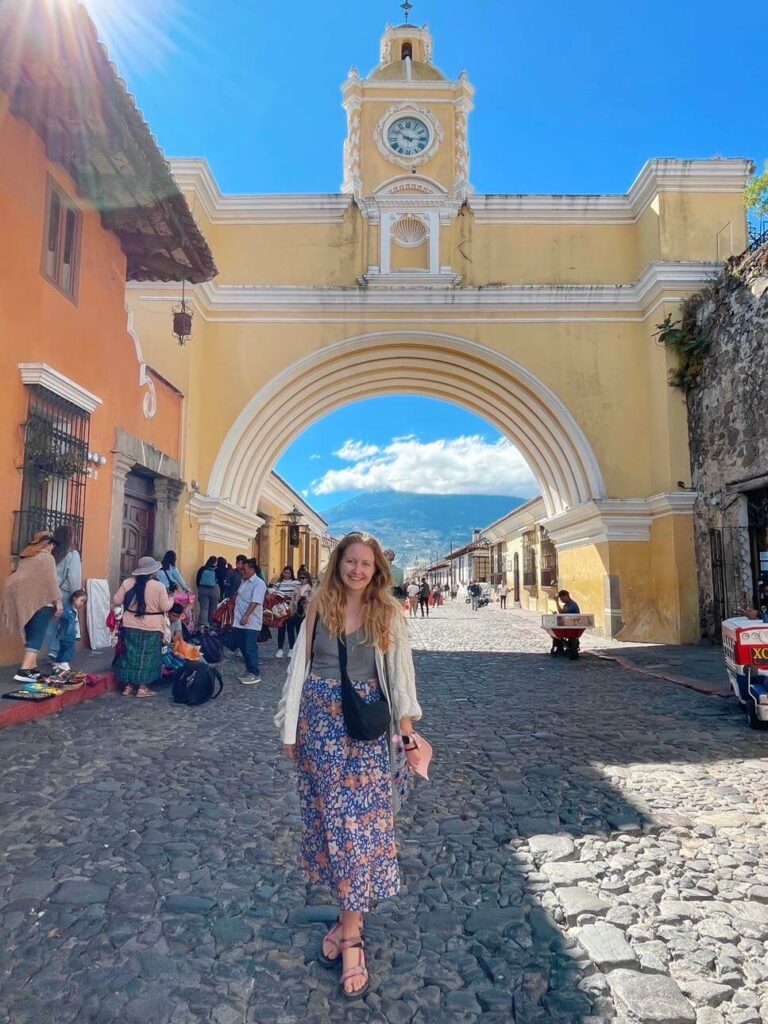
Coming from Guatemala? For around $35, you can get a shared shuttle service from Antigua (my favourite city in Central America – see my Antigua blogs) to San Salvador, Santa Ana or El Tunco.
If you’re travelling from north to south through Central America, I suggest arriving in Santa Ana then visiting the Flowers Route and coast. You can travel from here or from San Salvador to Honduras/Nicaragua.
Note – I don’t recommend using Gekko Travels for shuttles as they are uncontactable if you need to change your ticket, which I did. I found them through Google but, after a bad experience, used local agencies for future journeys.
Coming to or from Nicaragua? Although I planned to visit Honduras next, I found out I wasn’t allowed in due to new visa requirements for Brits. So instead, I headed to Nicaragua which meant getting a bus, a boat and another bus!
Luckily, shuttle services will collect you at the door of your accommodation in El Salvador (from most tourist destinations; I went from El Tunco) and drop you at your accommodation in Leon. This was a long travel day involving a VERY early start and faff at the border (well, beach) and cost around $90.
What to expect from a trip to El Salvador
Although you probably have some idea what to expect if you’re already planning your itinerary, I want to express how much I enjoyed my trip! I was backpacking through Central America so El Salvador was a natural inclusion, and I didn’t have huge expectations.
It was great! The Salvadoran locals are incredibly friendly; I’d say the nicest in Latin America tied with warm Colombians. Now that the dark days of gang rule are over, the locals are delighted to see tourists and the country feels safe and welcoming.
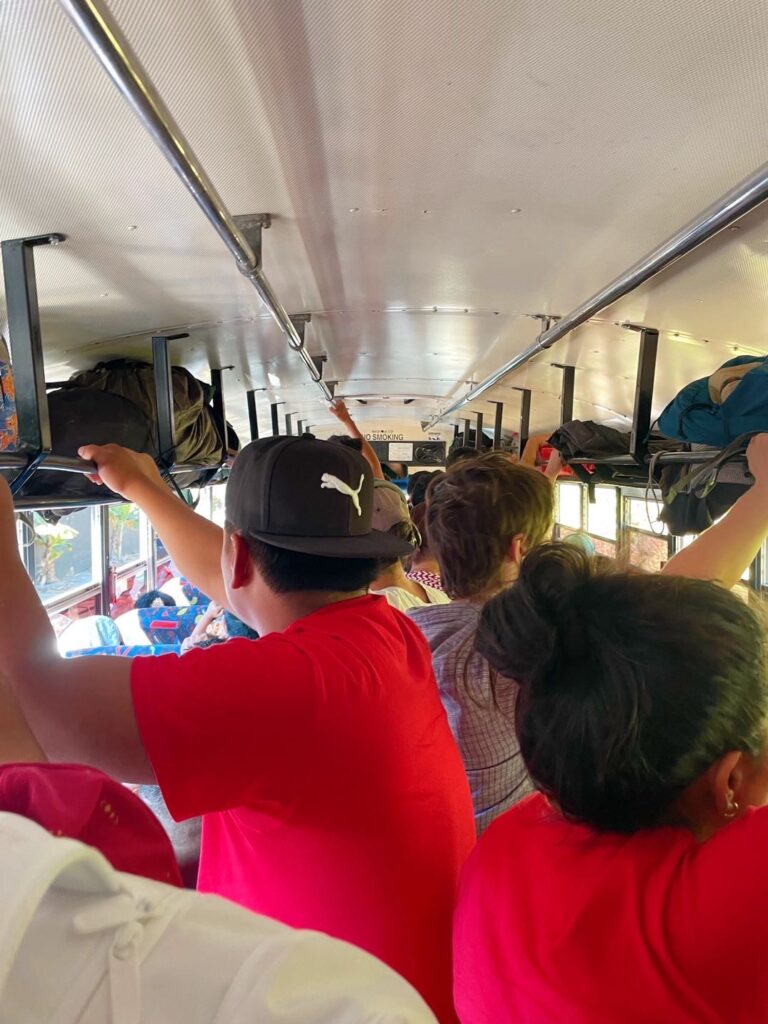
Saying that, tourist infrastructure is still developing compared to well-trodden Guatemala and Nicaragua so sometimes it’s a bumpy ride on chicken buses rather than an air-conditioned shuttle.
However, things are changing fast so it could be a different world in a year or two!
Travelling alone? I was too; see my solo female travel guide to El Salvador
How long to spend in El Salvador
As the smallest country in Central America, you don’t need months to get the best out of this friendly and fascinating nation.
I recently spent 10 days in El Salvador which I think was a good amount of time. I wasn’t in a rush; you could easily go a bit faster than I did, especially if you hire a car rather than relying on bus schedules.
You could stay longer by doing a surf school on the coast. I met people doing this for a month, and budget backpackers working at schools in exchange for accommodation and lessons.
1 week itinerary:
- Santa Ana – 2 days
- Flower Route – 2-3 days
- El Tunco & coast – 2-3 days.
10 day itinerary:
- San Salvador – 1 day
- Santa Ana – 3 days (inc. day trip to Tazumal, Joya de Cerén or Lake Coatepeque)
- Flowers Route – 4 days
- El Tunco & the coast – 2 days.
2-week itinerary:
- San Salvador – 1 day
- Santa Ana – 5 days (inc. day trips to Tazumal, Joya de Cerén or Lake Coatepeque)
- Flowers Route – 3 days
- Lagarza Hostel – 1 day
- El Tunco & the coast – 3 days.
I’ll dig into these places in more detail as we go...
Detailed El Salvador itinerary
Here are my suggestions for how to structure your trip, how much time to spend in each place, and the top attractions and eats (the most important bit, in my hungry opinion)…
San Salvador – 1-2 days
Since Central American capitals aren’t usually the greatest (and I didn’t NEED to go for transit since I was travelling overland through Central America rather than flying into El Salvador), I decided against spending much time in San Salvador.
However, I’ve since heard from other travellers that it’s worth a day. Things to do in San Salvador include a free walking tour (always my first stop when learning about a new country) and visiting nearby Boqueron National Park.
I heard that the best area to stay in San Salvador is Zona Rosa due to its positive safety reputation and its many restaurants and bars.
Next…
Santa Ana – 2 days
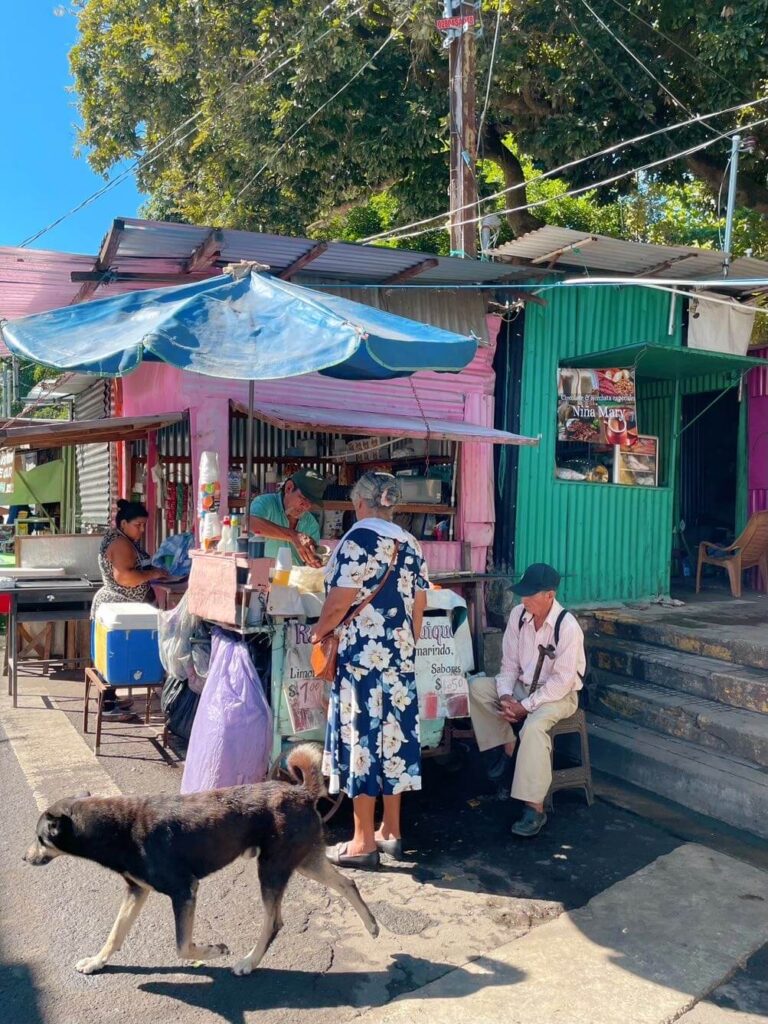
Although not my all-time favourite city in Central America, Santa Ana is a nice enough city with pretty architecture to be found while wandering the backstreets. It’s also a decent base for adventures. I absolutely loved the Santa Ana Volcano hike!
Aside from paying $2 to climb the cathedral tower and look out over the city, there’s not loads to do in Santa Ana, but you can take day trips to Tazumal Mayan Ruins, Joya de Cerén or Lake Coatepeque. Add extra days here for any day trips you take.
Where to stay in Santa Ana:
- Hostels – I liked the Coffee Garden Hostel in a beautiful old property with a sunny courtyard and free daily breakfast (incl. dishes like avocado toast and scrambled eggs). I also heard good things about Casa Coco and Casa Verde hostels.
- Hotels – for a comfy base with friendly locals and free breakfast, book at Casa Vieja Guesthouse for $30. For an upgrade, try Las Puertas Hotel for $40 a night.
- Apartment – Tiny house has great reviews and pool access from $40 a night.
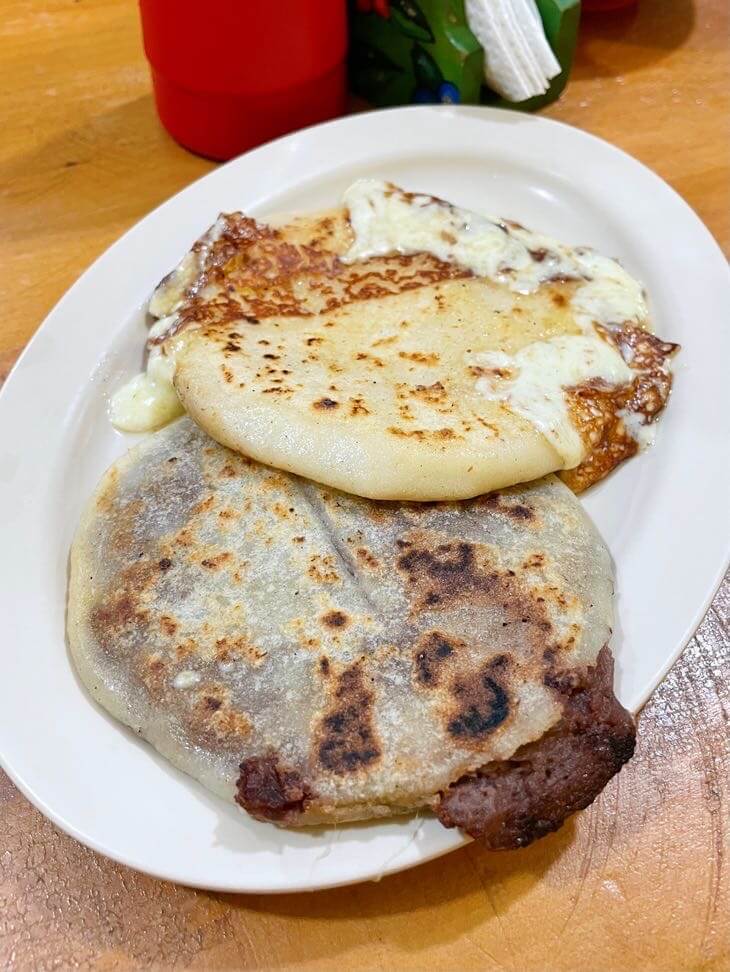
Where to eat in Santa Ana: pupusas at Pupusas El Ceiba and Pupuseria Claudia; pizza, pasta and meat dishes at Simmer Down, and speciality coffee at Beats.
Hiking Santa Ana volcano (day 1 in Santa Ana)
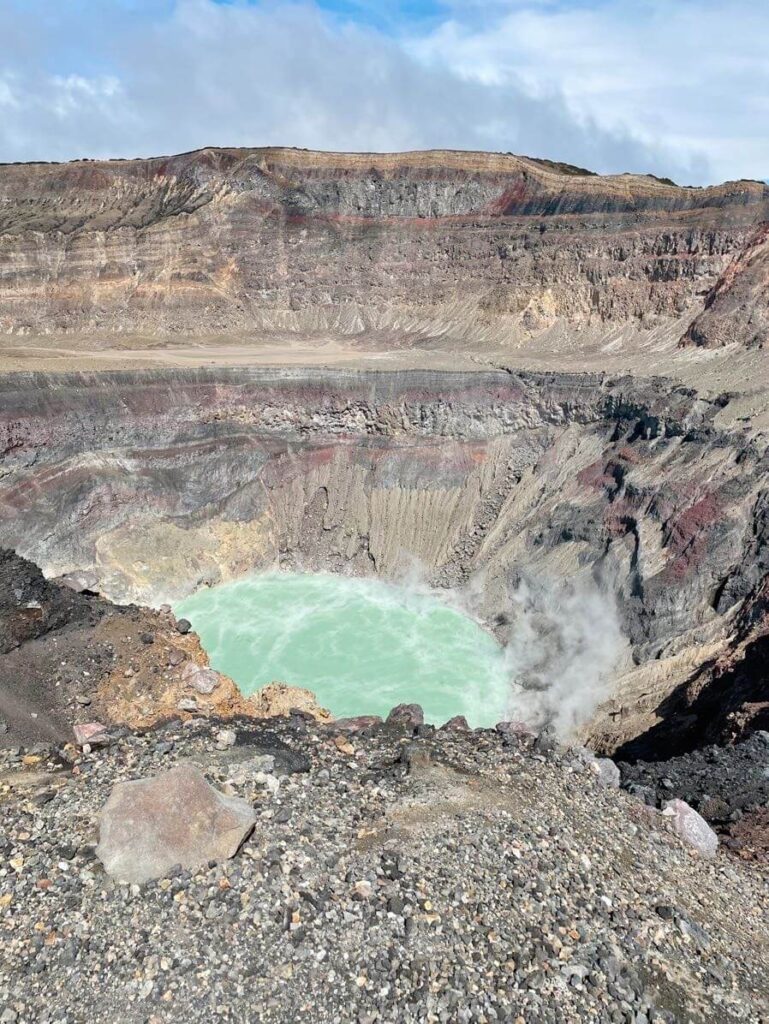
Hiking to this stunning volcano crater should be high on any El Salvador itinerary. The steaming waters appear milky green, contrasted against a brilliant blue sky.
The hike is around 4 miles in length, and the elevation gain is approximately 460 metres (1,500 ft). I would describe it as medium difficulty… Those who have done the Acatanango hike in Guatemala will find it a walk in the park!
Walking poles aren’t necessary but could be useful if you have them, or find somewhere in Santa Ana to rent a pair.
Entry is $3, plus a guide costs $3.50. Although I didn’t think this was necessary, it was mandatory; you have to hike up in a guided group, but at the top we disbanded and went down separately.
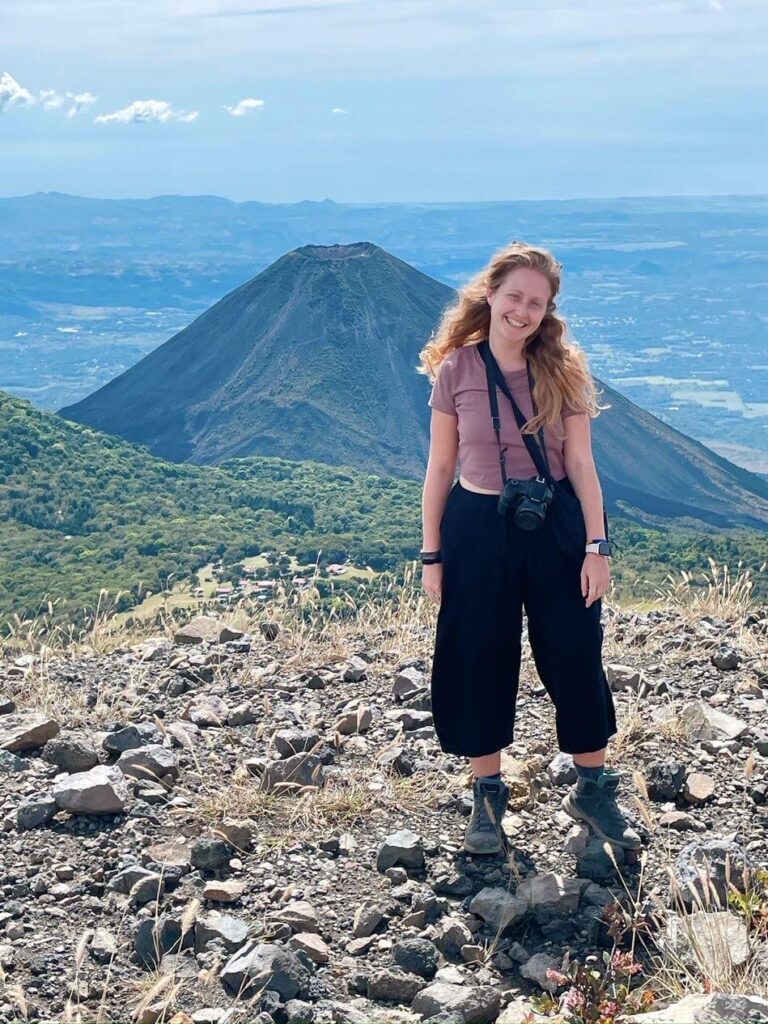
Getting there: The bus departs Santa Ana terminal at 7.30am and returns from the volcano at 1.20pm, costing just 90 cents each way. Don’t be late on the way back because there isn’t another bus.
The ride takes 1.5-2 hours, meaning you return around 3.30pm after an early start and big hike, so I wouldn’t suggest planning loads else for today.
Free walking tour and pupusas (day 2 in Santa Ana)
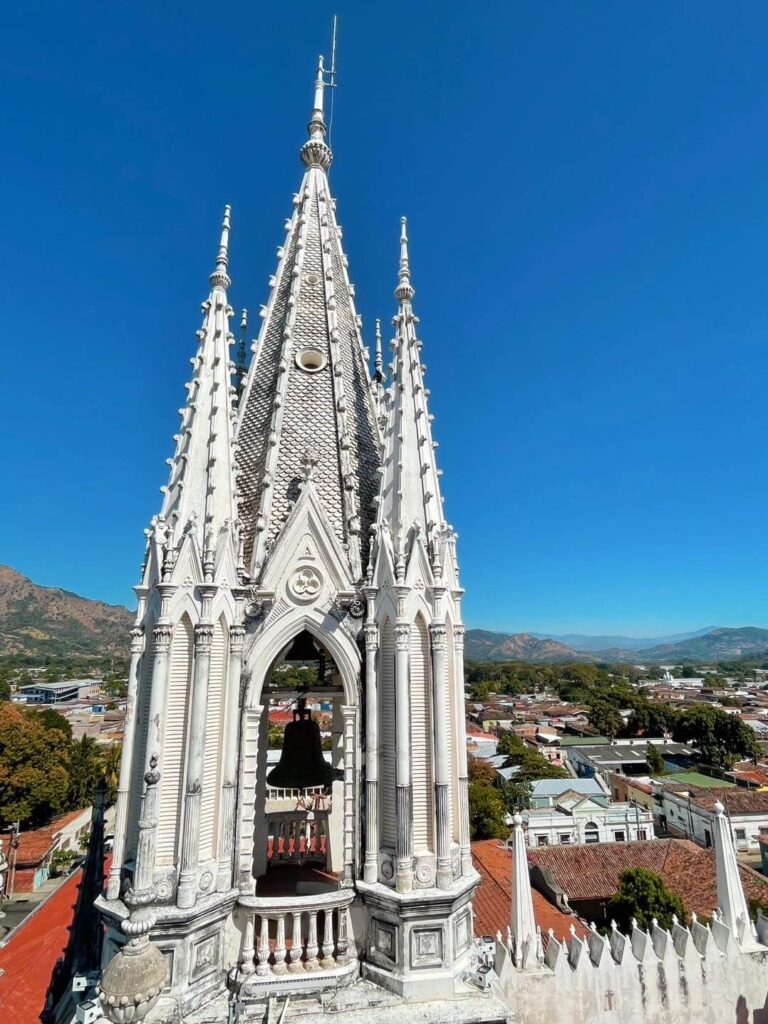
After the volcano hike the day before, I was happy to spend a relaxed day exploring the city. The best thing I did was a free walking tour with a young local named Hector.
Unlike many walking tours I’ve done that focus on facts and figures, this tour highlights Hector’s lived experiences as a teenager under the gang rule that once gripped El Salvador. We were hanging on his every word.
The tour ends at Beats Coffee Shop with the chance to sit together and chat more about the past and hopes for the future of El Salvador. I liked this informal ending that felt more like hanging with friends than a typical tour.
You can check the details on Guruwalk but there’s no need reason to book; just show up at 9am or 3pm in the central square.
Evening pupusa-making class: make your own tasty pupusas either at Casa Coco Hostel ($15) or with a local family for $12. For the latter, follow this Google pin and send a WhatsApp to the owner, Castor. After feasting on our creations, he took me and the other guests to a speakeasy bar.
Add extra days here for day trips to Tazumal Mayan Ruins, Joya de Cerén or Lake Coatepeque
Ruta de las Flores (2 days)
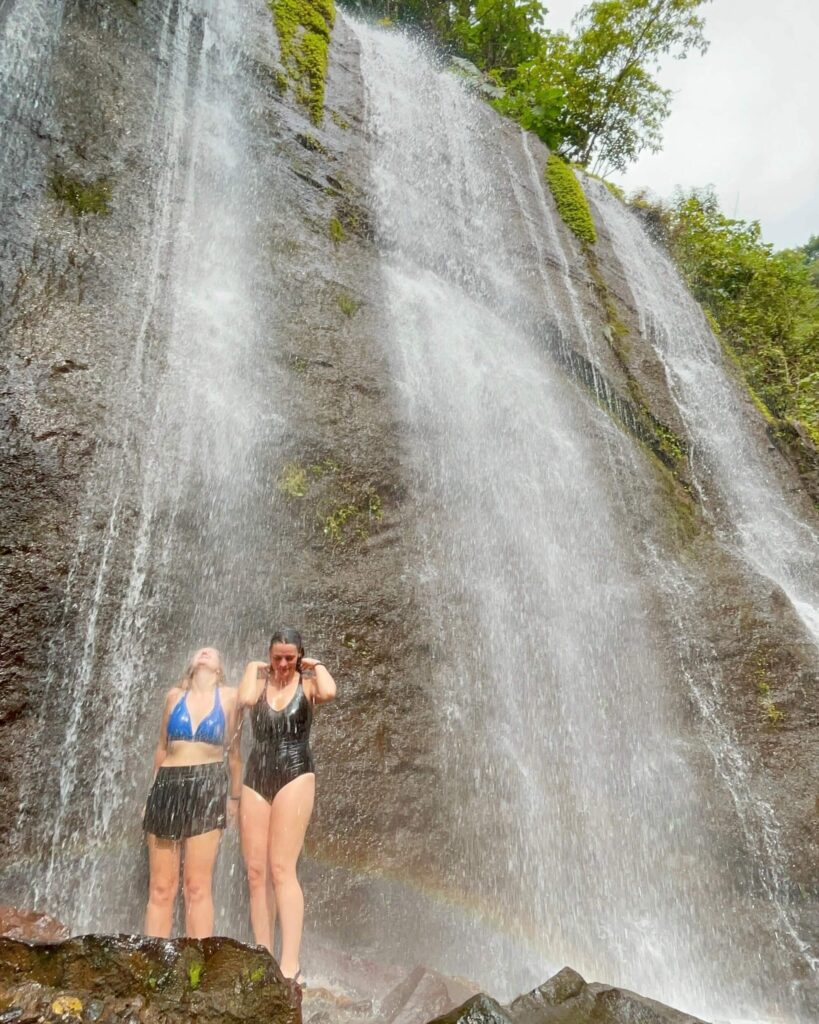
Probably my favourite place from my trip was Ruta del Flores (the Flower Route) so I’d say it’s WELL worth including in your El Salvador itinerary. This region is named after the blossoming flowers visible from November to February.
This lush region benefits from cool temperatures due to the higher elevation, colourful small towns, coffee farms and buzzing food markets. I suggest basing in Juayua (a bus from Santa Ana costs just 90 cents!) since there are plenty of decent hostels and scooter rentals, plus the lively weekend Food Festival.
Other places I recommend checking out include:
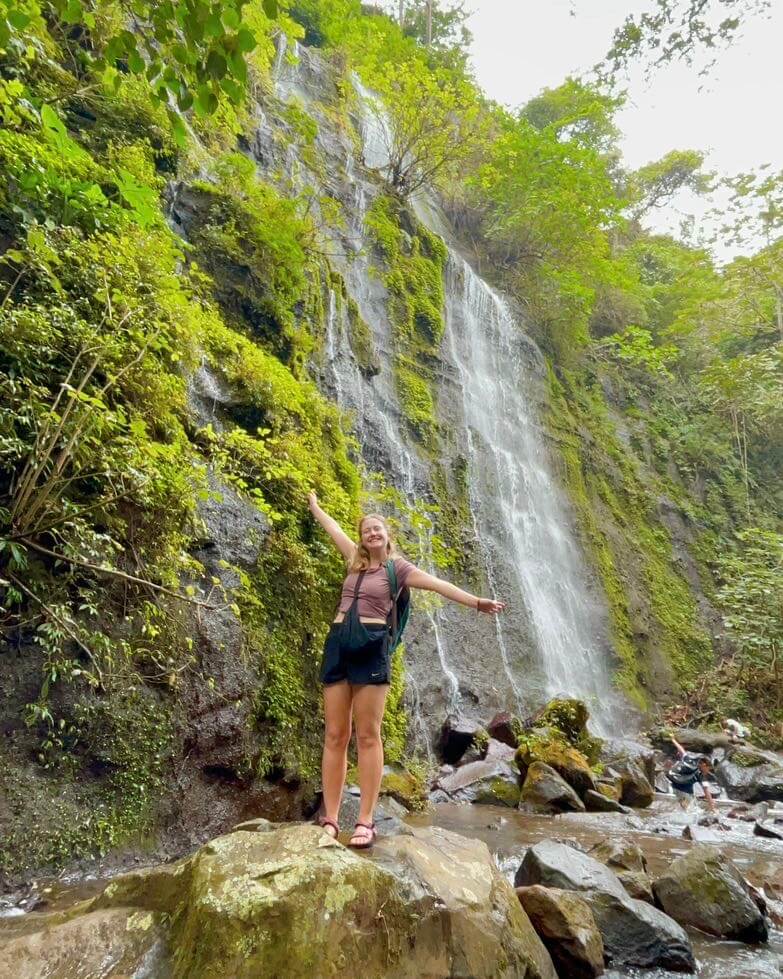
- The 7 Waterfalls hike – best visited during a guided tour from Juayua for just $10. Wear waterproof shoes and be prepared to climb up a waterfall without a harness! Health and safety may not be stringent, but it’s a beautiful region and a lot of fun. WhatsApp Elizabeth to book on +503 61137277.
- El Carmen coffee tour – for $7 we did a full tour of the farm, learning all about the harvesting and brewing processes, finishing with a tasting.
- Ataco town – a pretty town with cafes (I visited Axul for brunch and El Café del Artista for coffee), artisan markets and colourful murals. Avoid the mirador on foot as a dog bit me up there!
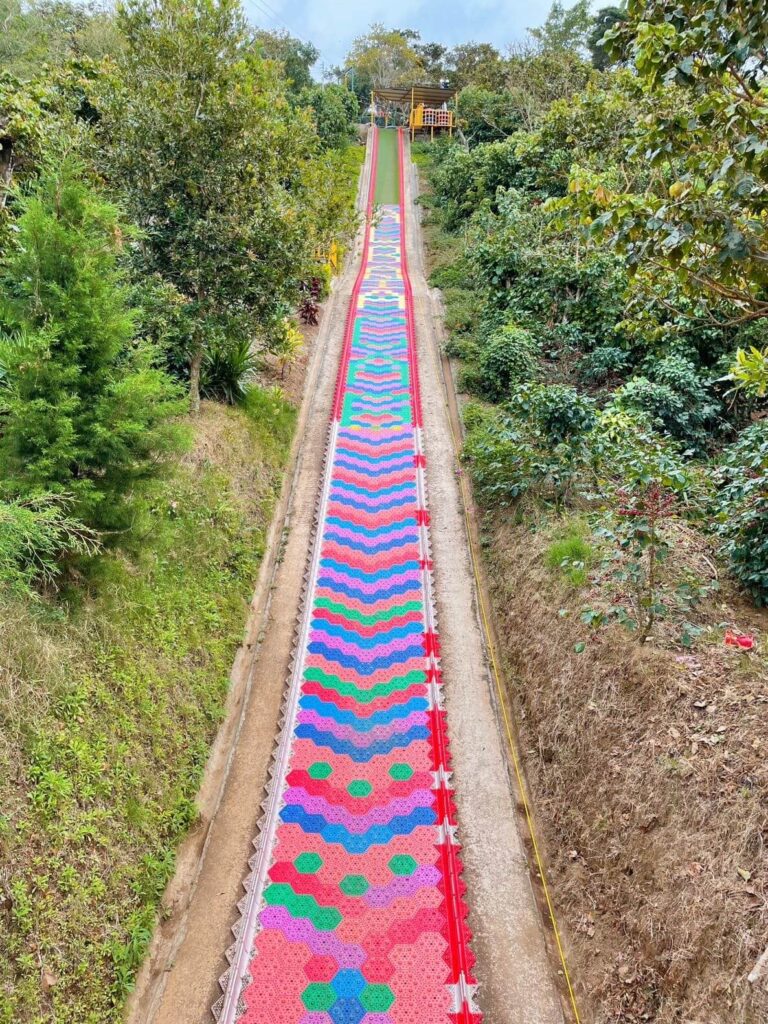
- Albania Cafe (Apaneca town) – in between Juayua and Ataco is this Insta-famous adventure park with a rainbow slide and bicycles on zipwire lines. Adventure types will love it. Entry costs $5 and includes a voucher to spend on rides or food & drink.
- Nahuizalco night market (weekends) – a group of us from the hostel drove over here for an evening and tried local dishes at the bustling, family-friendly market. It’s a great vibe.
- El Salto de Malacatiupan – a thermal waterfall where you can soak in the warm waters of the pools below.
- Alicante or Santa Teresa – these hot springs (in the same direction as the falls mentioned above) are relaxing additions to your El Salvador itinerary.
- Note – the three places above are best visited with a car as there’s limited public transport.
Itinerary for Ruta de las Flores:
- Day 1 – arrive in Juayua and explore the town. I recommend coffee at Bloom and eating at the afternoon Food Festival (weekends only). For the evening, eat at Pupusería Esmeralda
- Day 2 – do the 7 Waterfalls hike. We managed to squeeze in a coffee farm visit in the afternoon at El Carmen Estate
- Day 3 – visit Ataco town and Cafe Albania on the way back to Juayua
- Day 4 – if you have a car, visit the thermal springs and/or El Salto de Malacatiupan thermal waterfall.
Getting to the Ruta de las Flores: take a bus from Terminal Francisco in Santa Ana for just 90 cents (it takes 1.5-2 hours). From the coast, take a bus to Sonsonate city bus terminal (there’s an early bus leaving El Tunco at 6.30am) and change to a bus destined for Juayua/Ataco.
Getting around the Ruta de las Flores: hiring a car or scooter (from Samay Rental in Juayua) will give you more freedom but you can also jump on a bus from this point destined for Apaneca (Cafe Albania) and Ataco. It leaves every 15-30 minutes and costs 50 cents.
Where to stay in Ruta de las Flores:
- Hostel – I liked Que Ondas run by the friendly Oscar with a pizza restaurant downstairs. Just $12 a night with a decent kitchen. Samay Hostel is where to stay and hire a scooter, too.
- Apartment – stay at Catefto Loft from $45 a night incl kitchen, coffee machine, TV & more.
The coast – El Tunco and El Zonte
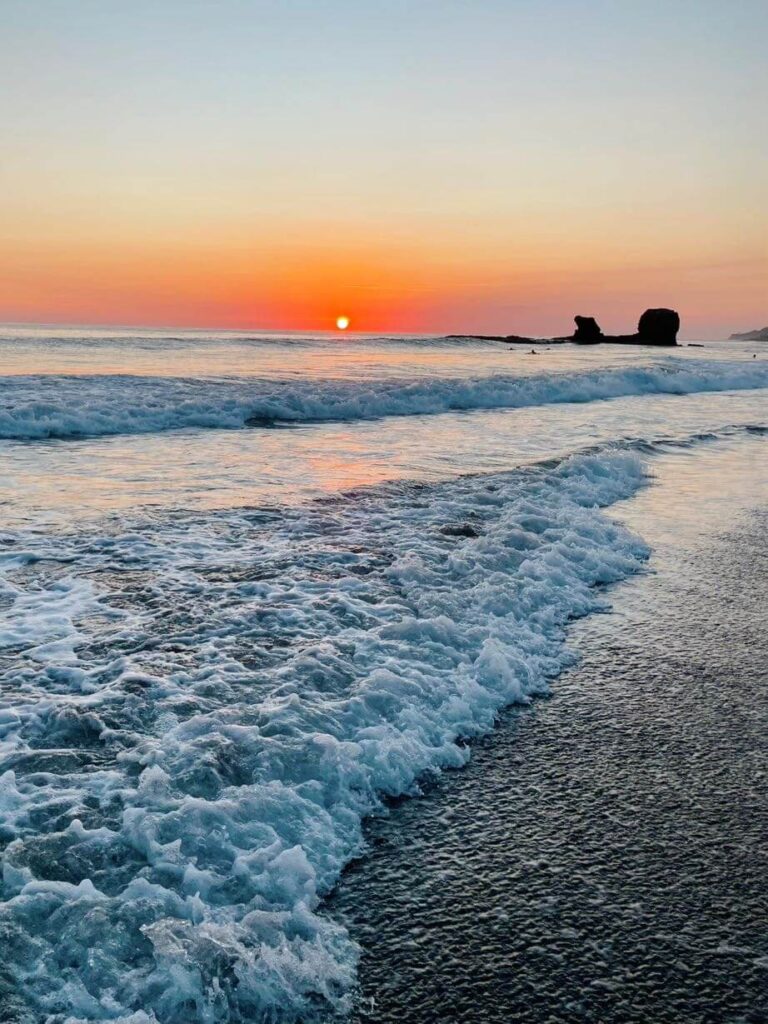
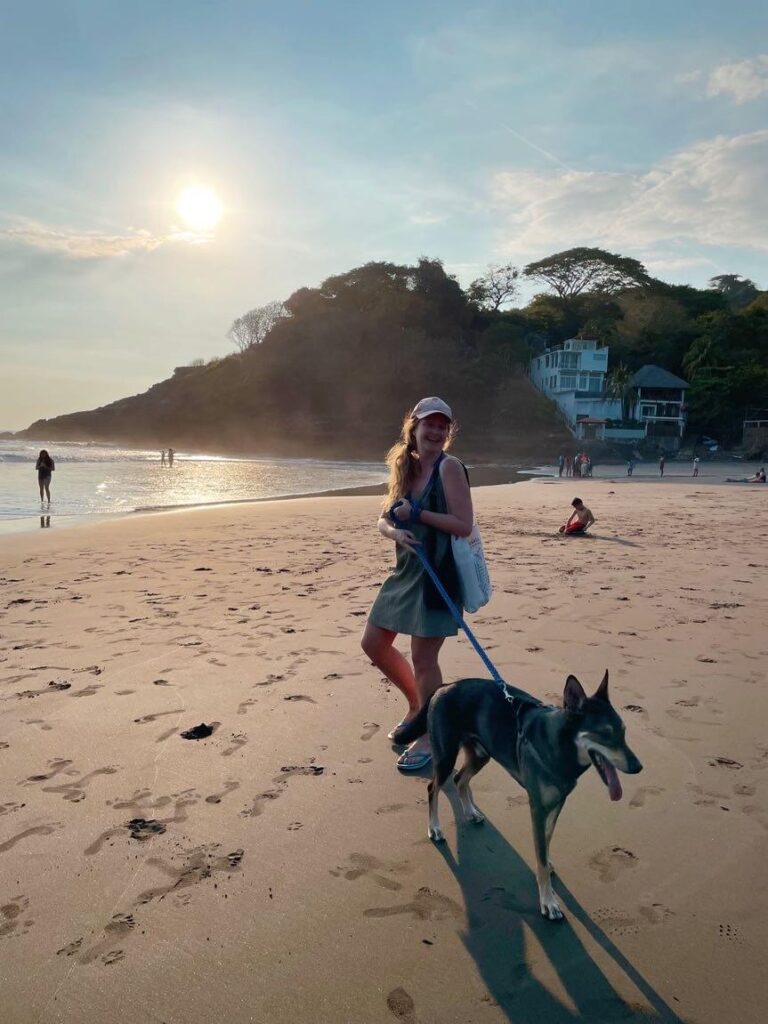
The beautiful coast was the final stop on my El Salvador itinerary. It was a real high with its spectacular sunsets and quality surf. You could stay weeks doing value surf schools or just a few nights relaxing and partying.
El Tunco is the main hub with the most plentiful accommodation options, but I found El Zonte just up the coast to be more charming. Stay in either because the other can be reached by a cheap bus or Uber. I didn’t get around to checking out La Libertad but I hear good things (and there’s a seafood market).
These towns offer beautiful beaches, sunsets, surf schools and a range of restaurants offering everything from cheap local pupusas and Western classics as El Salvador becomes more developed.
Where to stay (hostels): in El Tunco, opt for Duck Dive from $10 / Dos Palmas (with luxury double beds from $20 and pool access). In El Zonte, Casa de Colores is a lovely new hostel with a pool from $15.
Don’t miss Lagarza Hostel, a destination in itself!
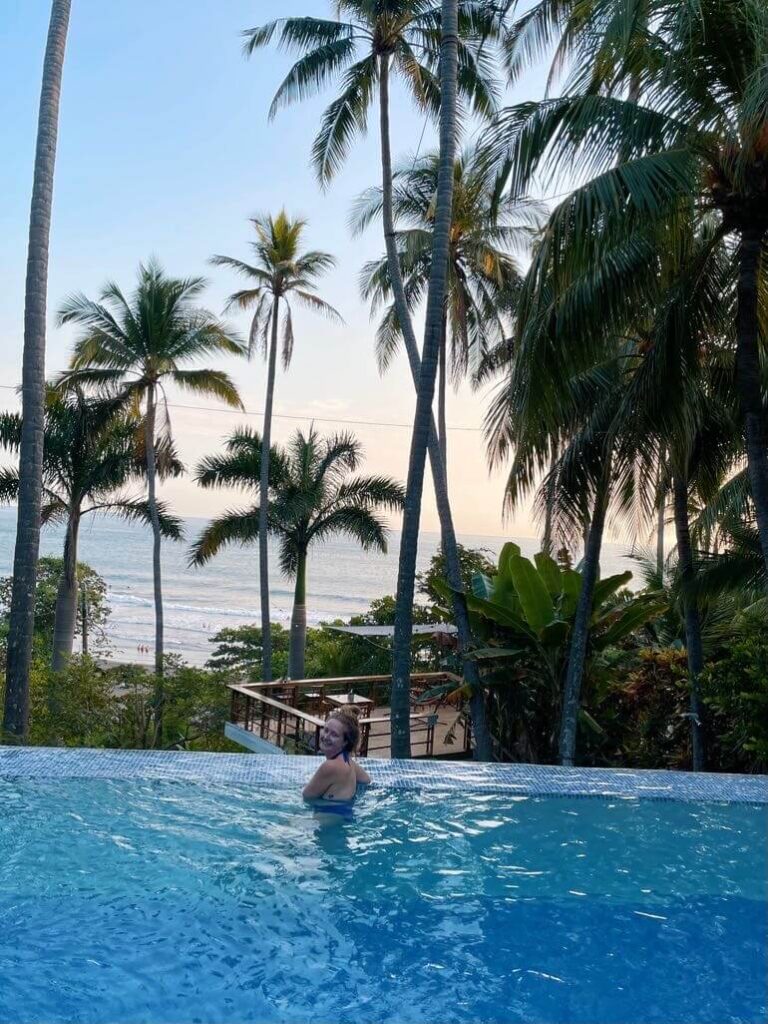
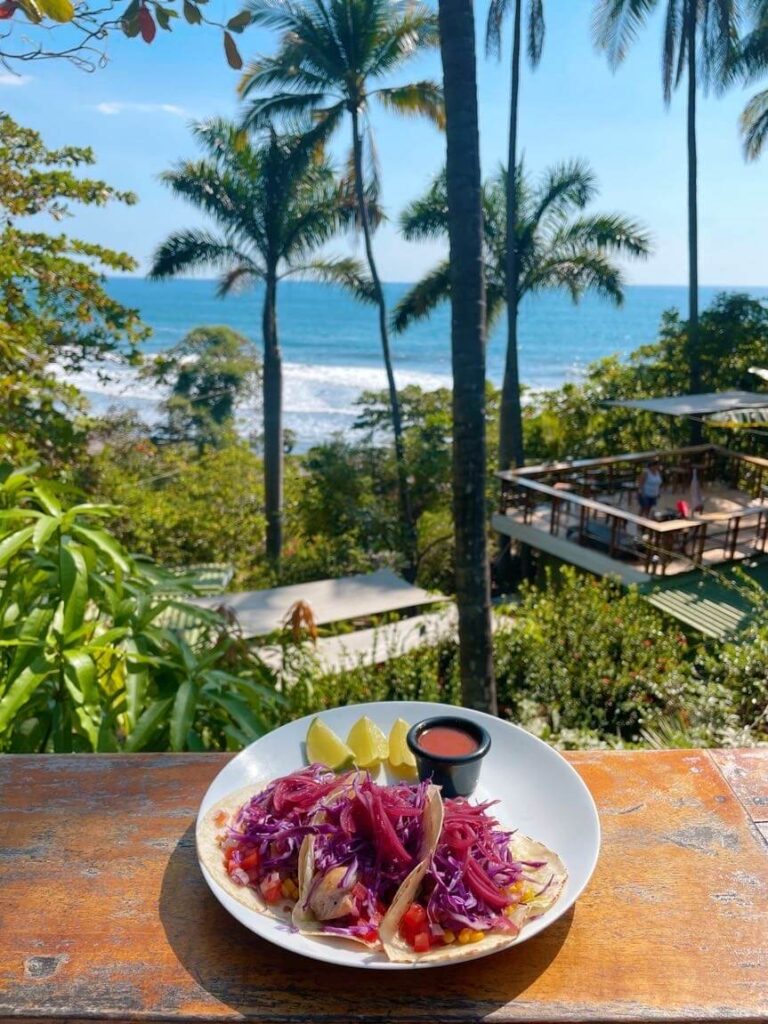
Can you believe this is a backpacker’s hostel? It’s one of the nicest from my many years of travel!
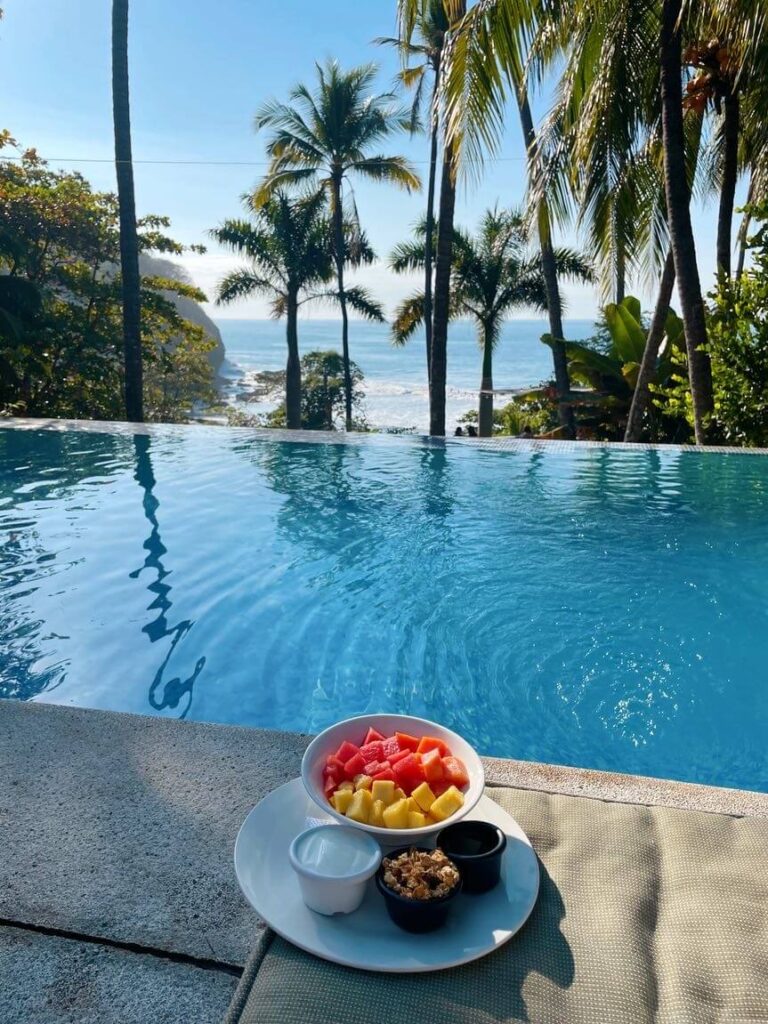
Lagarza Hostel is in Jicalapa, north of El Tunco. With an infinity pool, beach access, a free breakfast that would be at home in a fancy brunch restaurant, and double beds (with privacy curtains) in the dorms, it’s a steal at $20 a night.
I would suggest spending 1 or 2 nights here if you have more than 10 days in El Salvador. It’s a great base to relax but there’s not much to ‘do’ and it’s hard to get anywhere without a car, plus the food served at the hostel is nice but a bit pricey.
Getting there: If coming from the Flowers Route, get a bus to Sonsanate and change to one destined for the coast (be sure to check local timetables as they’re not that regular). Between El Tunco / El Zonte, it’s easy because the same road connects the whole coast – buses stop outside Lagarza Hostel.
If you’re coming from Antigua in Guatemala, shuttles drop off outside the hostel.
Be aware there’s a muddy, uphill walk from the road which may be tricky if you have a suitcase rather than a backpack.
Prices and currency
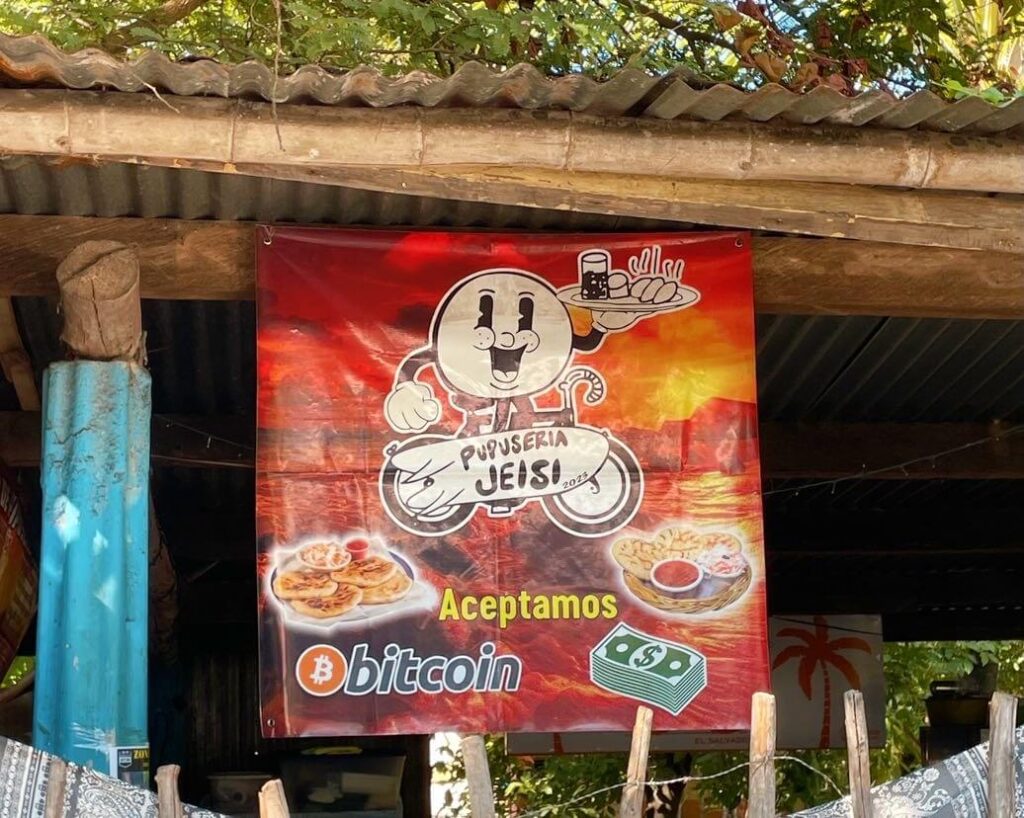
The official currency of El Salvador? US dollars and Bitcoin. Yes, really.
The story? The government got rid of their old currency in favour of something seen as more stable. In addition to USD, they introduced Bitcoin and gave a small amount to each citizen. But, without an education on how to use it, locals felt scammed when it temporarily dropped in value, and many cashed it out.
Now, you’ll see Bitcoin ATMs and signs in certain places (especially on the coast) saying you can pay with it. I can’t even imagine what denomination an ice cream costs!
Average prices in El Salvador (USD):
- Bunk in a hostel – $10-15
- Private room – $15+
- Car hire for a week – $200
- Street food – pupusas for around $1 apiece
- Meal in a restaurant – $5-10
- Coffee – from 25 cents at street stalls, from $1.50 at speciality coffee shops (up to $5 at Beats in Santa Ana but worth it!).
How to get around El Salvador
Car hire – I made a friend who had a car and realised how useful one can be for El Salvador. Saying that, the cost difference compared to cheap local buses is enormous so I think it comes down to how tight your El Salvador itinerary is (although I saw all the above places in 10 days without one). I suggest Rentalcars.com.
Scooter hire – you could consider taking buses around the rest of the country and just hiring a scooter for the Ruta de las Flores section because I think this is where you benefit most from the freedom of having a vehicle. Samay Hostel in Juayay is where to rent one.
Bus – the option I took was the chicken bus which doubles up as ‘an experience’! Sometimes it breaks down, sometimes it doesn’t. You will have to find out!
Jokes aside, the buses worked fine for me. They’re outrageously cheap: sometimes 50 cents for an hour’s ride!
Shuttles – when I visited, there weren’t many of these compared to other, more touristic countries in Central America, but I imagine there will be soon. They’ll be more expensive than the buses but more reliable… And the aircon!
El Salvador FAQs
Is El Salvador safe for tourists? Yes! As a solo female traveller, I always felt safe, especially along Ruta de las Flores and the beach towns. The one place I experienced cat calling and intense stares from the men was in Santa Ana but nothing bad happened. I recommend calling Uber at night rather than walking unless it’s a short distance in the centre.
I didn’t visit San Salvador but have heard it’s safe, although I imagine there are bad neighbourhoods like any capital city.
What plug socket do they use? Plug types A and B are used; the same all the way from Canada down to Bolivia.
Do you need a visa? Many nationalities, including those from the US, UK and many other European countries, get visa-free entry for 90-180 days. Check with your embassy and ensure you have six months left on your passport before expiry. Some nationalities will have to purchase a tourist card on arrival (around $12).
Do you need to know Spanish? The basics are VERY useful to know; not many Salvadorans speak English unless they work in tourism in places like Santa Ana, the Flowers Route and the coast. You CAN get by without, but I do suggest you brush up!
Can you drink the tap water? No! Buy bottled or, better yet, bring a refillable water bottle because many accommodations and cafes will have filtered units where you can top it up. Alternatively, a filtering water bottle makes any water safe to drink.
Additions to an El Salvador itinerary
El Espiritu de la Montana (La Union) – this is the one place I regret not visiting! This mountain top platform is where to camp and wake up to beautiful views of sunsets and islands. It was on my radar but I wasn’t sure about the logistics of going solo as there was limited public transport there and I didn’t have a car. La Union is in the south of the country by the Honduran border.
Suchitoto – this colonial town is slightly out of the way in the northeast of the country and I didn’t get around to visiting. If you’ve visited plenty of pretty, colonial towns in Latin America like I have, it may not be worth the journey. But I hear it’s lovely.
Final thoughts on El Salvador
Even though I travelled through 10 countries in Latin America on my recent trip, El Salvador stands out. It may not be the biggest country with the most UNESCOs or ‘must-see’ attractions, but it’s well worth visiting.
I found the locals so friendly and welcoming. After everything they have been through, tourism is naturally associated with a new era for their country, and you can tell they’re genuinely pleased to see you.
Now is a fantastic time to visit El Salvador because we don’t know what the future holds. Locals told me they are beginning to see signs of gentrification. I’m already updating my blog posts a month after writing them to include new hostels I’m seeing open up!
It’s an exciting time for the country, but much as increased tourism can create opportunities and livelihoods, it can also have negative impacts as I’m sure you know.
Also, El Salvador is a fantastic nature destination with beautiful hikes, waterfalls and incredible beaches and sunsets. There’s so much to love, and I hope I return one day and find it not TOO changed.
I’m still craving pupusas months later!
Thanks for reading!
Read more Central America blogs:
- Solo travel in Guatemala
- Guatemala itinerary
- Coffee shops in Antigua, Guatemala
- Best restaurants in Antigua, Guatemala
- Solo female travel in Belize
- Solo travel in Costa Rica
- Tips for solo Nicaragua travel
- 2-3 week Nicaragua itinerary
Loved your blog! We are heading there in just a few short weeks. We rented a house on Lake Coatepeque, we can’t wait for all the new adventures!
Oh fun, have an amazing time!