This post may contain affiliate links to things like tours, hotels, Amazon associates and products. These help me earn a small commission at no additional charge to you.
I recently spent almost two weeks in Colombia’s capital which, honestly, hadn’t been in my plans because I hadn’t heard many (or ANY) positive things. However, after my time here, I’d say Bogota IS worth visiting… and I’m going to explain why!
The reason why I spent so long here was because I’d had to book my exit flights before arriving in Colombia on the San Blas boat trip from Panama. Not having planned my two month Colombia trip down to the day, I’d had to pick a date for my upcoming flight to Ecuador and stick to it.
I arrived in Bogota in time to meet a friend who was finishing her trip here. I had two weeks left until my exit flight and originally planned to head over to San Gil and Barichara before heading back to Bogota for my exit flight. However, after months on the road and what felt like infinite long journeys in the previous weeks, I was exhausted and needed some downtime.
So I ended up renting an apartment and spending my spare time getting to know Bogota. Not having big expectations, I anticipated spending a lot of time reading in cafes or getting some work done in my apartment. However, I found plenty to do and enjoyed my time in the city far more than I expected.
In this guide, I hope to tell you what Bogota is like and what you can expect from visiting.
Reasons why Bogota is worth visiting
Here’s what I found to love about Colombia’s capital…
It’s not as unsafe as people say
I found this to be true about Colombia as a whole. I’d heard terrible stories about the cities, for example that you shouldn’t even use your phone in an Uber as criminals might smash the windows to grab it.
Having travelled for two months in Colombia with no problems, such stories now seem like madness! Don’t get me wrong; I’m not saying no crimes ever occur and you should be off-guard. As a whole though, I felt a lot safer than I expected to, including in Bogota.
One thing that will help you stay secure is picking a good neighbourhood (I’ll delve more into the details in my next point). Like most cities in the world, there are areas where you’ll feel safer than in your home town, as well as areas you’ll want to stay well clear of.
As a general rule, take Uber at night, don’t wander into areas you don’t know and, most importantly, ‘no dar papaya’ (don’t give papaya) which, as locals explained, means don’t flash around your valuables.
Cool neighbourhoods
Not only does Bogota not deserve its poor safety rating, but there are some cool and colourful neighbourhoods where you’ll feel as safe as you would at home.
La Candelaria – this is where many tourists opt to stay thanks to its positive safety rating, nice cafes and restaurants (I’ll share my favourites later) and colourful street art. This historical ‘hood is home to most of the museums (like the Gold Museum and Botero Art Museum) and historical buildings.
Recommendation – I stayed in this modern, well-equipped apartment with fantastic views near Candelaria for a week. It was ideal and just $25 a night.
Chapinero – this area in the north of Bogota is residential with nice apartment blocks, cafes and restaurants. It’s also a hub of LGBT+ nightlife
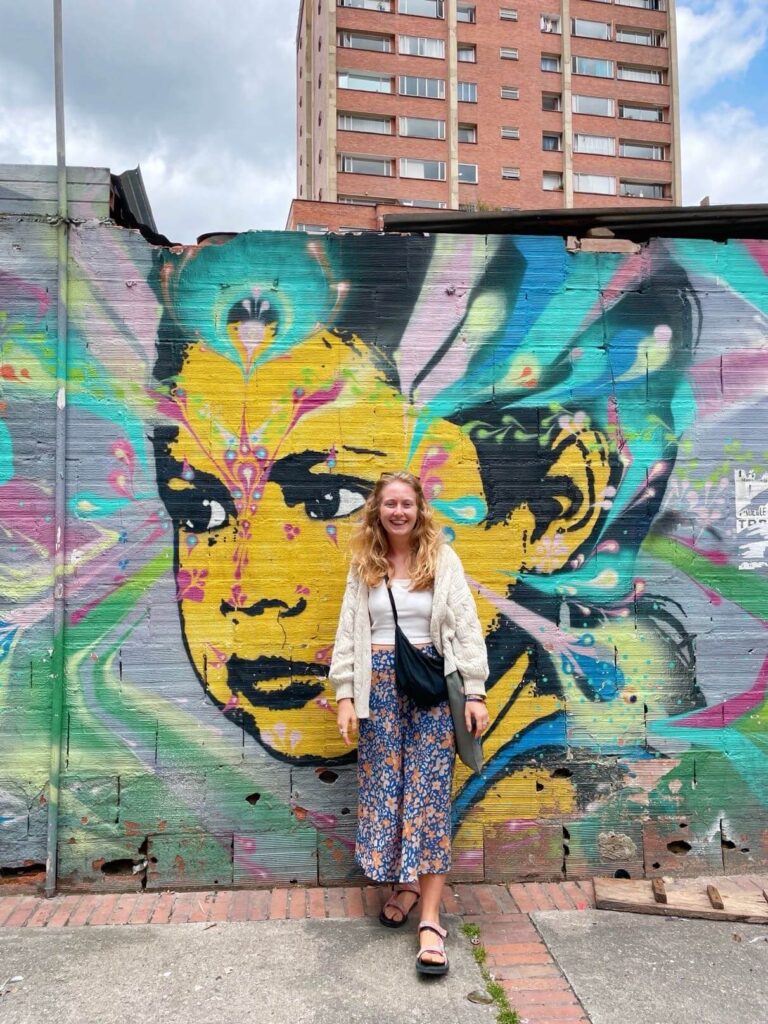
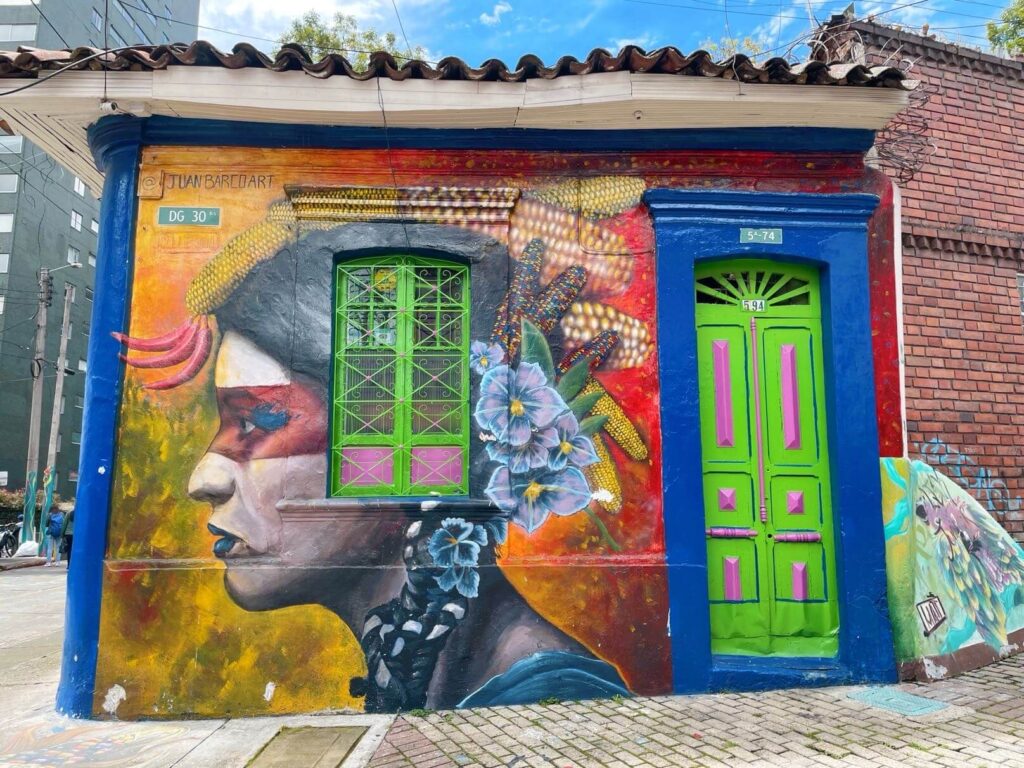
Calle Bonita (near Mercado Perseverancia) – I visited this central area for the famous food market featured on Netflix and stumbled upon this cute, colourful street (pictured below) with great restaurants and murals. Nearby, get the best sandwiches at Taller, coffee at Valiente and veggie food at Naturalmente.
Don’t miss Ocio Gallery to buy Colombian art and unleash your creativity in graffiti classes!
Other places I heard good things about but didn’t have time to check to include Usaquén and Zona Rosa.
There are also several areas where the architecture is designed to look British. I believe it was deemed popular in Colombia back in the day. It was so trippy seeing red brick, terrace-style Victorian houses!
Another thing I’ll add is that Colombia is a real city where you can experience local life and culture. It’s not as beautiful (or sunny) as Cartagena, but to be honest, I found this city a bit of a tourist trap. Bogota is more authentic and certainly cheaper.
Fantastic views from Cerro de Monserrate
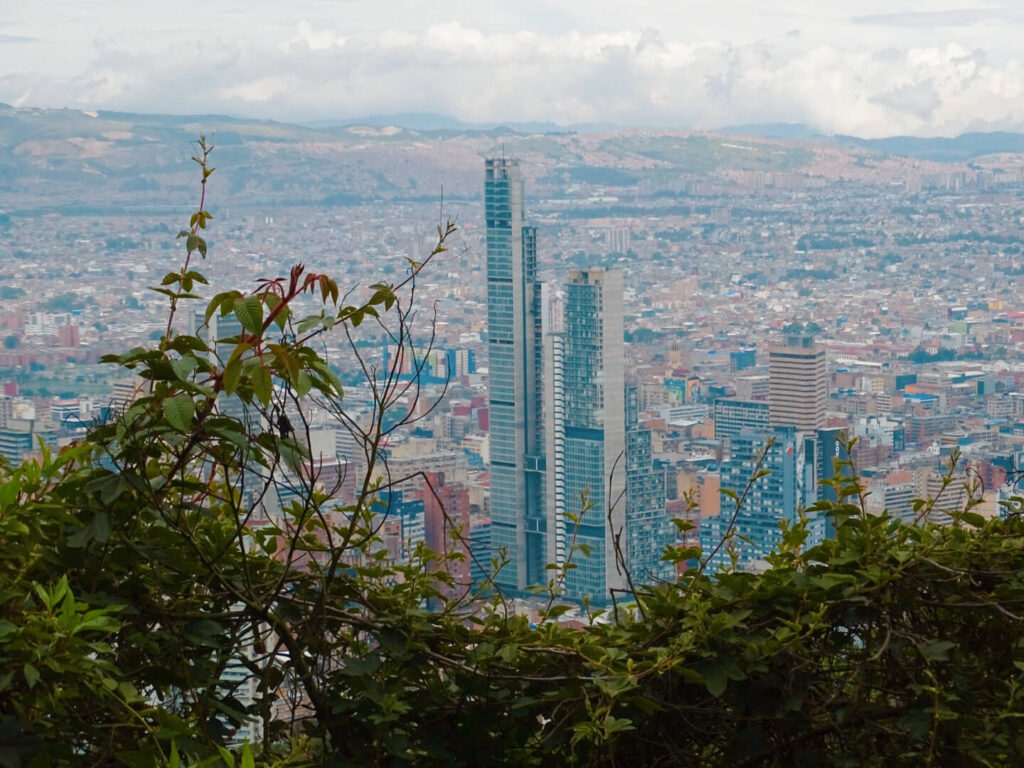
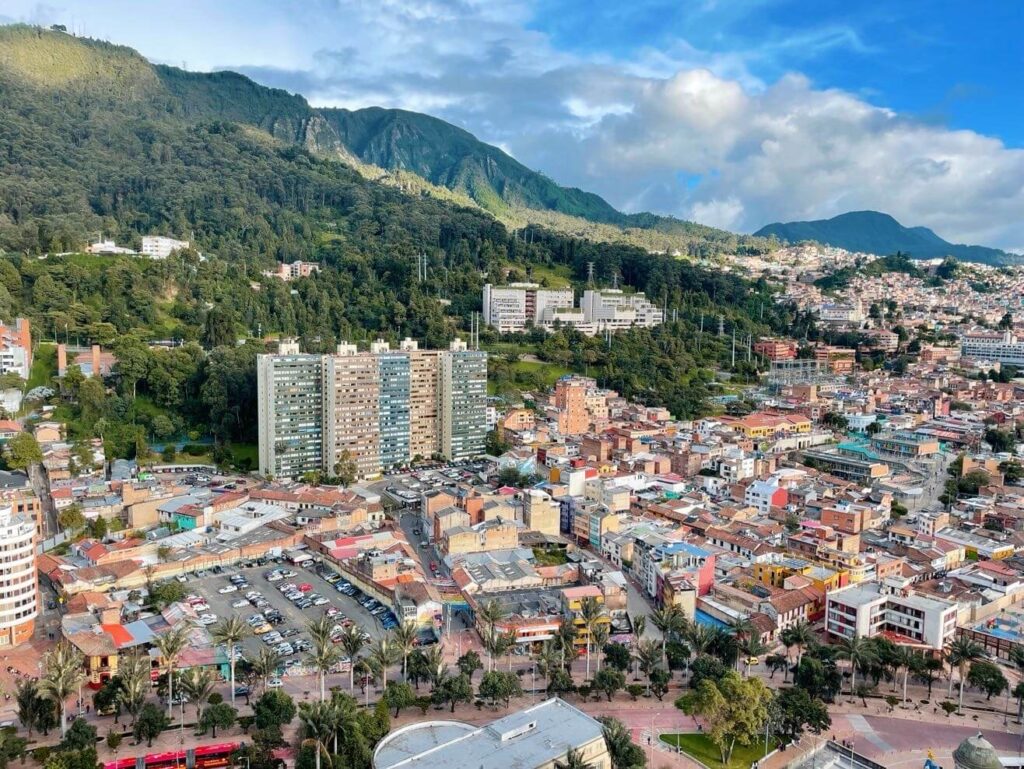
It’s worth visiting Bogota to hike or ride the cable car up Monserrate Mountain for spectacular views of Colombia’s sprawling capital.
I decided to brave the hike. With 400 metres of elevation, it’s not considered hard providing you have basic fitness levels however given that Bogota sits at 2,640m metres above sea level, the altitude makes it tough. You finish at 3,152m where you’ll find a church, market, food stands and the upper level of the cable car station.
To be honest, the top of Monserrate is pretty touristy and I had the worst-value snacks in all of Colombia (probably). It was the hike and views that made it a good experience for me. The cable car costs 32,000 pesos return ($8) if you don’t fancy the walk, but get there early or prepare to queue.
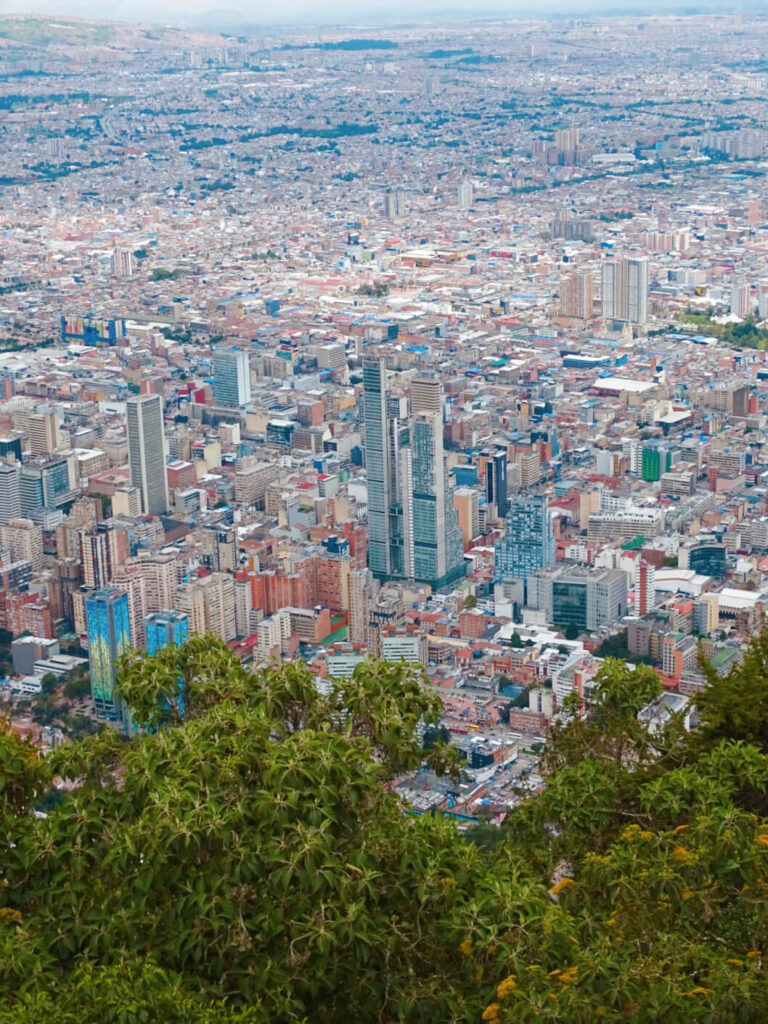
Note – the hiking trail is only open ’til 1pm for safety reasons so be sure to go in the morning with plenty of time. It took me around 1 hour 20 minutes to climb up and under an hour to get down.
World-class street art
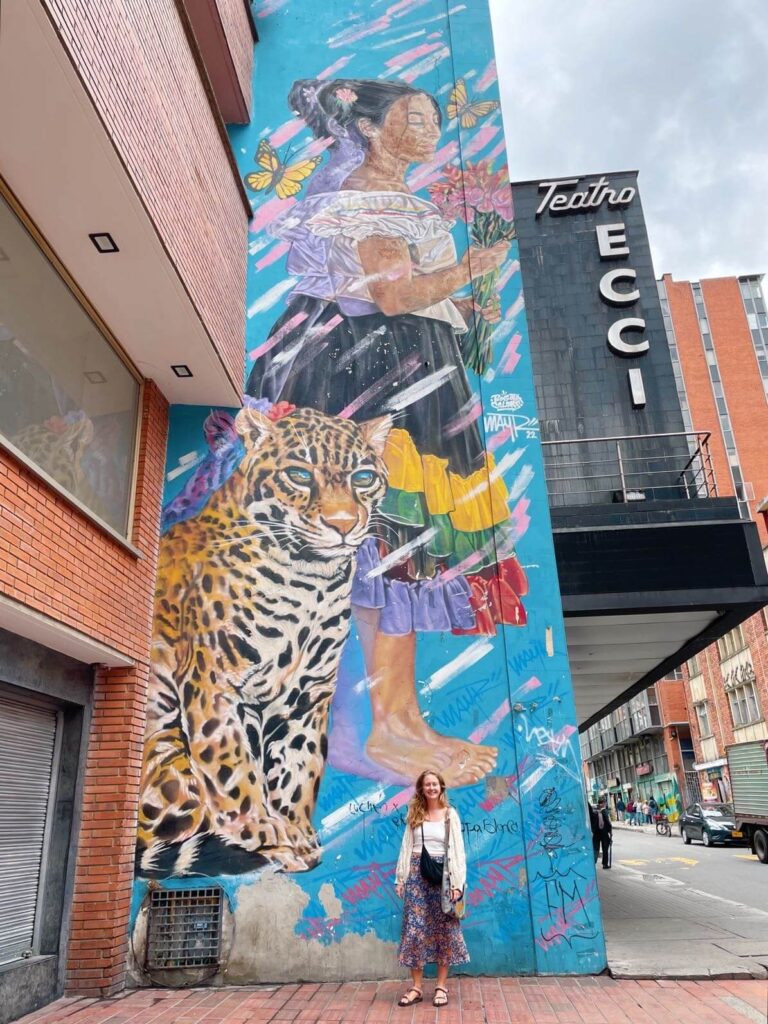
If you’re a street art fan like me, you’ll definitely think Bogota is worth visiting! (See my street art archives for mural inspo all over the world).
You’ll find much of the street art in La Candeleria neighbourhood close to where you’ll most likely stay. However, it’s all over the city. I did a fantastic tour with Capital Graffiti Tours led by local artists. The tour is paid by donation so you can give whatever you feel it’s worth (I’d suggest $10-15).
The tour finishes at a gallery run by one of the artists where you can browse prints and try your hand at graffiti on the colourful garden wall. If you’re interested, they even do full creative workshops where you can learn the tricks of the trade.
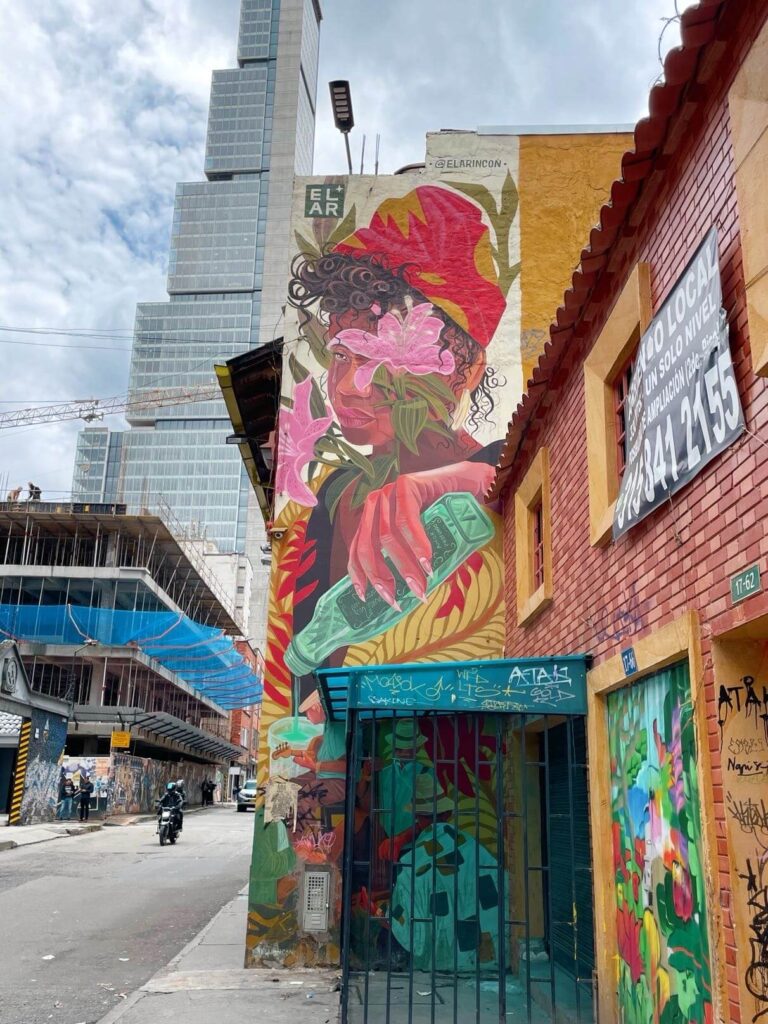
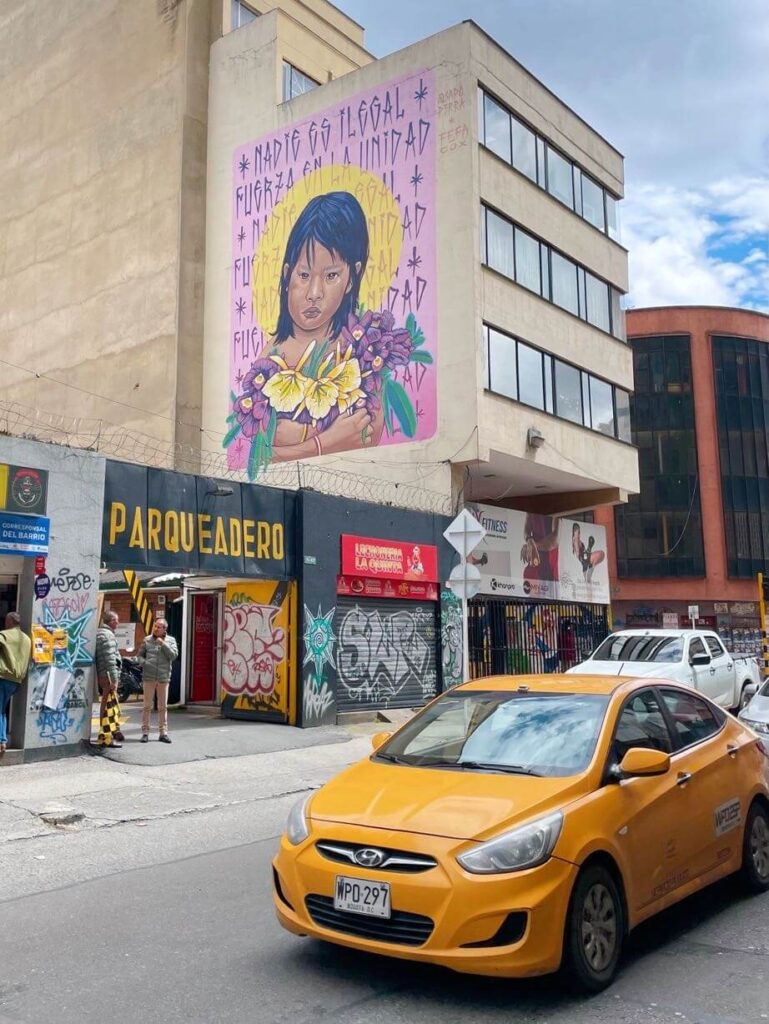
Like the best street art, the Bogota murals tell powerful stories. The one above (right) shows a young girl with the text ‘nadie es illegal’ (no one is illegal) referencing Indigenous communities who live around the borders of Colombia, Peru and Brazil and don’t receive support or recognition from any government.
You can learn a lot about Colombia from the street art in Bogota; don’t miss it!
Good food
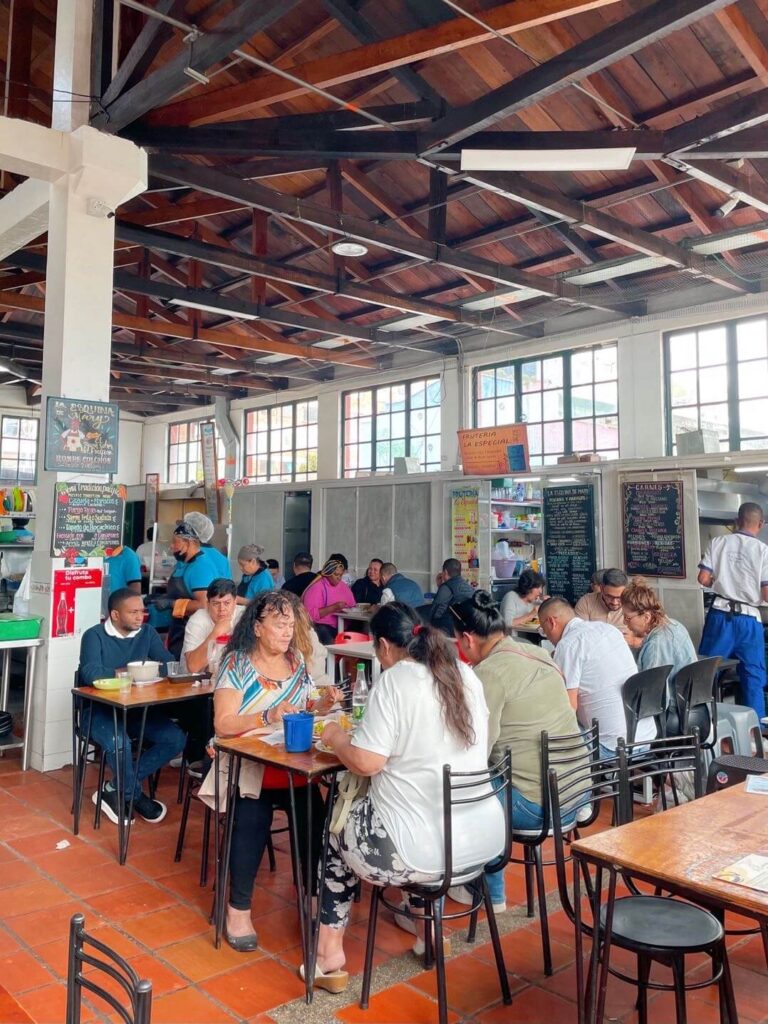
Whether you’re craving local or international food, there are countless options in the capital of Colombia. It’s become a hub for craft beer in the last few years with Bogota Beer Company and Cerveceria Gigante being two of the best brewpubs in Bogota.
You should play a bit of tejo while drinking beer. This game involves throwing discs 10-20m and hitting triangles full of gunpowder! Less scary than it sounds…
Foodie spots that make Bogota worth visiting:
- Mercado Perseverancia – the famous market featured on Netflix. There’s a buzzing atmosphere at lunchtime with locals enjoying their food – pull up a chair and join them!
- Gracia Coffee & Brunch – the best avocado toast in town and the prettiest latte art to boot
- Quinua & Amaranto – a vegetarian restaurant with a daily changing set menu. It feels homey with everything freshly cooked onsite. Two courses and a herbal tea costs around 27,000 pesos (under $7).
- Origines Cafe – a cosy cafe with a huge variety of options, but you can’t do better than the generous menu del dia. If you scan the QR code by the door, you can see the menu for the upcoming week.
- Cafe Cecile – a cute cafe with speciality coffee and tasty brunch and lunch options.
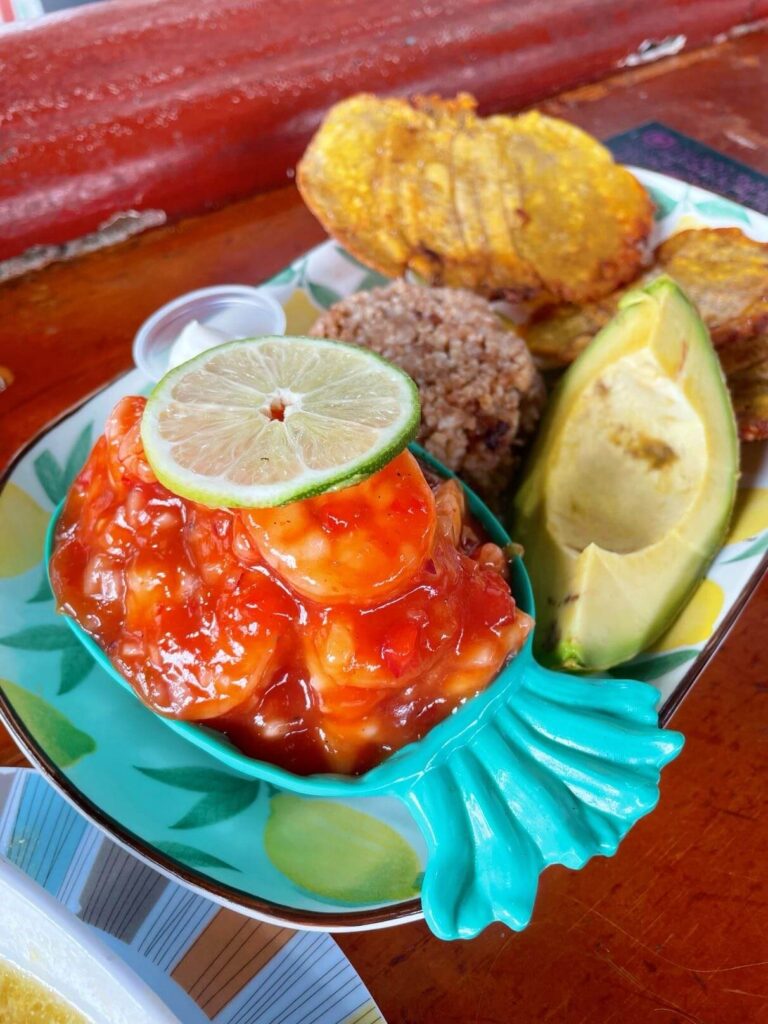
If it’s street food you’re after, head to Plaza de Bolívar and the surrounding streets. You can’t miss obleas: sweet wafers stuck together with ingredients such as jam, cheese and arequipe (like dulche de leche).
You might wonder (and why wouldn’t you!) why so many food stands are named Obleas de Mick Jagger. The story is simple: apparently he ate at one while touring in Bogota but no one can say which one because they ALL changed their names to honour him. Hilarious!
Nightlife
As I was travelling solo (and having some downtime during a busy 9-month trip hence I stayed in an apartment rather than my usual, more social choice of a hostel), I didn’t get around to experiencing the Bogota nightlife, but I hear it’s big.
One place that was on my radar without even researching the topic was Teatron, the WORLD’s biggest LGBT+ club. With up to 5,000 guests per night, a castle-style exterior and 13 rooms for every vibe and style of music spread across five floors, it’s somewhere party people can’t miss.
Excellent coffee shops
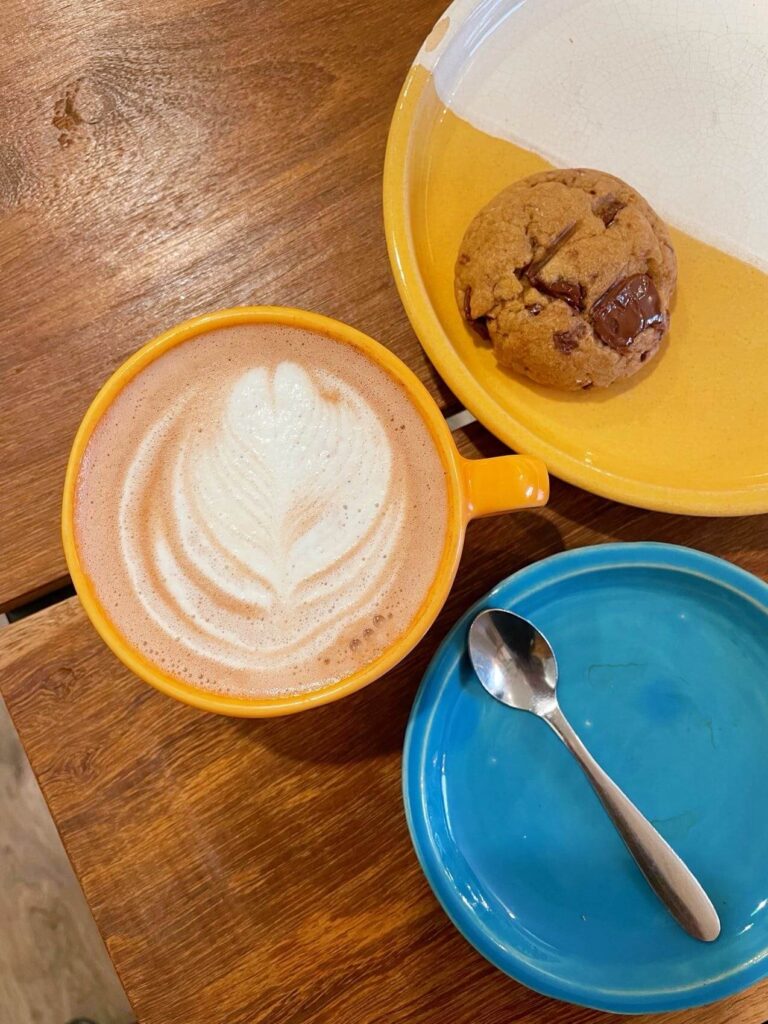
Given that Colombian coffee is world famous, you won’t be surprised to hear there’s a fantastic cafe scene in Bogota. Gone are the days when only global brands could afford to keep premium coffee and local shops were left with ‘tinto’, the poorer quality part of the harvest. Thank god!
Some of my favourite coffee shops in Bogota are:
- Robusta Bakery – a cute, small spot with quality coffee, desserts and sandwiches. The latte art is impressive!
- Jaguar Coffee – what looks like a cosy coffee shop when entering from the street is actually a huge venue with different rooms and event spaces. The coffee is also good, of course
- La Tregua – I became a local here as it was beside my accommodation. It’s a friendly spot with quality coffee and light bites
- Vronxx60 – a cute spot in La Candelaria with two floors and cool vintage furniture and music. Ideal to curl up with a book on a rainy Bogota afternoon. I can vouch for the chocolate chip cookies
- Cafe Freddie – this quirky cafe with glam decor is a shrine to Freddie Mercury complete with signed photos and soundtrack! Escape the crowds of busier cafes over tasty coffee, cocktails, brunch and lunch.
One of the world’s best fruit markets
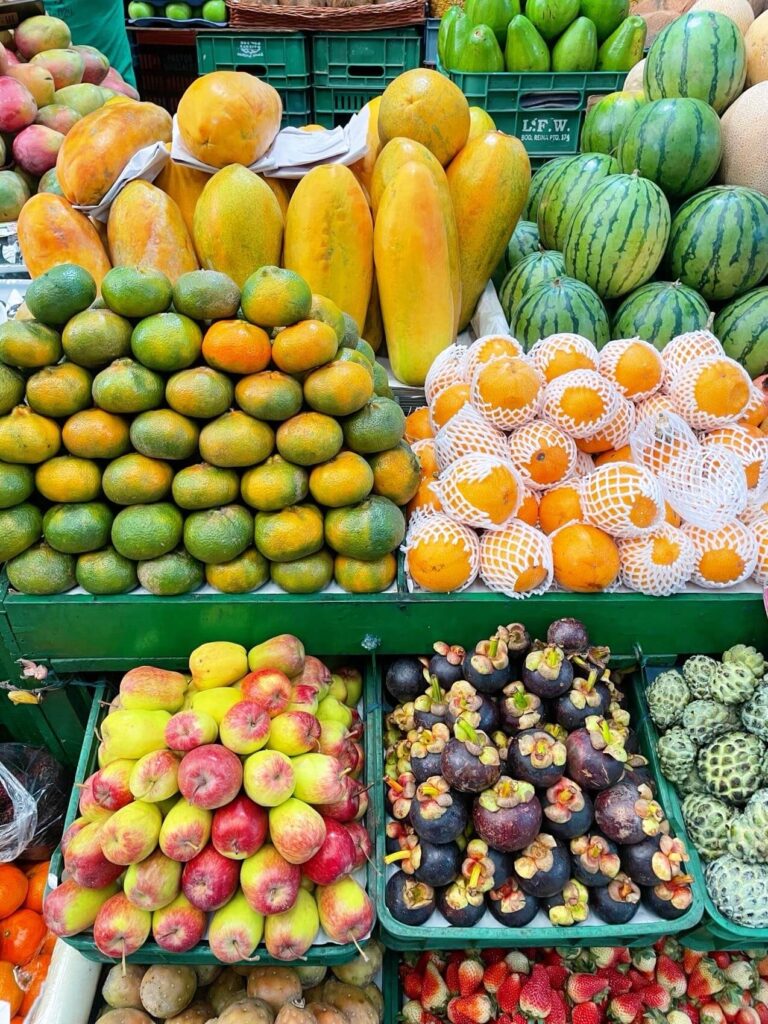
Paloquemao Fruit Market is a top tourist attraction in Bogota, but it’s also an authentic bustling local market where locals can be found shopping every day of the week.
Although the highlight is the vibrant fruit, there are plenty of other sections to be explored selling everything from fresh meat, fish, pandebono (my favourite Colombian snack of cheese bread – try it if you haven’t already) and, despite the local vibe, I even found a speciality coffee stand in the crazy mix.
I saw several companies selling fruit-tasting tours for $30+ so I decided to just go by myself. Aside from walking there not being the best idea (the area is quite sketchy so I recommend jumping in an Uber instead), I didn’t feel I needed a guide at all.
I spent $8 and was eating delicious fresh fruit for the next week! Some of the most interesting finds were purple cucumber (much sweeter than the green variety) and lulo (looks like an orange, tastes like a kiwi), known as naranjilla in some countries.
Museums and art

As Colombia’s capital, of course there’s culture in abundance. Whether you’re interested in pre-Hispanic history or famous artist, Botero, it’s worth visiting the Bogota museums and galleries. A few places to earmark include:
- Botero Museum – after Botero Square and the Antioquia Museum in Medellin, this is THE place to see Botero’s quirky dimension-shifting art. The pretty colonial residence in La Candelaria is home to over 200 pieces of art (over half his own; others by Picasso, Dali and Monet) donated by the man himself. Entry is free.
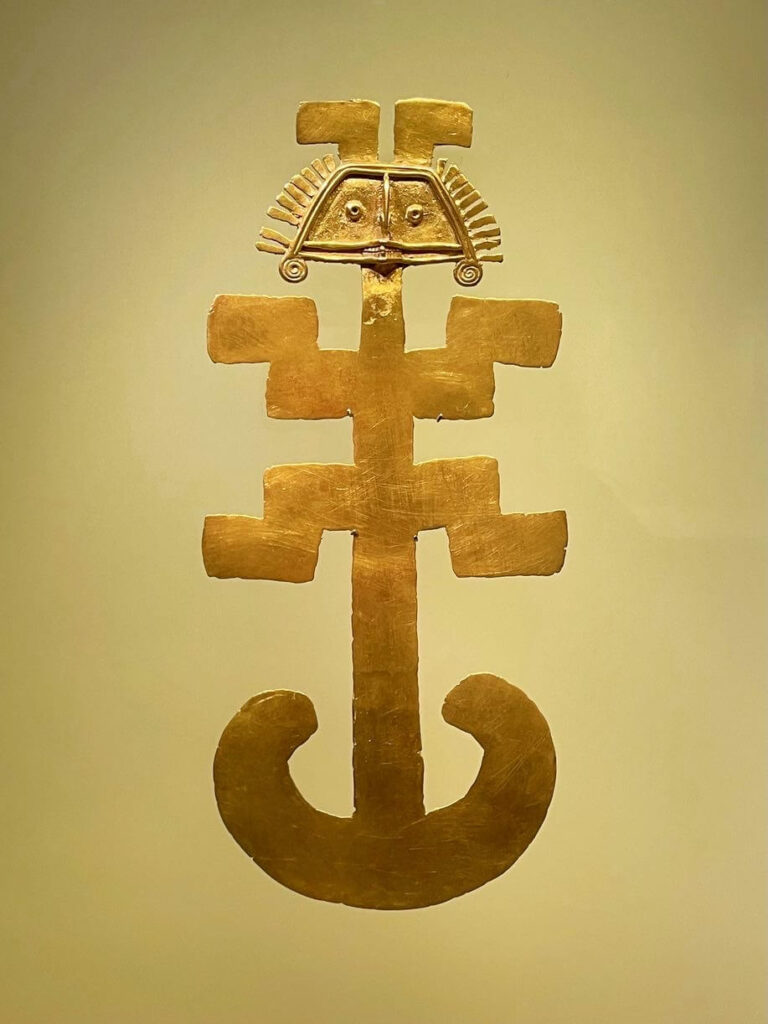
- Gold Museum (Museo del Oro) – my favourite museum in Bogota tells the tales of pre-Hispanic culture through precious relics. Entry is just 5,000 COP (just over $1).
Although I just visited these two, there are TONS of other museums that might interest you, for example the Museum of Santa Clara (colonial art in a former convent), the National Museum (art and history) and Bogota Museum of Modern Art (the latter two are both located in the northern Chapinero district).
Reasons why Bogota might not be worth visiting for you
To present a rounded view, here are the less than desirable things about visiting Colombia’s capital…
There’s not loads to ‘do’ exactly
For a capital city of its size, I didn’t find there to be endless tourist attractions in Bogota. Other cities of its size generally have more entertainment. Once you’ve visited the museums, hiked Cerro de Monserrate, visited the famous fruit market and wandered around La Candelaria, you might be running out of ideas.
Saying that, there are some day trips that I didn’t get around to. El Chiflon Waterfalls look stunning, for example.
Bogota has (some of) the worst traffic in the world
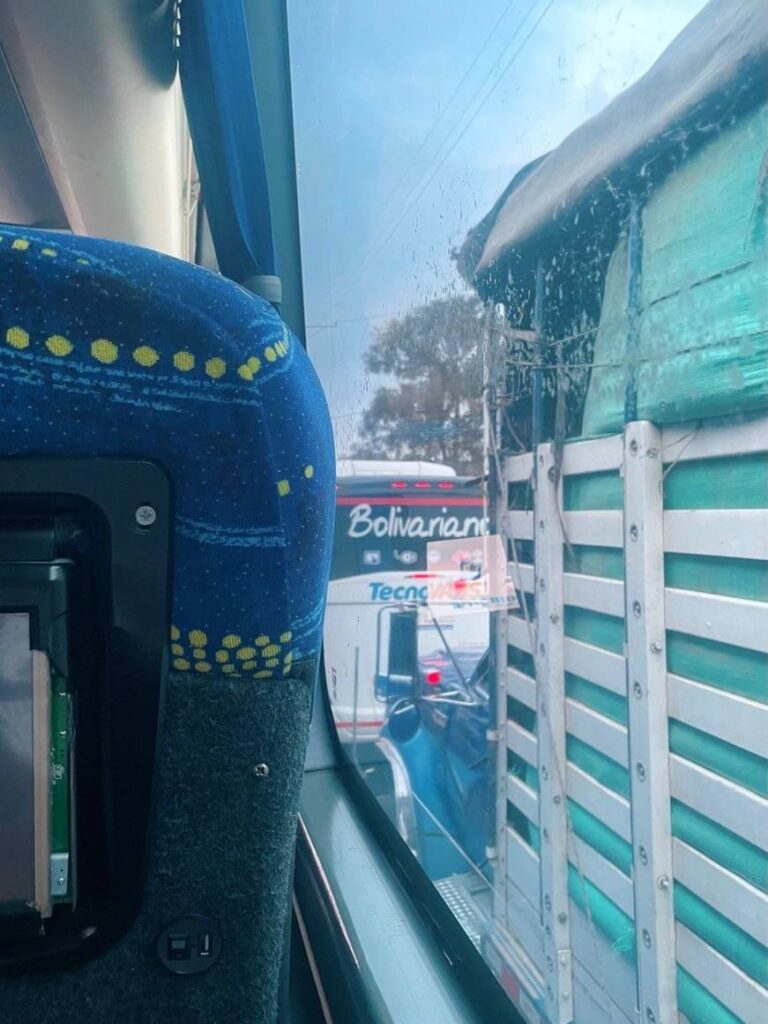
It’s not just me who thinks it! Some statistics rank Bogota as the most congested city in Latin America with commuters spending 94 hours a year in traffic.
If you’re visiting as a tourist, try to avoid getting caught up in it by travelling at off-peak times. Not that you can always avoid it: my bus into the city was meant to arrive at 3pm but, after getting delayed elsewhere, reached the outskirts of the city at 5pm and we were sat in traffic until 7pm. Not the best first impression!
I think the problems come from the fact that there’s no metro which is crazy for a city of 8 million. Even Medellin (2.5 million) has a very efficient one. Apparently, there are plans in the works but it won’t be ready until at least 2028.
The weather leaves a lot to be desired
The weather in Bogota gave me major UK vibes! The sky was grey 50% of the time, it rained a lot and temperatures were low at night.
However, it would suddenly swing to warm and sunny. Basically, always have a jacket AND an umbrella AND a hat, sunglasses and sunscreen at the ready. It’s hectic.
Saying that, I visited in May which is the height of rainy season (in total this lasts about six months of the year with October typically being the other wettest month to rival May). December to March are meant to be better but still, don’t expect anything tropical! You need Colombia’s northern coast for that.
If you’re coming to visit the Salt Cathedral (I found it underwhelming)
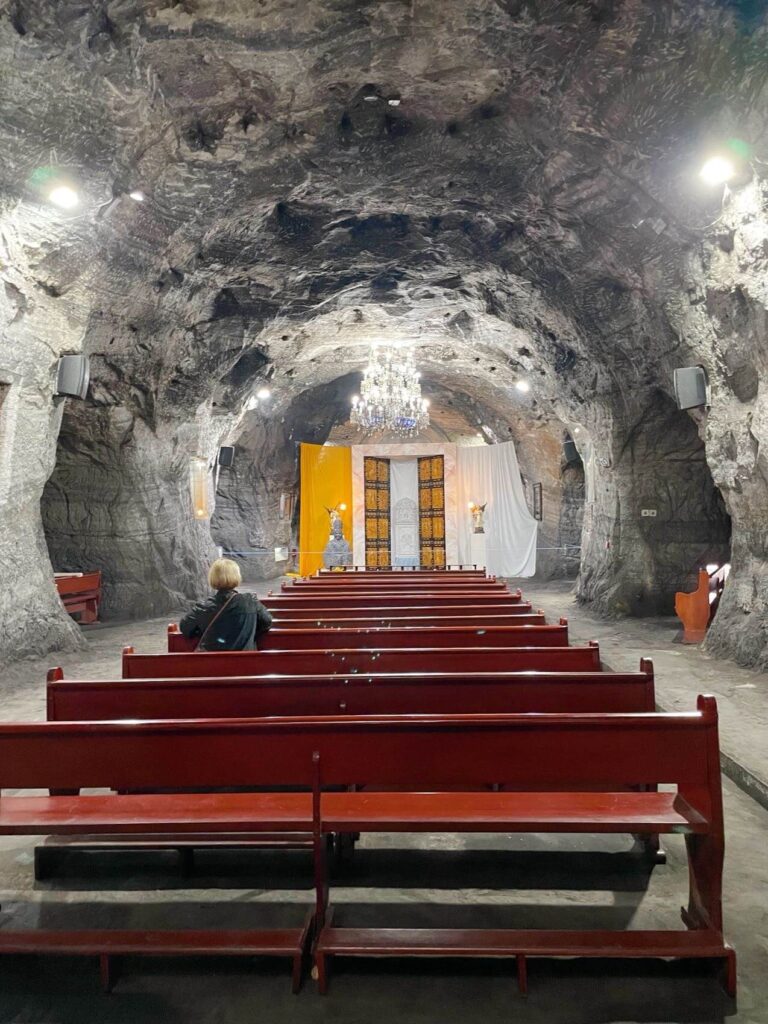
Research what to do in Bogota and the famous Salt Cathedral of Zipaquirá will come up. Since I had plenty of time and it sounded quirky and unusual, I decided to pay a visit to this ex-salt mine turned cathedral buried 200m underground.
However, I found this to be one of the most overrated attractions I’ve visited in Latin America. Not only is it expensive (118,000 pesos / $30) but I found it to be an overly commercial and religious experience rather than a historically or culturally interesting one.
Also, getting back took HOURS due to the traffic and bus issues, so a 12-hour day only consisted of an hour in the underground cathedral. I would skip visiting even if you’re in the capital already, and it’s definitely not worth visiting Bogota specifically to go!
Bogota is not a top city in the world/Latin America (in my opinion!)
As someone who’s lived in Mexico City and travelled to Buenos Aires, I’m a bit biased. I’m obsessed with these cities and think they’re easily the best capitals in Latin America! When comparing them to Bogota, they’ll always come out top (at least for me).
Yes, Colombia’s capital is a cool city and there ARE some convincing reasons to visit Bogota (as I hope I’ve shown you) but it simply can’t compete with other capitals. So, if you’re choosing where to go in Latin America, I think there are better places than Bogota. But if you’re simply choosing between visiting Bogota or not, I can recommend it.