Table of Contents
This post may contain affiliate links to things like tours, hotels, Amazon associates and products. These help me earn a small commission at no additional charge to you.
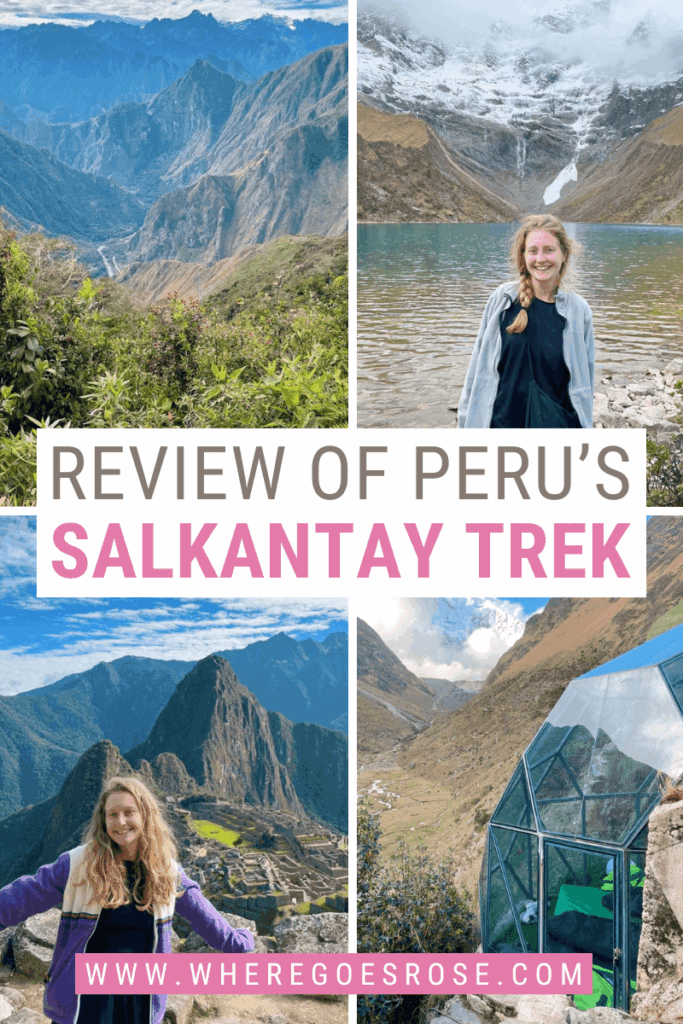
I recently had one of the most memorable and challenging experiences of my 10+ years travelling: the 5-day Salkantay hike to Machu Picchu.
Peru is hiking madness: I did more in 6 weeks than in the rest of my life combined! The blue lakes and snowy mountains of the Sacred Valley were more comparable to the Huarez hikes in Northern Peru (my favourite area of the country!), while the arid Colca Canyon hike from Arequipa could have been a different continent.
What makes hiking accessible in Peru is that you can usually go guided or unguided. I met people doing the Salkantay Trek unguided who had a successful trip. However, as I was travelling solo in Peru (and I’m not an experienced hiker), I was more comfortable going with a group.
The Salkantay Trek certainly isn’t easy but also isn’t completely inaccessible to anyone but professional hikers. In this guide, I’ll cover everything you need to know, including what to expect, what to pack, how to prepare for the altitude and other general tips.
I’ll also review the trekking company I went with, Machu Picchu Reservations (that I’ll abbreviate to MP Reservations), so you can decide whether to use them, too…
How hard is the Salkantay Trek?
It is a challenging trek, there are no two ways about that. There are days you’ll climb 1,000 metres of elevation, sleep in a hut and wake up at 4.30am to do it again.
The altitude can also make it tricky as you reach 4,630 metres above sea level.
However, the Salkantay Trek isn’t a technical one (no ice pick experience needed!) as long as you have a basic level of fitness, I believe it’s doable for most people. I had done plenty of tough day hikes but never embarked on a multi-day trek before (apart from the Acatenango hike in Guatemala a few months before but this was only a 2-day hike).
So, if it’s also your first multi-day hike, don’t be put off.
If you have the opportunity to train, focus on doing the same type of exercise: hikes with plenty of uphill and downhill, ideally at altitude.
However, I know it’s not always easy to create the environment, for example if you’re at home somewhere without altitude. Even if you’re already travelling in South America, I find it can be hard to stick to a fitness routine while travelling.
Do what you can. Ultimately, your enthusiasm and mental stamina will support, you, too.
You can do it!!
How long is the Salkantay hike?
The entire hike is 74 kilometres (46 miles).
Whether you choose the 4 or 5-day option, the final day is spent at Machu Picchu with just a short 1.5-hour hike in the morning (or you can even take a shuttle bus).
How is it different to the Inca Trail?
The Salkantay differs to the Inca Trail in a few ways: the former is longer at 74km; the latter is only 43km.
It’s said that the Salkantay is better for nature lovers as it’s through the mountains, while the Inca Trail is more of a historical route visiting ancient Inca ruins. However, there’s still history when it comes to Salkantay… It’s said the ancient Inca leaders followed this elevated trail to bring them closer to god.
The Salkantay is also cheaper, starting from $250 guided, while guided Inca Trail hikes are rarely found for under $600.
Since the Inca Trail has been popular for longer, it’s more in demand and requires booking further in advance (a few months rather than a few weeks). This might make your decision for you!
Is the 4 day or 5 day Salkantay trek best?
I opted for the classic 5-day trek but it can be condensed into 4 days whether you go guided or independently.
Note – whichever option you choose, the last day is spent at Machu Picchu then transferring back to Cusco so you’re not really trekking on this day.
The longest sections of the 5-day hike are covered on days 2 and 4. If you opt for the 4-day trip, this will be days 2 and 3, meaning very tough days consecutively. I found day 3 – where we only trekked in the morning – was the closest thing to a rest day so I really valued having it!
Another thing to note is that the 4-day trek (with MP Reservations, anyway) is only $10 cheaper than the 5-day. Since it includes an extra night’s accommodation, 3 meals and the chance to spend more time in the stunning Andean highlands, I think it’s well worth doing the 5 days!
What is the cost of doing the Salkantay Trek guided?
The cost of doing it guided with MP Reservations is $300 and includes all meals (three per day on days 1-4 and just breakfast on day 5) and four nights’ accommodation. It also includes your MP entry ticket.
It includes a return to Cusco by car (requiring you to hike an extra 3 hours, leaving MP by 11.30am which could be rushed) or you can opt to pay an extra $70 for the scenic train direct from Aguas Calientes. In our group of 14 people, we all took the train.
You pay a 50% deposit ($180) and the rest the day before the tour.
As a midrange traveller (I’m in my 30s and have a remote income), I thought this was a reasonable price. My average daily spend in South America was £42 a day so, at £57, this wasn’t a huge amount more.
However, proper budget backpackers (which I used to be – I get it!) commented that it was expensive compared to the cost of doing it alone. Without a guide, you can expect to pay around $150 (not including MP entry or transport back to Cusco).
How far in advance do you need to book?
Unlike the Inca Trail which requires pre-booking, it’s far easier to get on a Salkantay hike. You could rock up in Cusco and find one for a couple of days later but I suggest doing your research instead to find a decent company and book online.
For MP Reservations, try to visit a couple of weeks ahead in peak season (April to October). Outside of this, you can probably book a week ahead.
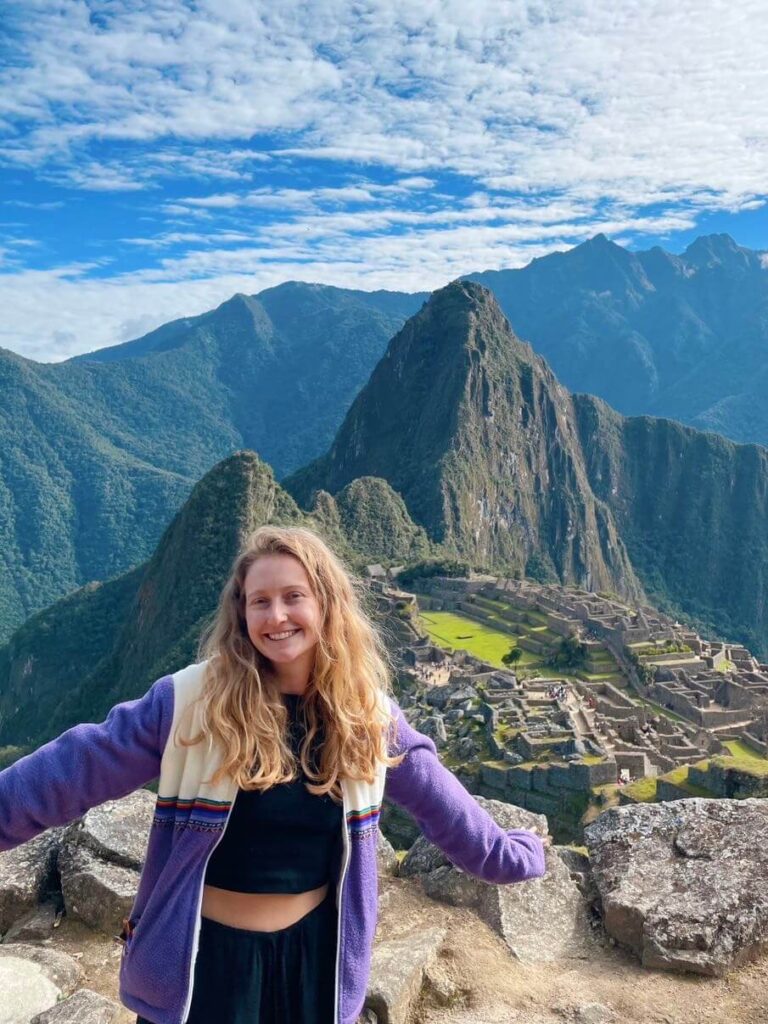
However, it depends on what circuit you want for Machu Picchu. If you have your heart set on Circuit 2 (allowing you to see the panoramic viewpoint AND walk through the ruins), book two months in advance. You may also wish to email your trekking company to confirm which circuit they’re booking for you.
Circuit 1 allows the ‘postcard view’ but not access to the ruins, while Circuit 3 is just the ruins.
Do you need to carry everything?
Thankfully, no!
I feel I’m a good hiker now but I still need to work on my strength in terms of overall fitness. Adding a heavy bag is the point I go from ‘I can cope!’ to ‘I can’t cope!’
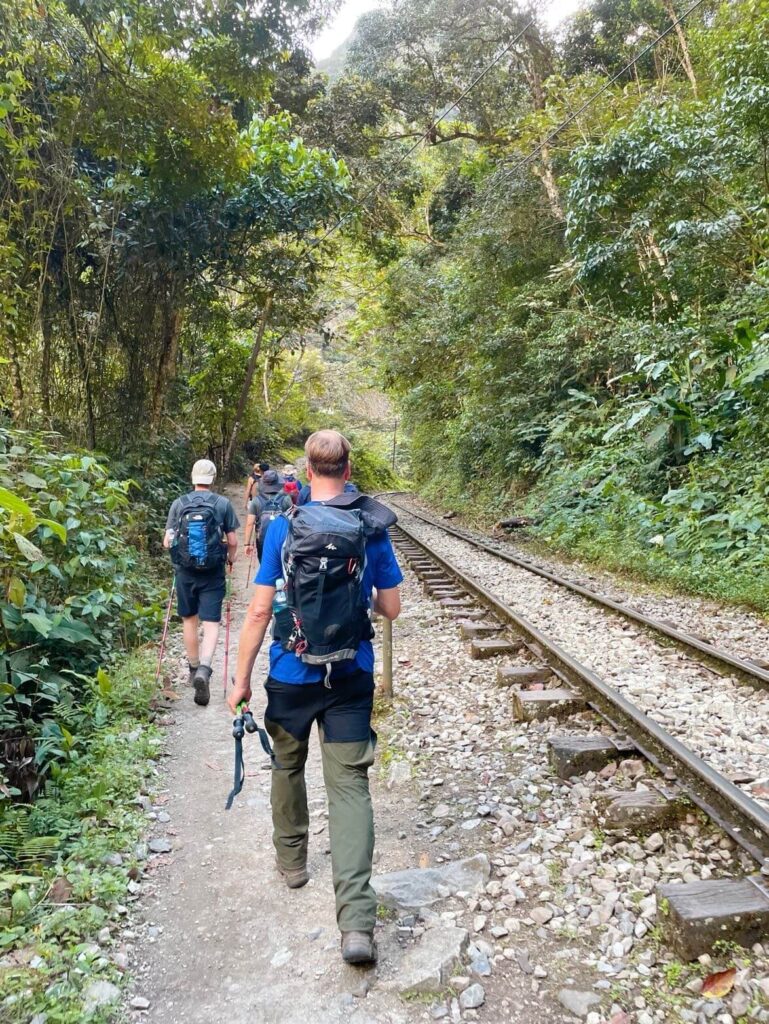
All you need to trek with is your day pack including water, snacks, raincoat etc.
The night before the Salkantay Trek begins, there’s an orientation briefing in Cusco. They give you a duffel bag to pack, transported by horse or car depending on the day of the trek, but you never need to carry it yourself.
In here, you can pack whatever you want, but there’s not endless room so my tips are: prioritise clean trekking clothes, warm layers for the nights, your toiletries and, most importantly… more snacks! Also, it’s useful to bring a few plastic bags to separate clean and dirty clothes, especially those that are wet.
(There are snacks available at camps but they’re ridiculously expensive so I suggest packing your own. Also, it’s just chocolate and cookies, and I prefer nuts, energy bars etc with more sustenance for hiking).
Best season for the Salkantay Trek
Peak season in the Sacred Valley is April to October during the dry season. Since heavy rains can cause flooding, landslides and rockfall, the hike should be approached with caution during the rainy season (November-March).
Although dry, the summer months are the coolest time of year, so be prepared for cold temperatures (dropping below 0 at night), making sleeping tough.
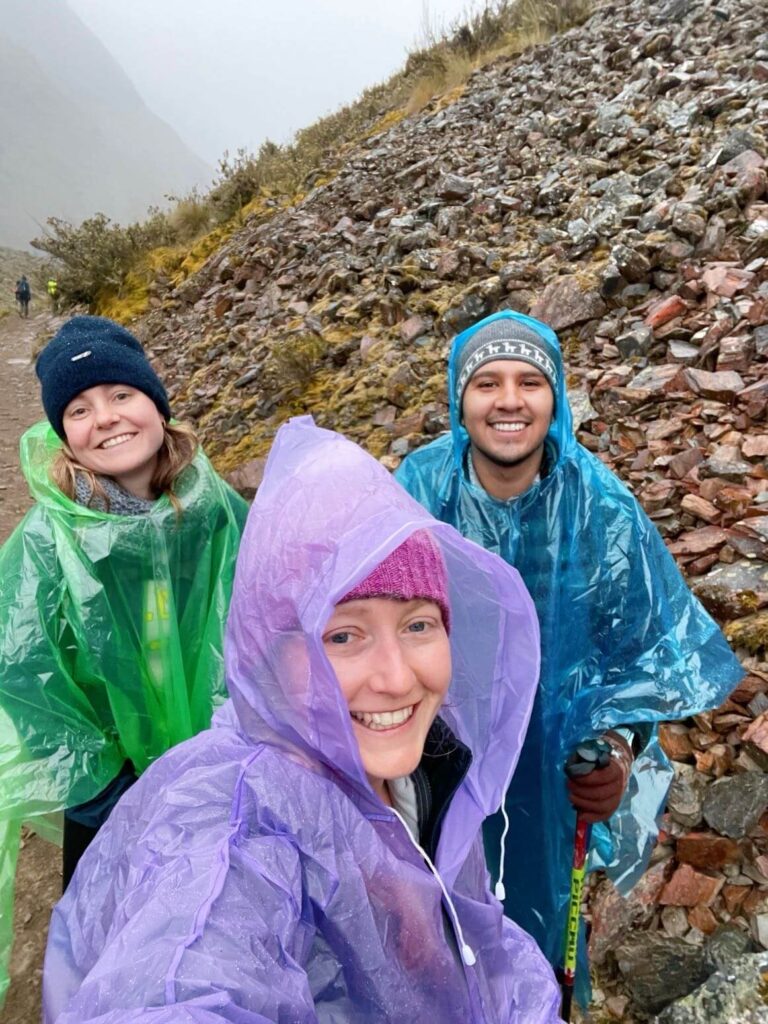
I did it in July and we predictably didn’t have any rain but we did have some snow that got us damp and cold. My gloves got wet on day 2 and didn’t dry ’til I was back in Cusco, several days later!
Altitude considerations
The Salkantay Trek would be challenging without the altitude, but this is what many people really struggle with.
While acclimatisation undoubtedly helps, it’s also true that altitude simply affects people differently and you may not know how your body is going to respond until you’re in the situation.
I’ve been lucky to have never really experienced altitude sickness. But in the case of the Salkantay hike, I had already been at altitude for weeks (and perhaps living in Mexico City for the previous two years helped, too).
Symptoms can include headaches, dizziness, loss of appetite, nausea, exhaustion and sleep problems.
Tips for altitude
- Spend at least a few days acclimatising in Cusco (3,400m) before the hike
- Keep hydrated by drinking plenty of water – and avoid alcohol
- If you feel bad while on the hike, tell your guide who will know how to support you
- Ensure you have travel insurance that covers high altitude (more on this to come).
How cold does it get?
In the winter of June and July (although, as discussed above, this is the best time for less rain and reduced risk of landslides etc), it can drop below 0 at night.
Our guide even told us that it can drop to -10 at the campsite where we stayed on night 1! Luckily, I don’t think it was THAT cold during our visit… But it was certainly freezing!
I highly recommend hiring a sleeping bag from your trekking company. MP Reservations charged $10 for the whole tour (transported by them – you don’t need to trek with it). I slept wearing a beanie, gloves and thick socks. My tent mate had found some amazing heated hand pads in a shop in Cusco that you shake to activate. I highly recommend these if you can find them!
Review of Machu Picchu Reservations for the Salkantay Trek
Generally, I had a great time with this trekking company, however there was one HUGE caveat…
The mass food poisoning of night 2!!!
Yes, I did mean those three exclamation marks. This was one of the most traumatising nights of my life (and I imagine the other 20 trekkers who got ill felt the same). We don’t know what caused it, but most likely lunch on day 2.
Even after the Night of Horror (imagine that infamous Bridesmaids scene but in a rural campsite), we struggled with our digestion and energy for the rest of the hike, especially on the long day 4, making an already challenging experience extremely difficult.
Also, on day 3, when many members of the group could barely stand and had to go with the bags on the bus to our next camp, the company had the audacity of charging $5 per person for the ride!
After numerous emails to head office, I got an $80 refund which was appreciated but I’d obviously still have preferred the whole saga hadn’t happened!
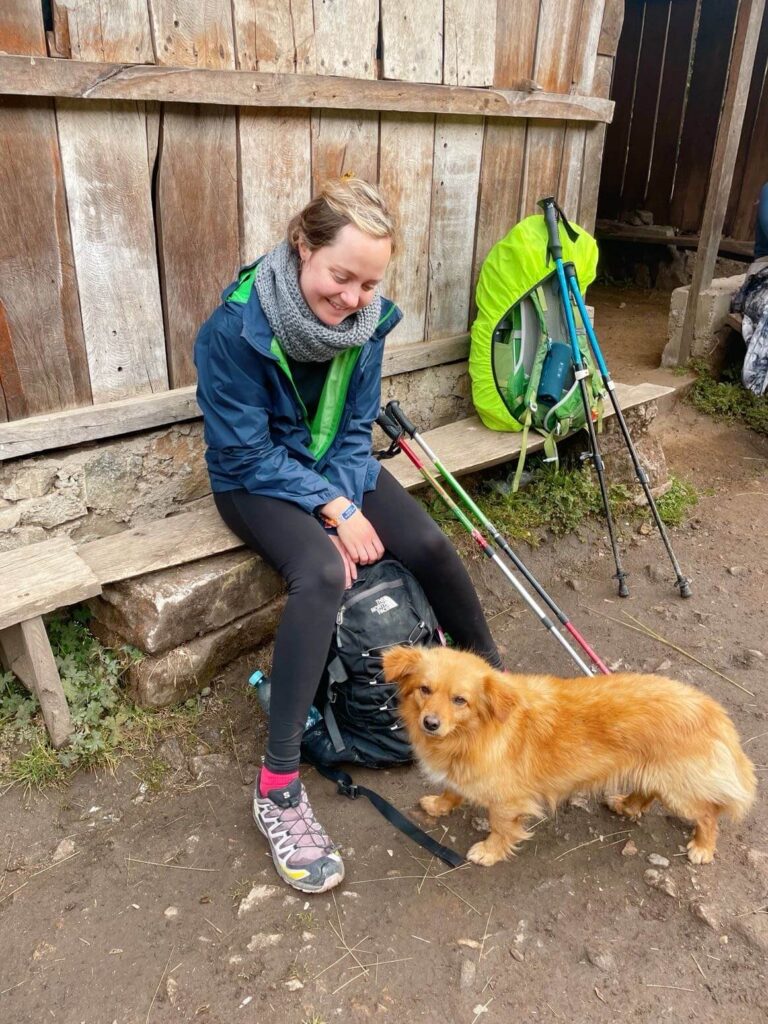
Ranking other elements of the Salkantay Trek with MP Reservations:
Food: I’d give this a 6/10. There were always big portions, usually including meat, vegetables and carbs, even if it wasn’t the most flavoursome. I prefer to eat vegetarian but didn’t select it for this hike in case it meant getting no protein, and this was largely the case for the vegetarians.
Guides: We had the loveliest guide who was so supportive and helpful throughout the hike. He was also knowledgeable about the history and culture, which was a big plus.
What is the accomodation like?
It was basic but decent. There was always a toilet block and restaurant. On night two, there are hot showers.
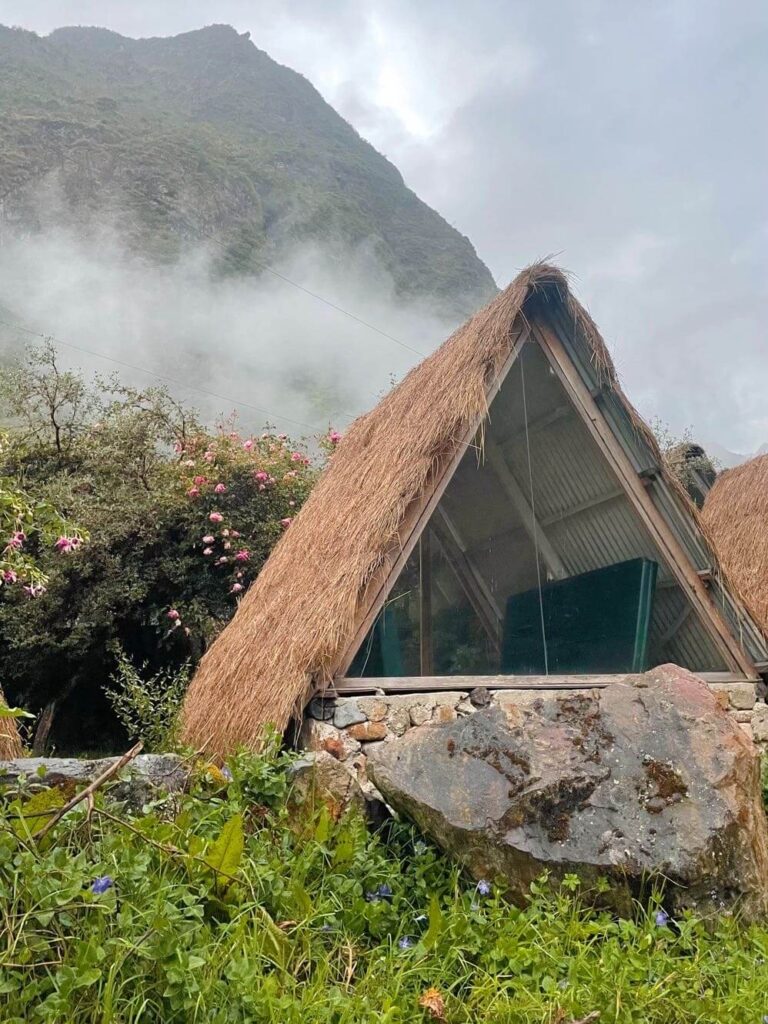
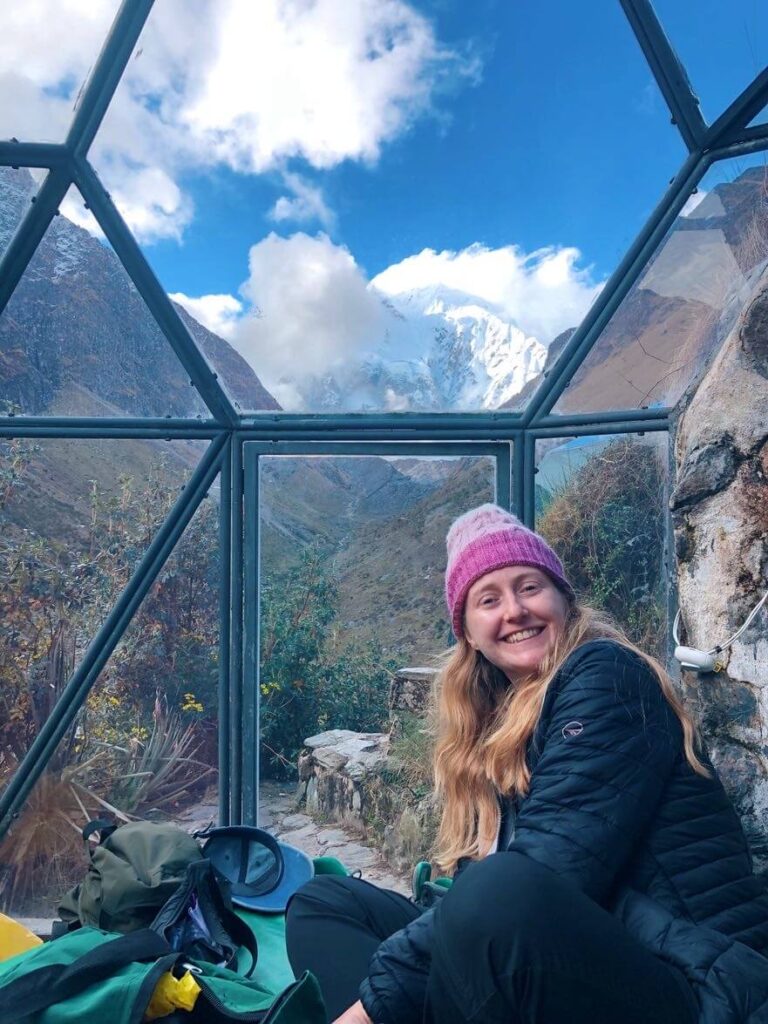
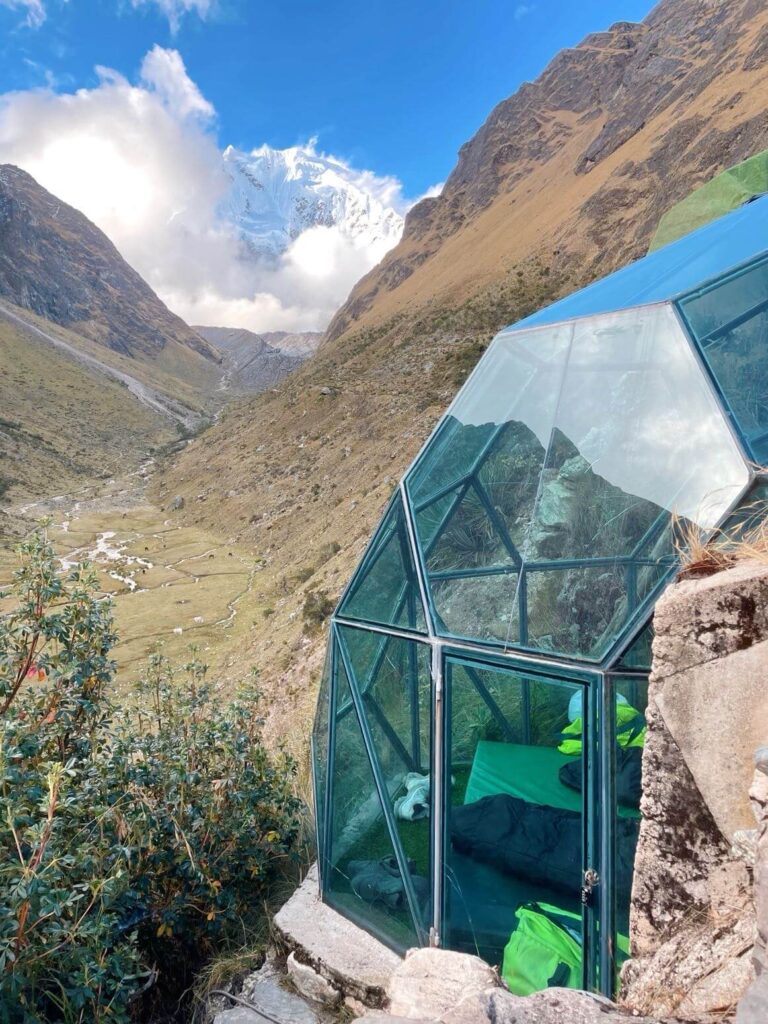
- Night 1 – clear domes with spectacular views of the mountains. This was my favourite camp in terms of views but also by FAR the coldest. I was SO grateful to be staying near the restaurant in the uphill area, but some members of the group were sent down the hill, meaning an extra steep trek up for meals. I’d have simply died!
- Night 2 – wooden cabins in a campsite with a hot shower!
- Night 3 – more glass domes in a nicer and warmer campsite (however there were trees above the domes so you don’t get the views of night 1)
- Night 4 – a basic guesthouse in Aguas Calientes town. It actually had the worst Google reviews I’ve ever seen, and others in our group only had cold water, but I had a hot shower and slept very well.
Group demographics
Perhaps because of the affordable price, MP Reservations seems to attract a young crowd but not a super young gap year crowd.
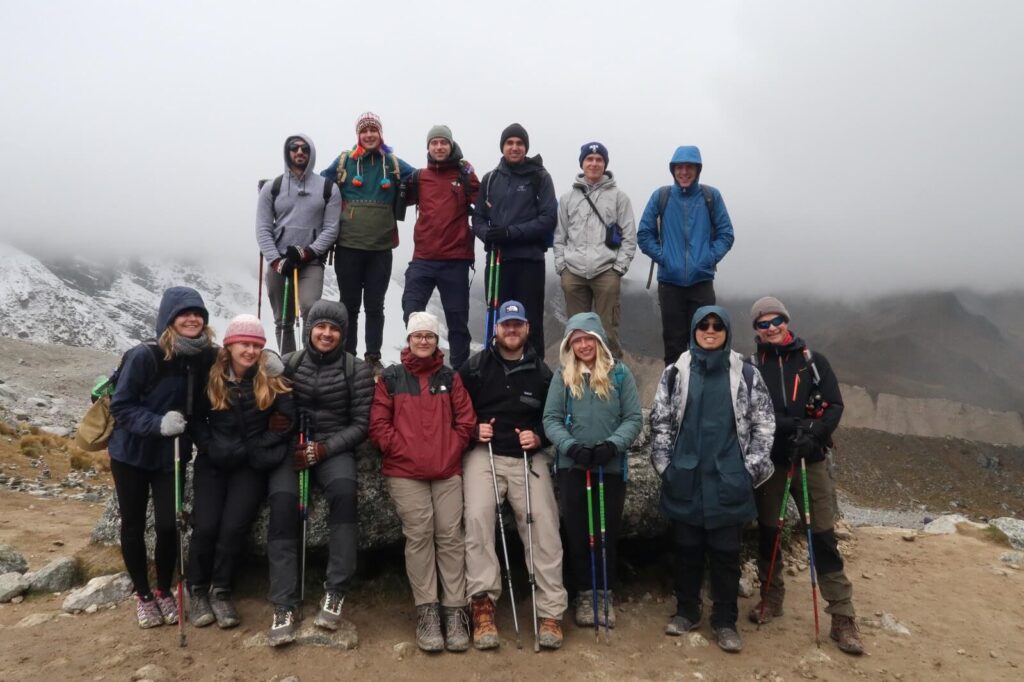
Aside from a father in his 50s trekking with his 20-something son, we were mainly in our 20s and early 30s. However, I found it attracted a sociable, open-minded backpacker crowd (rather than people on short holidays who are sometimes more keen to spend time just with each other) so I think you will fit in at any age!
Our group was unusual, according to our guide as it was 70% male. Usually, there are more women, he said. We were only two solo travellers (me and my tent mate, who was the sweetest!) which is also apparently on the low end.
Day by day review of Salkantay Trek
Let’s get into the details so you know what to expect…
Day 1 – pick up in Cusco and hike to Humantay Lagoon
At 4.30am, when I was waiting outside my accommodation on the dark and empty streets of Cusco, I seriously considered my life choices. WHY was I doing this again?
We got on the road and, after a couple of hours including a buffet breakfast stop, we arrived at our starting point of Mollepata. The hike started gradually, and I started getting to know other members of the group.
On the way up to Humantay Lagoon, it started getting steep! You gain about 500m of elevation during this section.
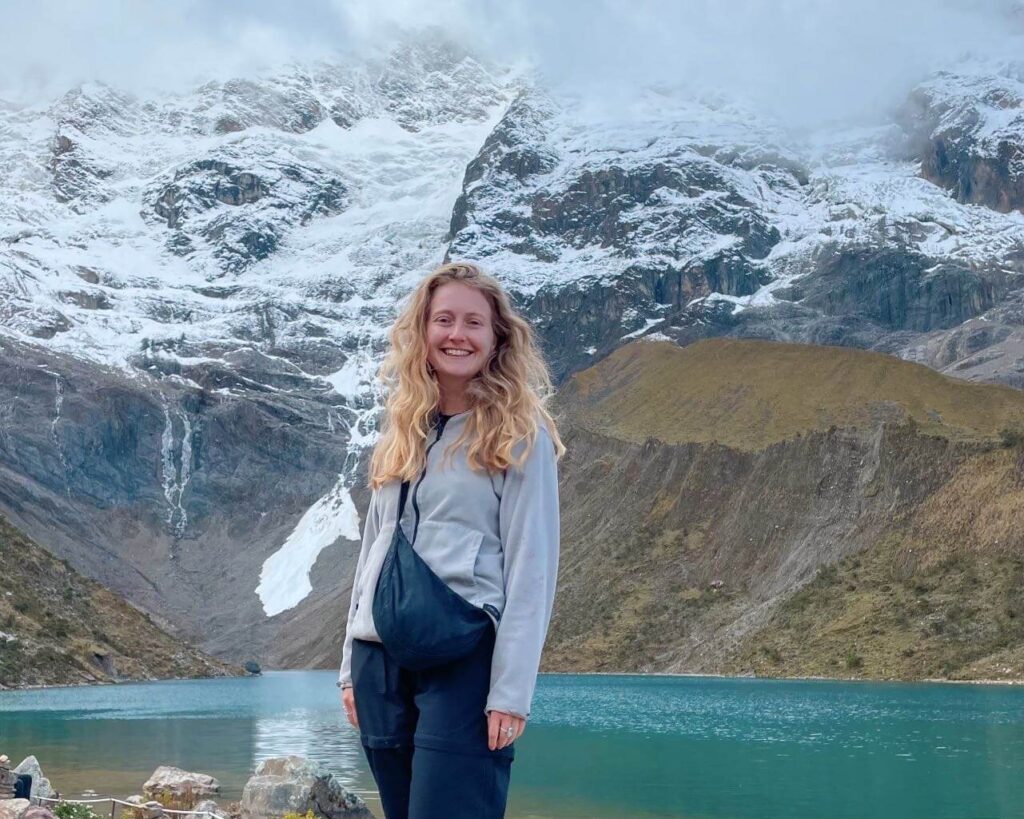
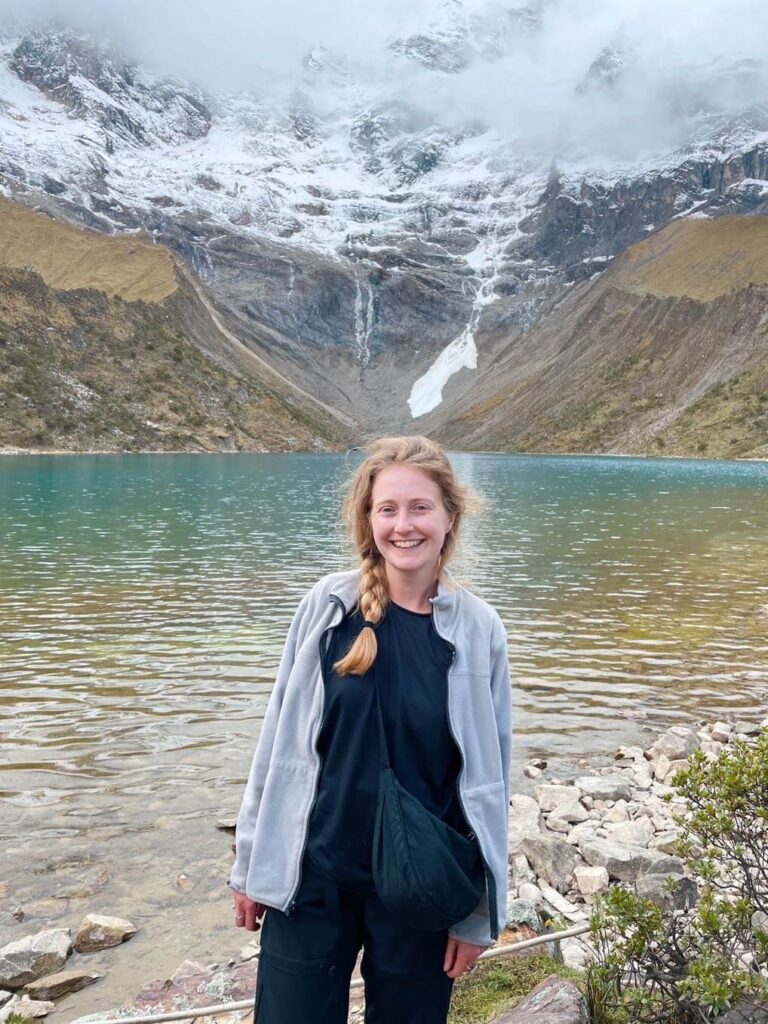
The lagoon is truly stunning, although we had bad luck with the weather, which was cloudy. Scenery-wise, it was reminiscent of the lagoons in Huaraz, Northern Peru. If you don’t have time to visit, Humantay is great.
After the lagoon, we hiked down, and then we were on the flat again. As we headed to our accommodation for the night, there was a final uphill section that was a struggle, but the thought of lunch motivated me on!
After lunch, we had time to nap and relax before dinner and an early night. The next day we were up at 4.30am so we needed all the sleep we could get!
Elevation gain: approx 900m.
Distance covered: 10km.
Time hiking: 6 hours.
Difficulty: moderate. Days 2 and 4 were harder.
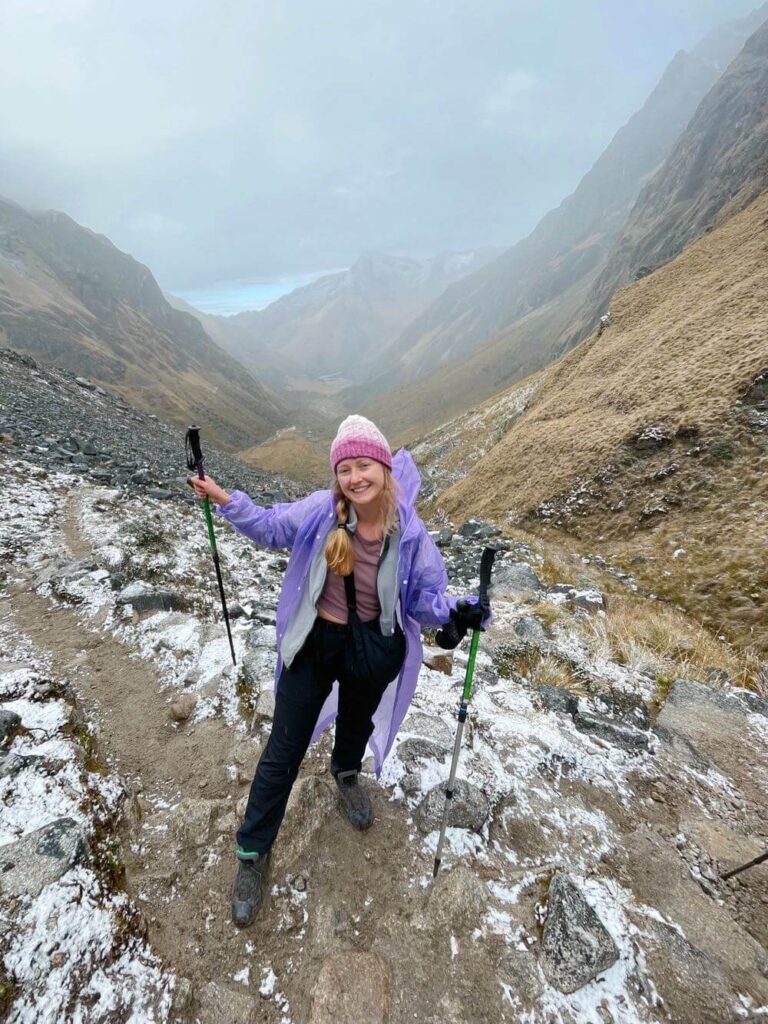
Day 2 – the 4,630m Salkantay Pass
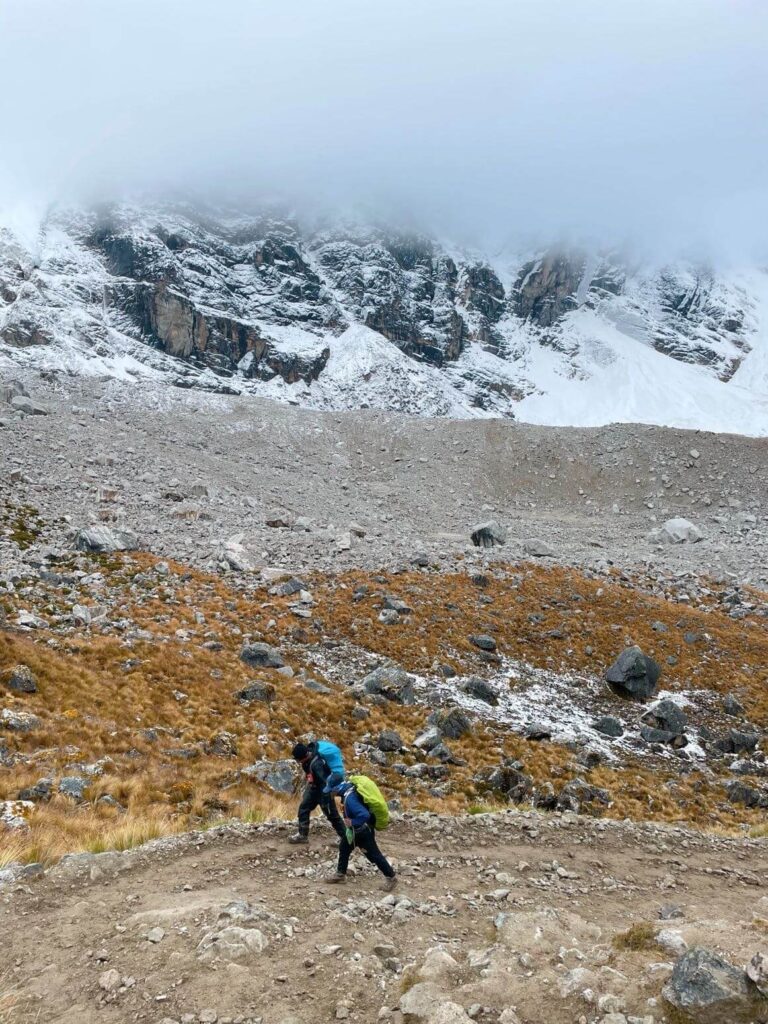
This was described as the hardest day of the trek but I definitely found day 4 harder (although maybe that’s because I had food poisoning). Not that I didn’t find day 4 challenging: we woke up at 4.30am and set off by 6.30am for a long day with the highest elevation of the trip.
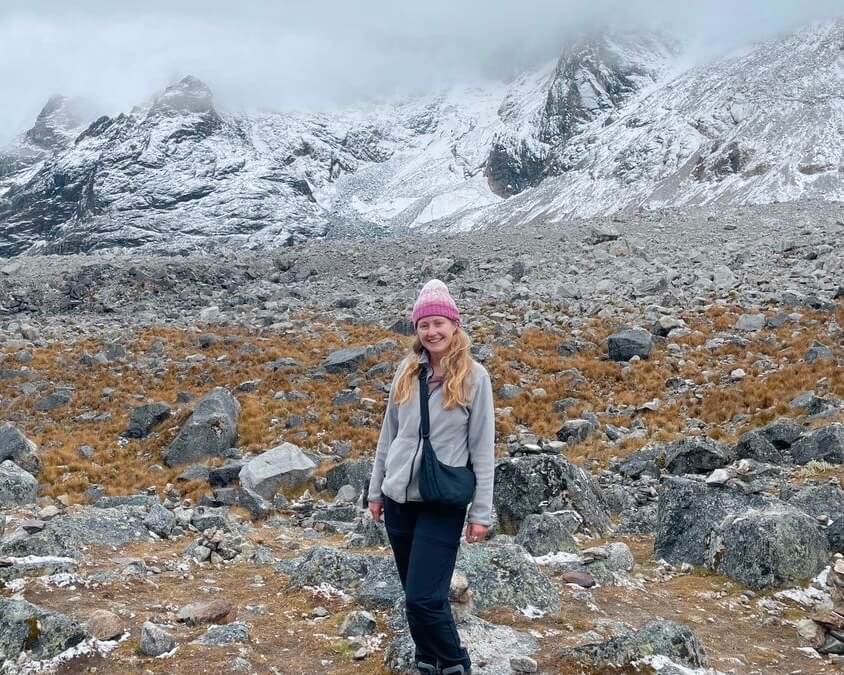
We hit 4,630m by 9am as we reached the Salkantay Pass. The main challenge here was the cold; I was absolutely freezing!
During the afternoon, we had beautiful scenery but the hike never seemed to end! The thought of a hot shower was the only thing motivating me by hour nine…
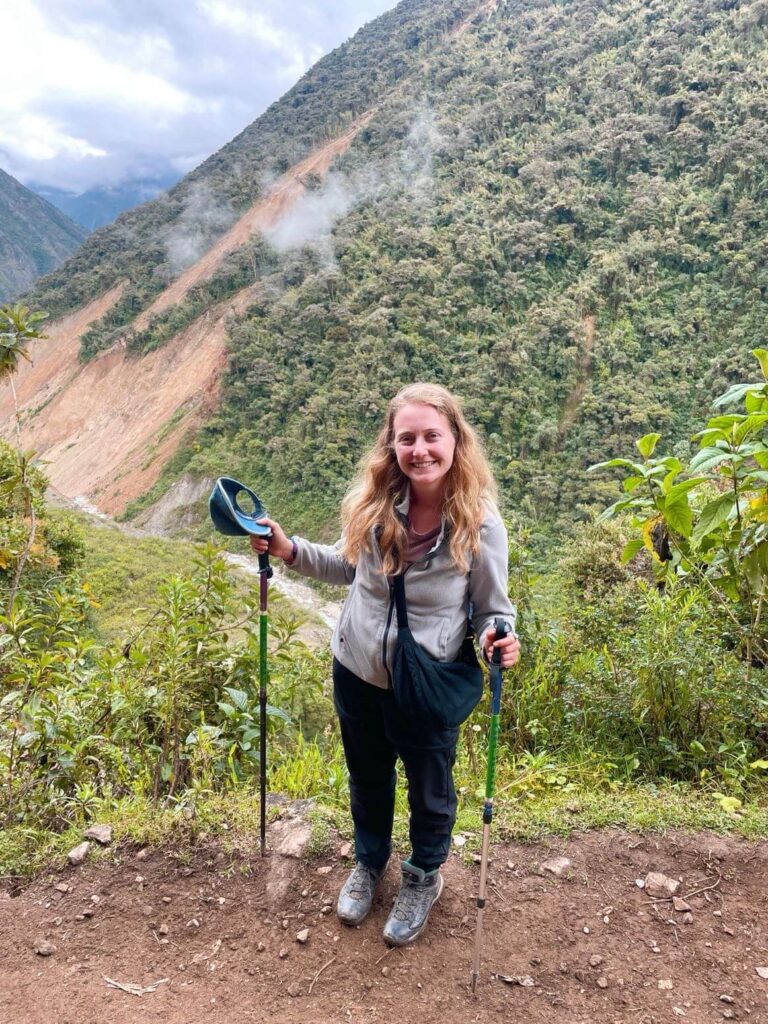
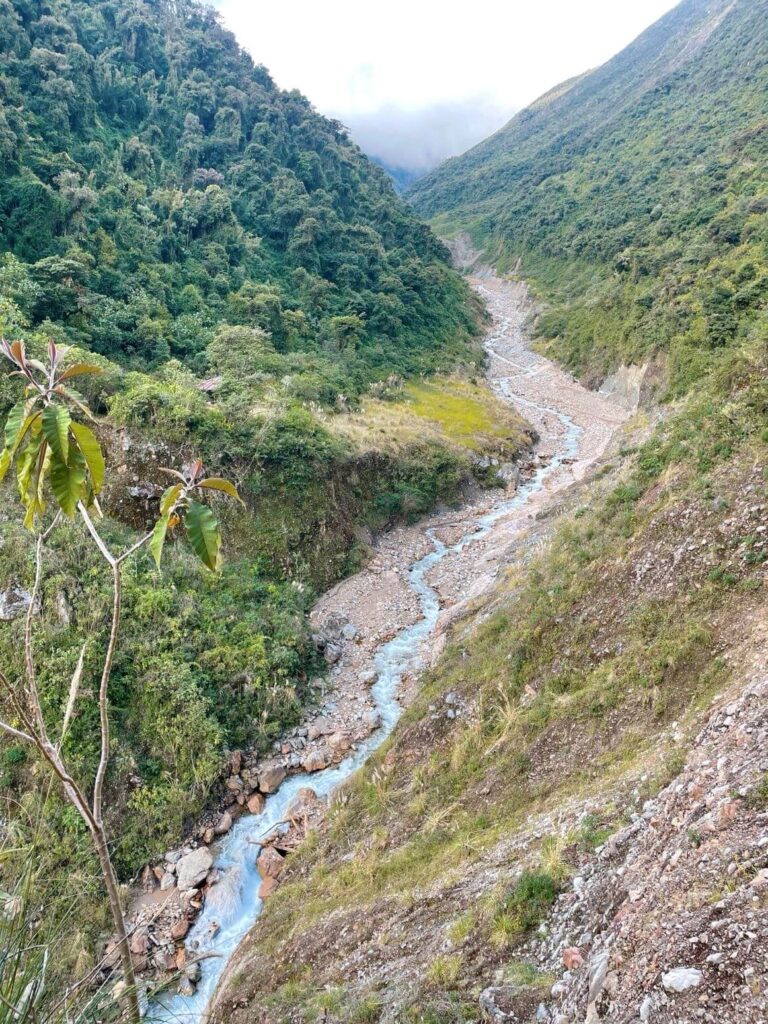
Elevation gain: approx 900m.
Distance covered: 22km.
Time hiking: 9-10 hours.
Difficulty: challenging.
Weather: absolutely freezing at the pass. Don’t forget your gloves!
Day 3 – easy day in Santa Teresa Valley
Today breaks up the difficulty of days 2 and 4 as it would be HARD work doing them back to back.
A relatively flat 15km hike (4 hours) ends by lunchtime, then you have the afternoon to relax at camp (which is slightly nicer and warmer than previous days).
In the afternoon, you can choose to visit a coffee farm, go zip-wiring, relax in Santa Teresa hot springs… or simply chill at camp in your cute star domes.
Day 4 – Inca Trail to Llactapata ruins and arrival to Aguas Calientes town
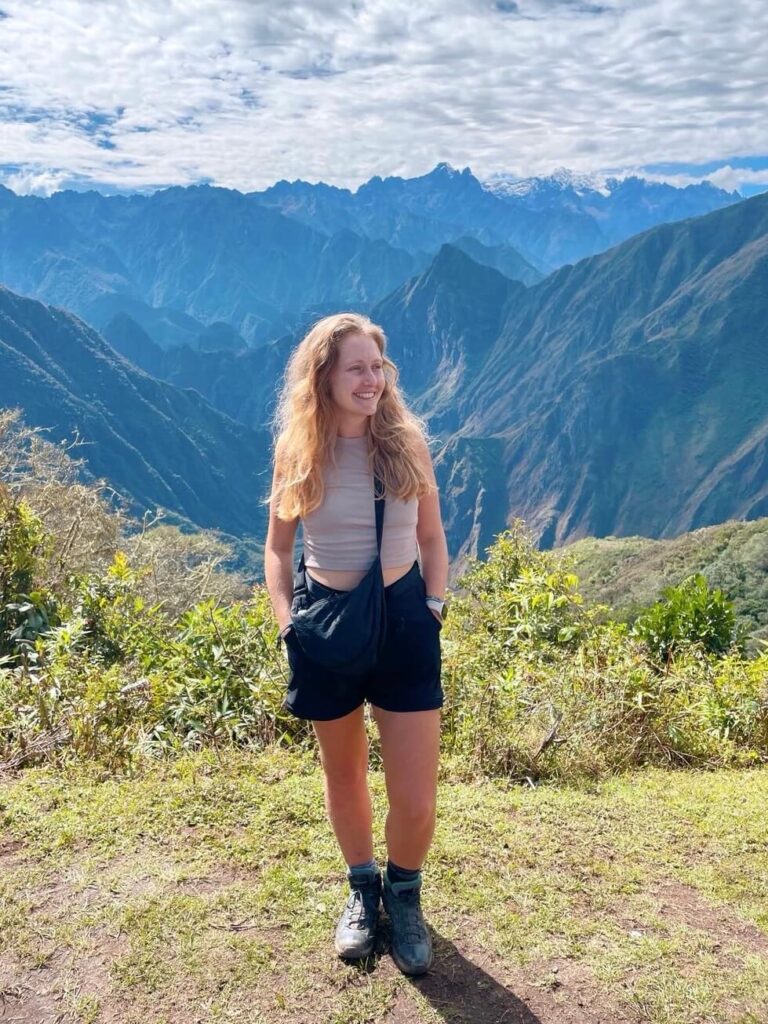
This would have been the hardest day of the Salkantay Trek, regardless of the drastic ups and downs, but the fact that we were still recovering from food poisoning made it almost traumatic!
Unlike day 2, where there was the option of getting a horse if you were struggling during the day, there was no option (apart from going in the car from the beginning and not even attempting the hike). Basically, if you started the hike, you had to finish it. Knowing there was no way out gave me anxiety in my still semi-ill state.
However, I made it!
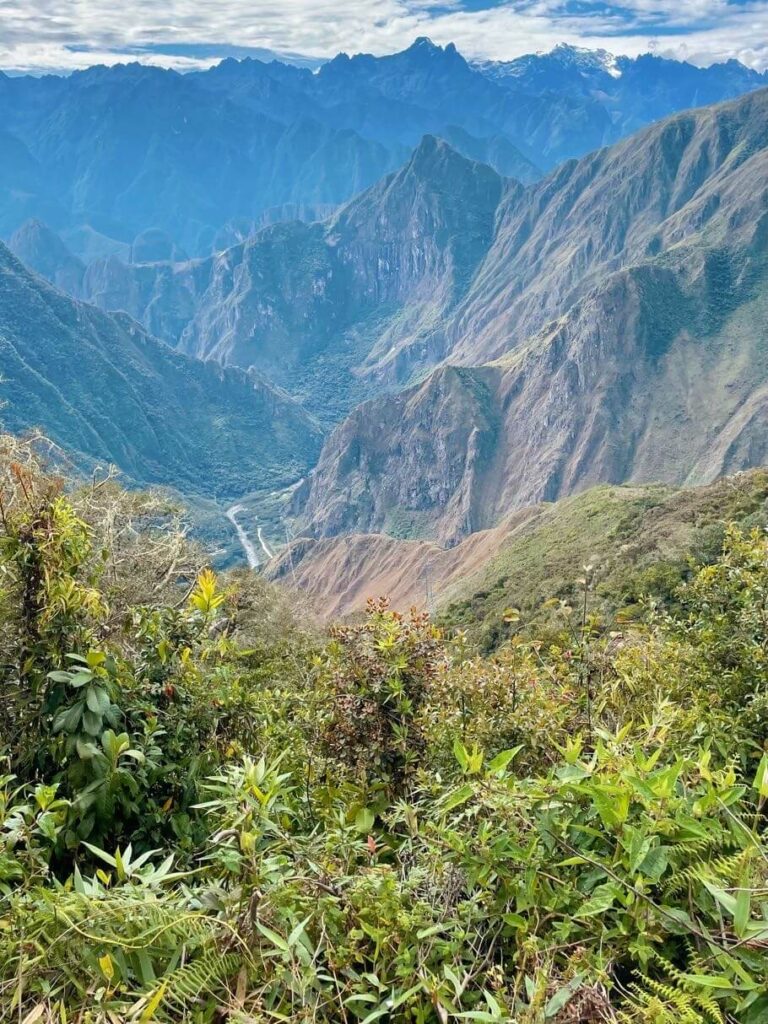
Highlights were getting our first glimpse of Machu Picchu from afar. I also enjoyed seeing the Llactapata ruins.
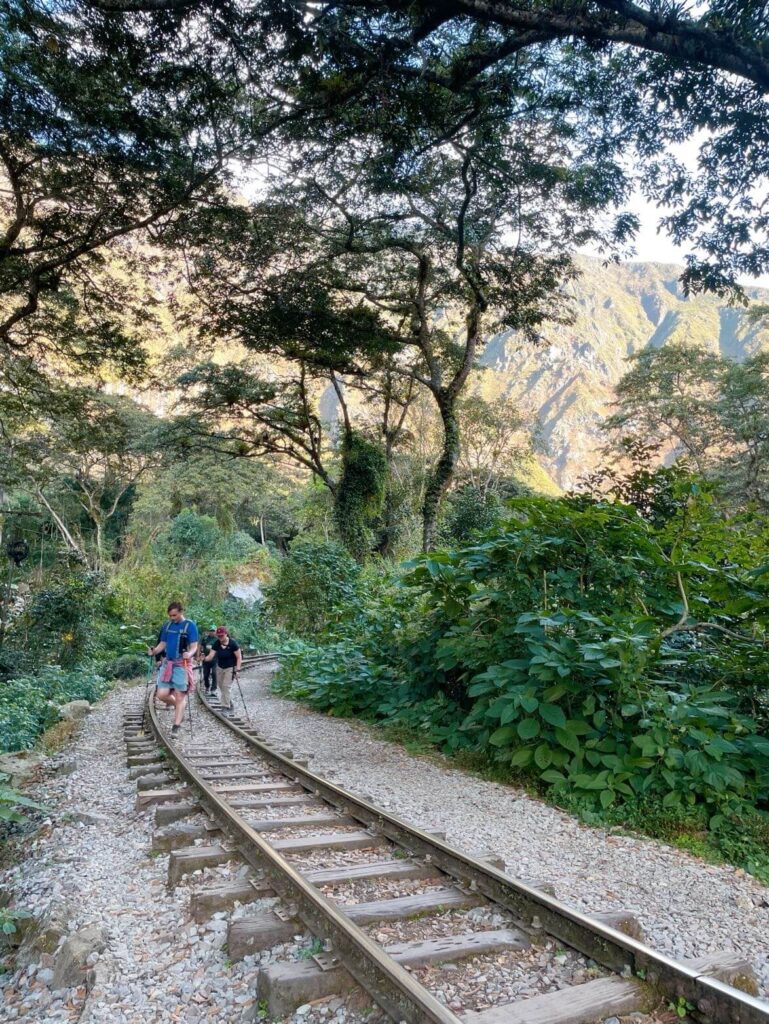
The most challenging bits were the long hike down after Llactapata: I thought the stairs would never end! The same for walking on the railway trains after lunch in Hidroelectrica. It was getting dark (and we’d begun at 7am!) so our energy was fading.
Elevation gain: 800m early in the morning, but then you go down over 1,000m before lunch.
Distance covered: 24km.
Time hiking: 9-10 hours.
Difficulty: challenging.
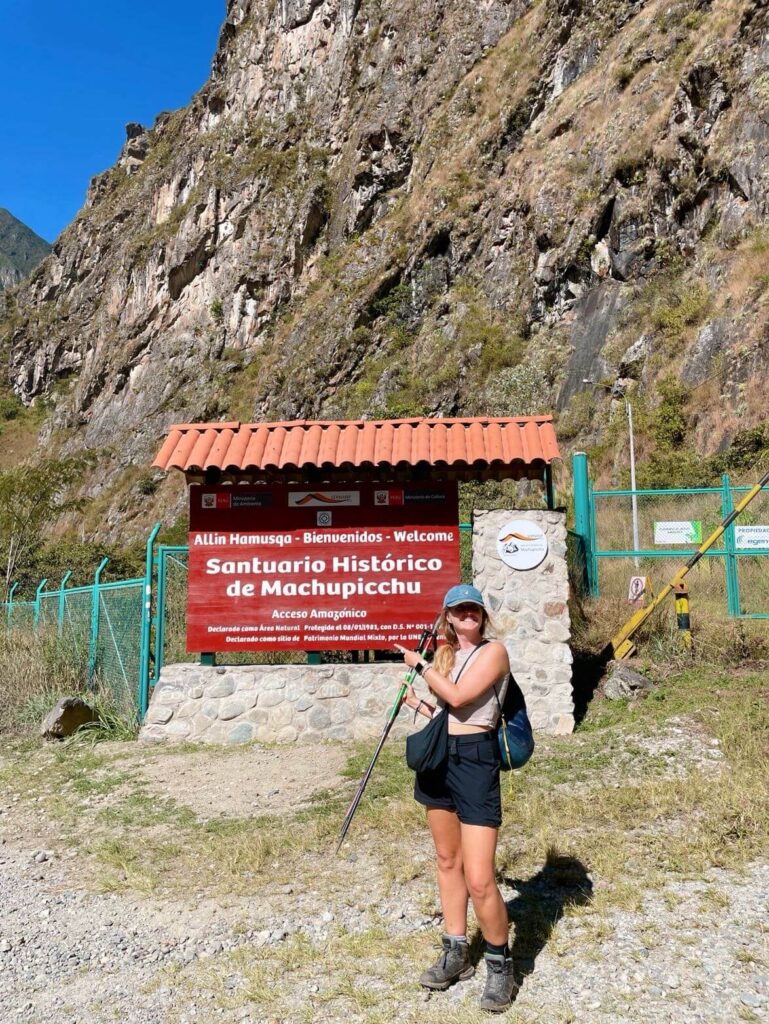
Weather: the hottest day of the Salkantay trek! As you can see from my shorts and t-shirt.
Day 5 – visiting MP and returning to Cusco
Aside from getting a talk from a member of MP Reservations staff when we were inside the complex, ‘day 5’ isn’t REALLY part of the guided trek because you visit the ruins by yourself.
Our guide had given us our MP tickets on day one with the strict instructions not to lose them (quite the challenge for me, the Queen of Losing Things).
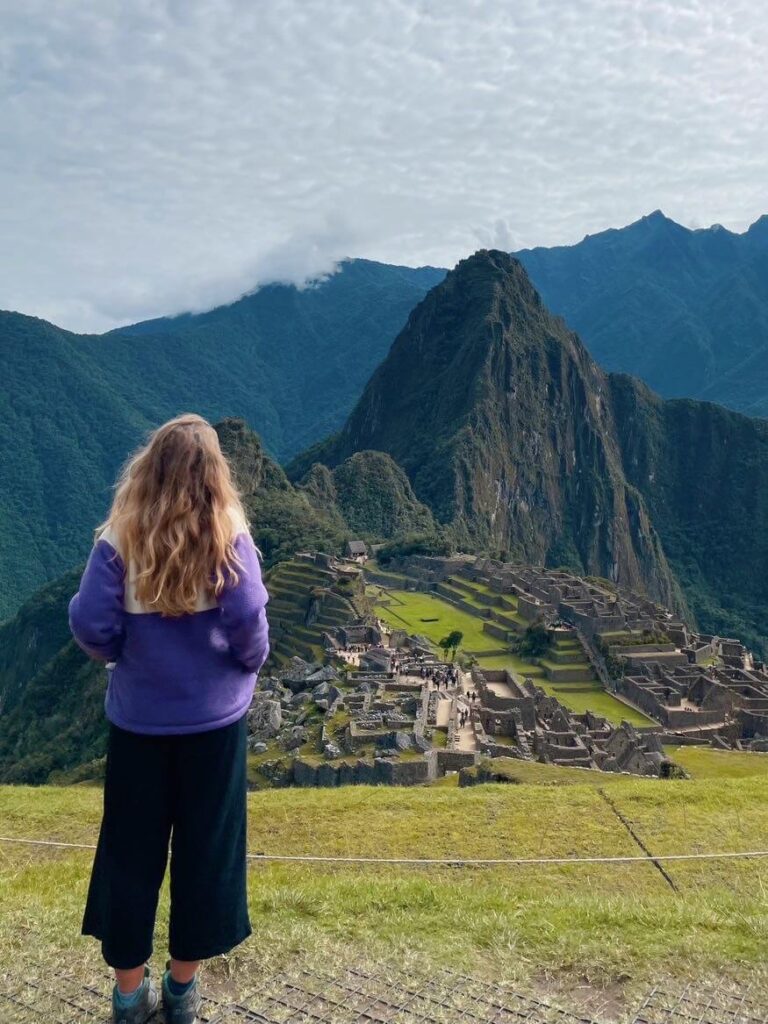
Although I knew already what circuit I had (this had been made clear when booking), I didn’t find out ’til receiving this ticket the time of my entry slot. I had quite a late one: 10am which I was pleased about because I could sleep in.
Other trekkers in our group had the 7am slot so they had to wake up early.
Entry is not flexible or changeable so don’t miss your slot!
To reach MP from Aguas Calientes, you can:
- Hike 1,600 steps (takes around 1.5 hours)
- Take the minibus (20 minutes, $12 each way).
A good option is taking the bus up and walking down. Be sure to arrive in good time to get in the bus line! There were hundreds of people waiting.
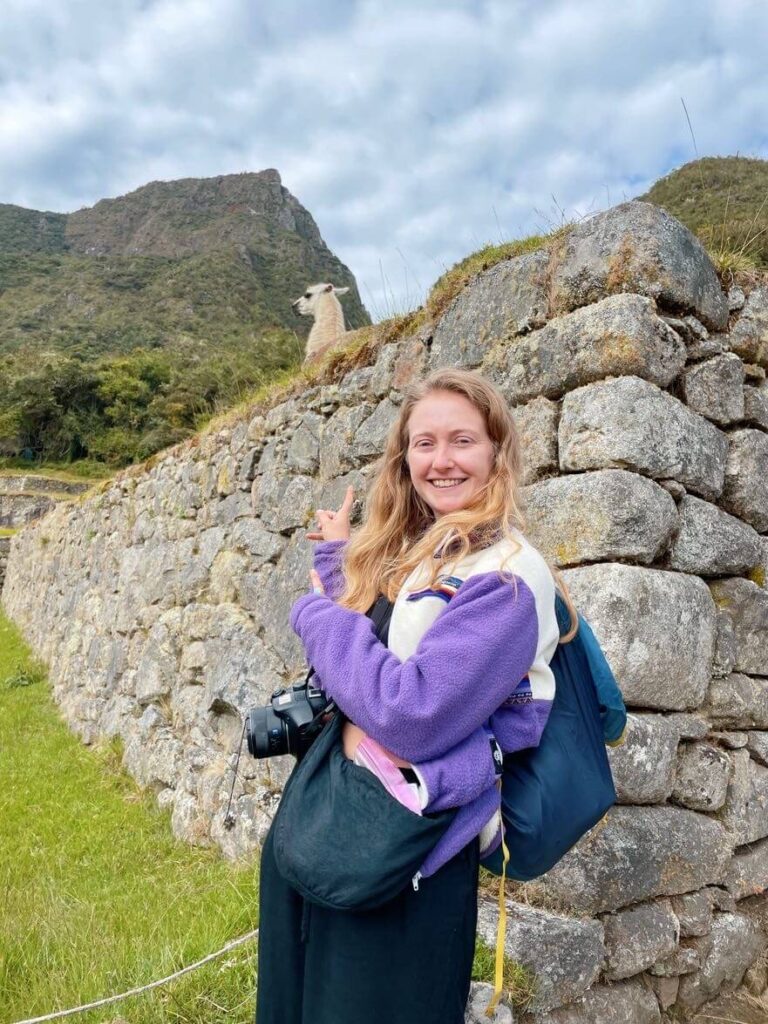
My tentmate had the same entry time as me, so we went together. Afterwards, the group were meeting for a final lunch (not included) before getting the train back to Cusco.
When looking up directions to the restaurant, I saw Google reviews about food poisoning, so I grabbed food at La Rivera Cafe instead and just met the group for a drink. My stomach couldn’t take much more!
Train out of Aguas Calientes
After 5 days of walking, I was looking forward to the train ride. It had cost an extra $70 (on top of the tour price), selected when you book the hike on the MP Reservations website.
Having done it, I would describe it as overrated. It’s a lot of money compared to the cost of other things in Peru, and I can’t entirely say it was worth it. For example, many seats, including mine, were positioned so you were mainly looking at the wall (photo below left), and had to crane your neck forward to look out the window.
Still, I would have happily paid $70 again not to have to walk an extra 3 hours back to Hidroeletrica to catch the bus! Plus, the views were nice (below right).
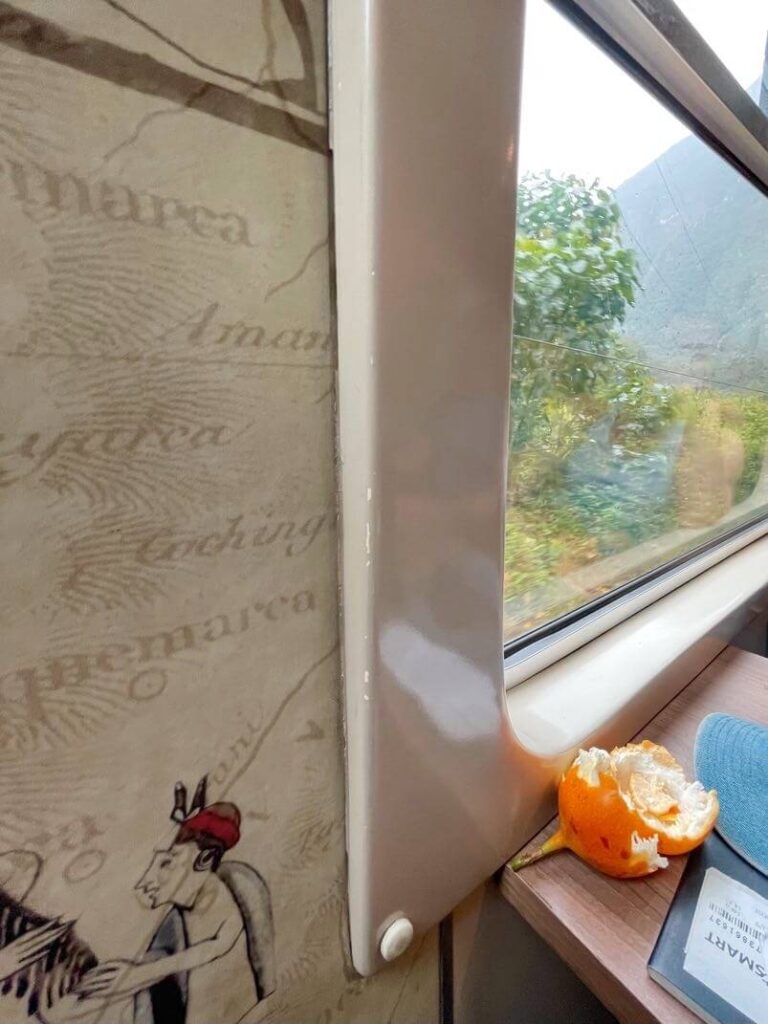
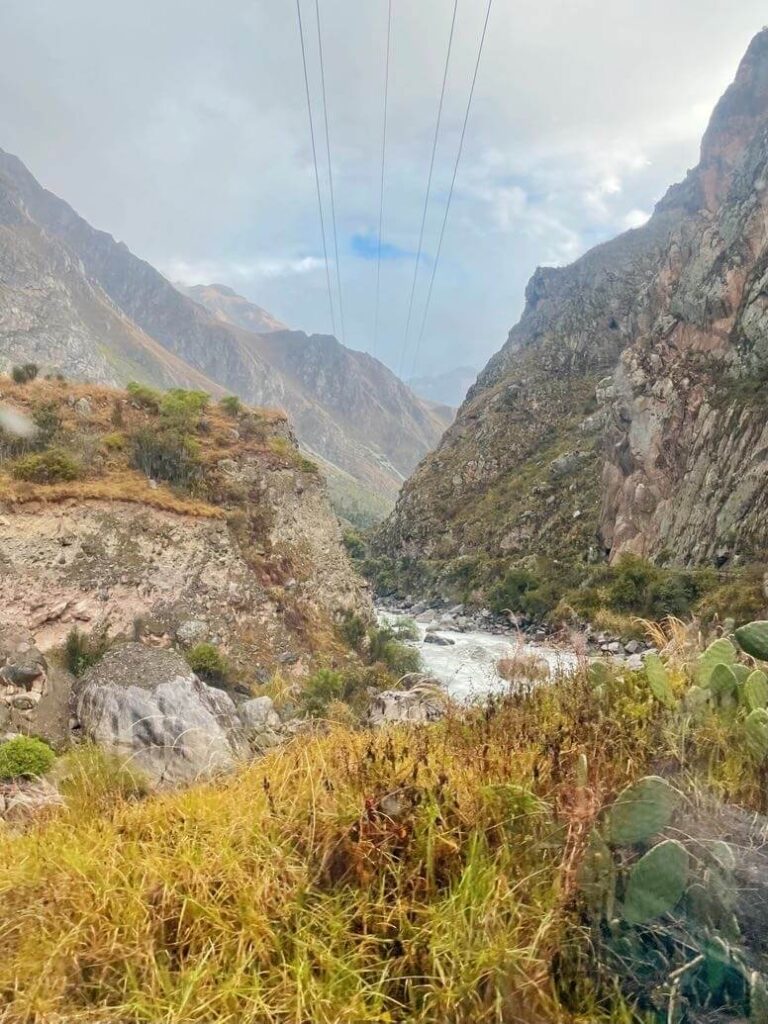
The train ends in the cute town of Ollantaytambo, where MP Reservations had a shuttle waiting to transfer us back to Cusco. However, I decided to stay there two nights instead. I was keen to see the Sacred Valley without a tour group’s rushed itinerary, so staying overnight meant having the Ollantaytambo ruins to myself at 7am.
Sadly, since my main luggage was still in Cusco, I only had my smelly hiking clothes, but at least there were laundrettes in town.
I still had the MP Reservations duffel bag, but they didn’t seem to mind me keeping it a few days longer. When I returned it in Cusco, they gave me my free t-shirt saying ‘I survived the Salkantay Trek!’. With their food poisoning, barely, but the challenges made me feel even prouder…
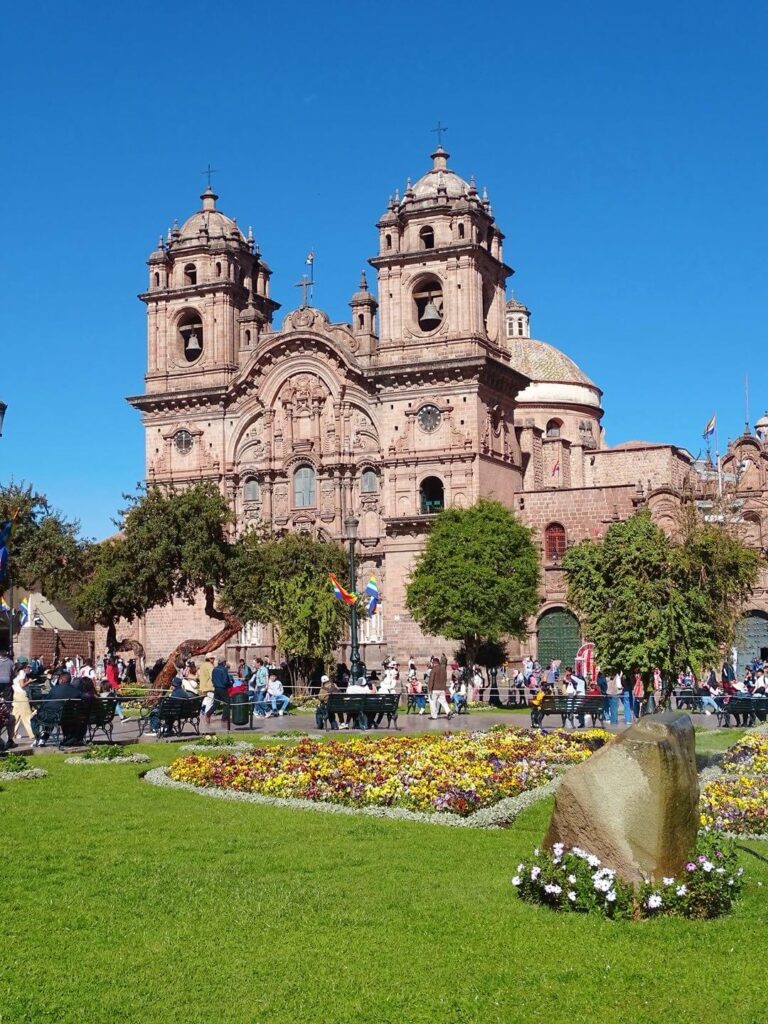
Sleeping, eating copious amounts and going for a massage were in order back in Cusco! See my guide to the best Cusco restaurants to do the same.
What to pack
- Day pack (approx 25l) for day treking
- Hiking boots – essential! I wouldn’t want to do this hike in trainers
- 2 x hiking pants
- 5 x hiking tops (ideally sweat-wicking sports ones)
- Clean underwear for each day including thick socks
- Warm jacket (ideally one that fits into your day bag)
- 2 x fleece layers – I suggest one for daytime hiking and a clean one to wear around camp and while sleeping
- Shoes for around camp – I brought flip flops and wore them over thick socks
- Waterproof jacket (in rainy season, waterproof pants may also be useful)
- Water bottle or water bladder, ideally holding 1.5 litres, but you can also buy bottles along the way
- Trekking poles -I rented mine from MP Reservations for $10
- Headlamp to use around camp
- Quick-dry towel
- Earplugs and eye mask
- For warmth: beanie hat and gloves
- Toiletries: body soap, sunscreen, bug spray, hand sanitiser, toothbrush and toothpaste, toilet paper (very important!) and baby wipes
- Portable charger (we had the opportunity to recharge these on day 3)
- Plastic bags to separate your clean and dirty clothes, and secure anything that’s got wet
- Cash – for snacks and entry to Humantay Lagoon / Santa Theresa hot springs
- Passport.
What insurance do you need for the Salkantay Trek
Most insurance plans will cover you to 3000 metres above sea level on their standard plans. Typically, you will need to upgrade for hiking higher. Since the Salkantay Pass surpasses 4,500m, you will definitely need to upgrade.
I personally used True Traveller for all my Latin America travels and can’t fault them.
For the Salkantay Trek, opt for their Adventure Pack which will cover you up to 4,600m (as opposed to the standard Traveller Pack that covers you up to 3,000m). I contacted them to confirm the Salkantay is included in this pack, and they said it is.
Click to get a quote.
Thanks for reading!
Read more Peru blogs: